
Beautiful Poets
Perhaps all poets are nerds at heart, but some were rather ravishing nerds...

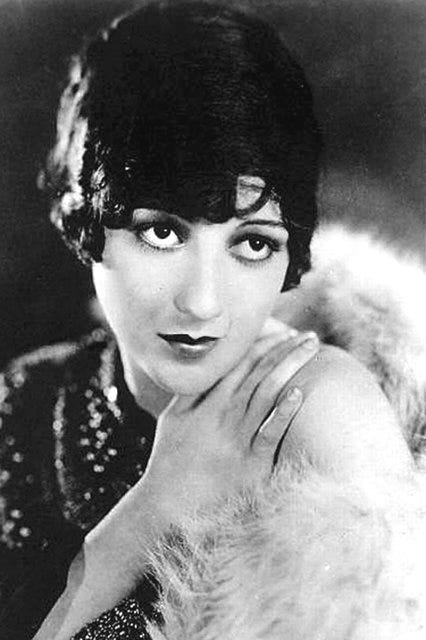
Elinor Wylie "was famous during her life almost as much for her ethereal beauty and personality as for her melodious, sensuous poetry."
Cold-Blooded Creatures
by Elinor Wylie
Man, the egregious egoist
(In mystery the twig is bent)
Imagines, by some mental twist,
That he alone is sentient
Of the intolerable load
That on all living creatures lies,
Nor stoops to pity in the toad
The speechless sorrow of his eyes.
He asks no questions of the snake,
Nor plumbs the phosphorescent gloom
Where lidless fishes, broad awake,
Swim staring at a nightmare doom.
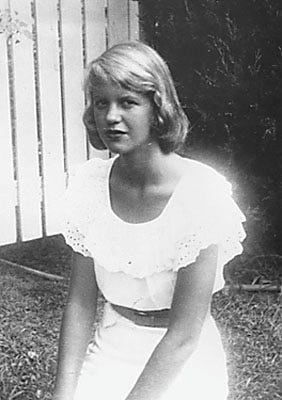
Sylvia Plath was the Golden Girl of American poetry and one of the first and best of the modern confessional poets. She won a Pulitzer Prize posthumously for her Collected Poems after committing suicide at the age of 31, something she seemed to have been predicting in her writing and practicing for in real life.
Poppies In October
by Sylvia Plath
Even the sun-clouds this morning cannot manage such skirts.
Nor the woman in the ambulance
Whose red heart blooms through her coat so astoundingly —
A gift, a love gift
Utterly unasked for
By a sky
Palely and flamily
Igniting its carbon monoxides, by eyes
Dulled to a halt under bowlers.
O my God, what am I
That these late mouths should cry open
In a forest of frost, in a dawn of cornflowers.
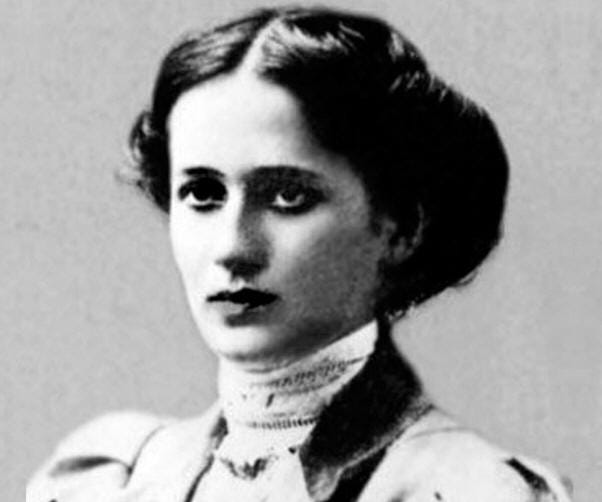
THE MUSE
by Anna Akhmatova
loose translation/interpretation by Michael R. Burch
My being hangs by a thread tonight
as I await a Muse no human pen can command.
The desires of my heart — youth, liberty, glory —
now depend on the Maid with the flute in her hand.
Look! Now she arrives; she flings back her veil;
I meet her grave eyes — calm, implacable, pitiless.
“Temptress, confess!
Are you the one who gave Dante hell?”
She answers, “Yes.”
Anna Akhmatova had a fan and apparent worshipper among the Russian poets of her day…
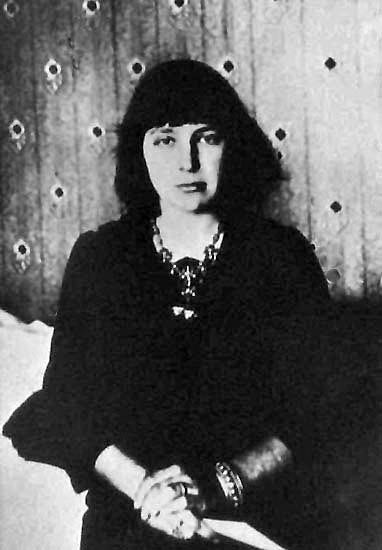
Excerpt from “Poems for Akhmatova”
by Marina Tsvetaeva
loose translation/interpretation by Michael R. Burch
You outshine everything, even the sun
at its zenith. The stars are yours!
If only I could sweep like the wind
through some unbarred door,
gratefully, to where you are ...
to hesitantly stammer, suddenly shy,
lowering my eyes before you, my lovely mistress,
petulant, chastened, overcome by tears,
as a child sobs to receive forgiveness ...
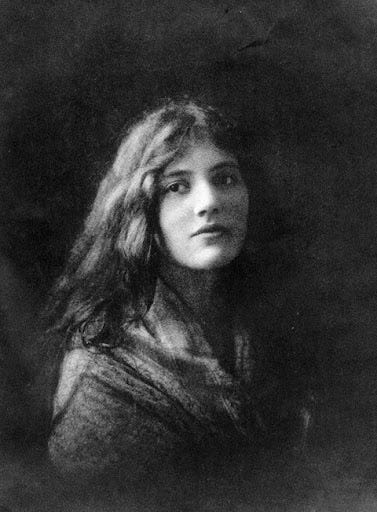
The great Irish poet William Butler Yeats wrote poems of unrequited love for the beautiful Irish revolutionary Maud Gonne.
Hearthside
by Michael R. Burch
“When you are old and grey and full of sleep...” — W. B. Yeats
For all that we professed of love, we knew
this night would come, that we would bend alone
to tend wan fires’ dimming bars—the moan
of wind cruel as the Trumpet, gelid dew
an eerie presence on encrusted logs
we hoard like jewels, embrittled so ourselves.
The books that line these close, familiar shelves
loom down like dreary chaperones. Wild dogs,
too old for mates, cringe furtive in the park,
as, toothless now, I frame this parchment kiss.
I do not know the words for easy bliss
and so my shriveled fingers clutch this stark,
long-unenamored pen and will it: Move.
I loved you more than words, so let words prove.
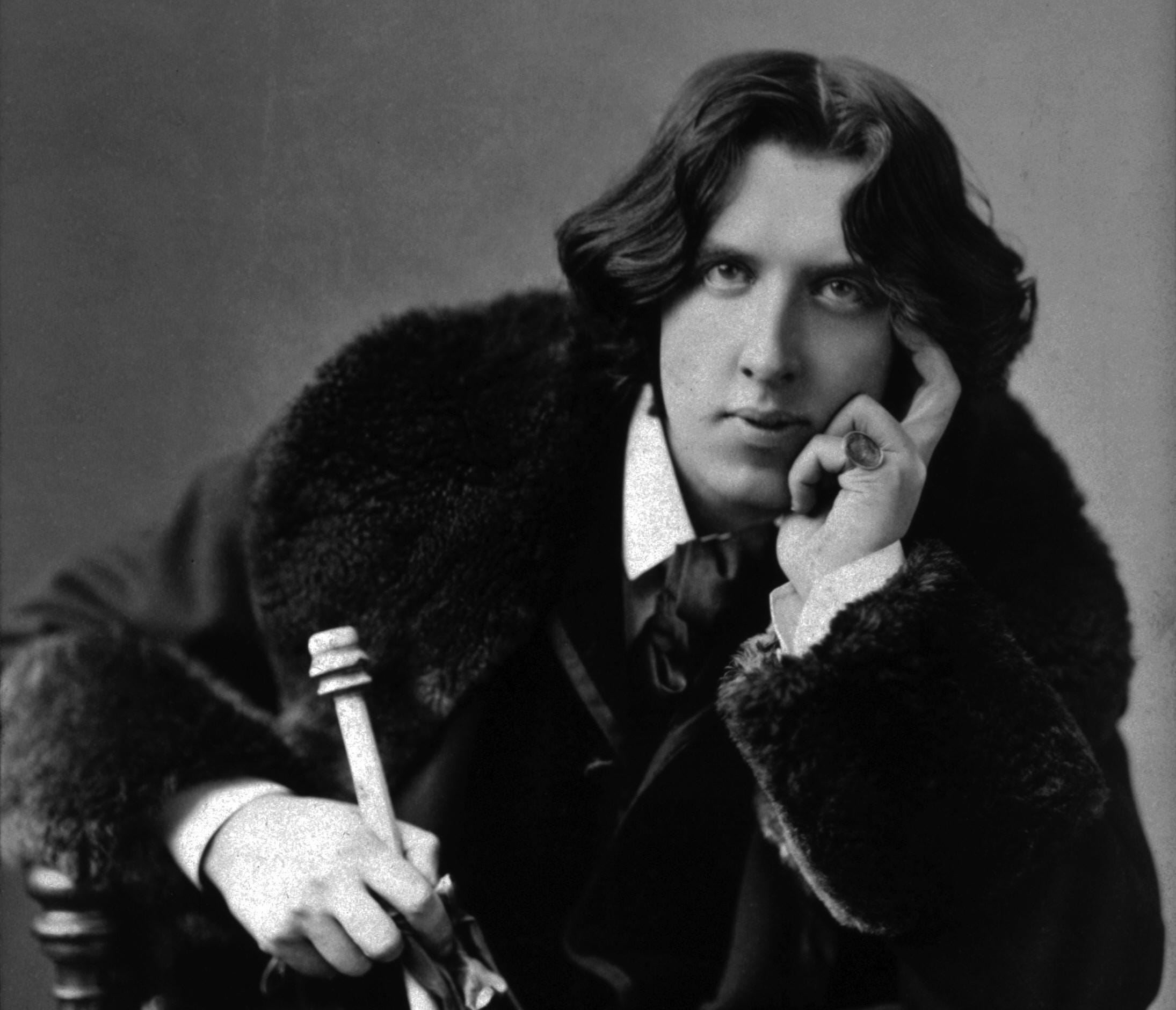
Oscar Wilde may be the most notorious "bad boy" in the annals of poetry and literature, or second only to Lord Byron. He was flamboyantly gay at a time when polite society was prim, proper and violently homophobic. As a result, he was sentenced to hard labor at Reading Gaol and died soon after his release. Wilde is justly famous for his disdain for dull and dulling conformity, as his witty epigrams attest. But this lovely, wonderfully moving elegy Wilde wrote for his sister Isola proves that he was a true poet capable of creating timeless art.
Requiescat
by Oscar Wilde
Tread lightly, she is near
Under the snow,
Speak gently, she can hear
The daisies grow.
All her bright golden hair
Tarnished with rust,
She that was young and fair
Fallen to dust.
Lily-like, white as snow,
She hardly knew
She was a woman, so
Sweetly she grew.
Coffin-board, heavy stone,
Lie on her breast,
I vex my heart alone,
She is at rest.
Peace, Peace, she cannot hear
Lyre or sonnet,
All my life's buried here,
Heap earth upon it.
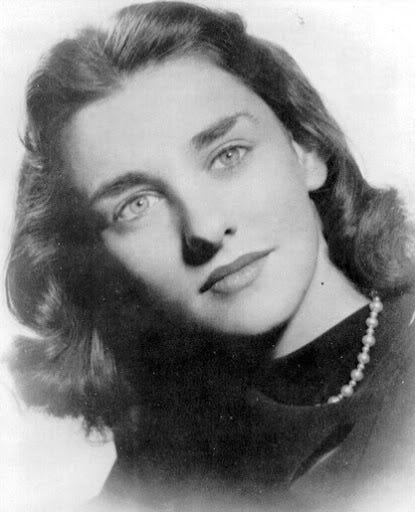
Anne Sexton was a model who became a confessional poet, writing about intimate aspects of her life, after her doctor suggested that she take up poetry as a form of therapy. She studied under Robert Lowell at Boston University, where Sylvia Plath was one of her classmates. Sexton won the Pulitzer Prize for Poetry in 1967, but later committed suicide via carbon monoxide poisoning. Topics she covered in her poems included adultery, masturbation, menstruation, abortion, despair and suicide.
The Truth the Dead Know
by Anne Sexton
For my Mother, born March 1902, died March 1959
and my Father, born February 1900, died June 1959
Gone, I say and walk from church,
refusing the stiff procession to the grave,
letting the dead ride alone in the hearse.
It is June. I am tired of being brave.
We drive to the Cape. I cultivate
myself where the sun gutters from the sky,
where the sea swings in like an iron gate
and we touch. In another country people die.
My darling, the wind falls in like stones
from the whitehearted water and when we touch
we enter touch entirely. No one's alone.
Men kill for this, or for as much.
And what of the dead? They lie without shoes
in the stone boats. They are more like stone
than the sea would be if it stopped. They refuse
to be blessed, throat, eye and knucklebone.
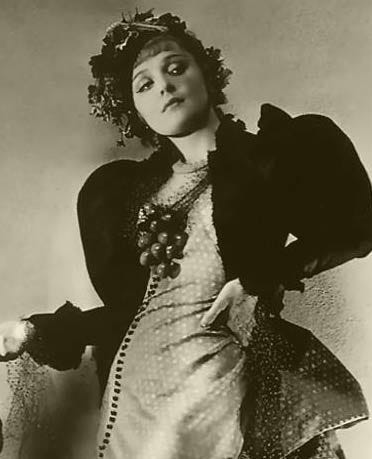
Renée Vivien, born Pauline Mary Tarn (1877-1909), was a British poet and high-profile lesbian of the Belle Époque who wrote French poems in the style of the Symbolistes and Parnassiens.
Song
by Renée Vivien
loose translation/interpretation by Michael R. Burch
When the moon weeps,
illuminating flowers on the graves of the faithful,
my memories creep
back to you, wrapped in flightless wings.
It's getting late; soon we will sleep
(your eyes already half closed)
steeped
in the shimmering air.
O, the agony of burning roses:
your forehead discloses
a heavy despondency,
though your hair floats lightly ...
In the night sky the stars burn whitely
as the Goddess nightly
resurrects flowers that fear the sun
and die before dawn ...
Undine
by Renée Vivien
loose translation/interpretation by Kim Cherub (an alias of Michael R. Burch)
Your laughter startles, your caresses rake.
Your cold kisses love the evil they do.
Your eyes—blue lotuses drifting on a lake.
Lilies are less pallid than your face.
You move like water parting.
Your hair falls in rootlike tangles.
Your words like treacherous rapids rise.
Your arms, flexible as reeds, strangle,
Choking me like tubular river reeds.
I shiver in their enlacing embrace.
Drowning without an illuminating moon,
I vanish without a trace,
lost in a nightly swoon.
Amazone
by Renée Vivien
loose translation/interpretation by Michael R. Burch
the Amazon smiles above the ruins
while the sun, wearied by its struggles, droops to sleep.
murder’s aroma swells Her nostrils;
She exults in blood, death’s inscrutable lover.
She loves lovers who intoxicate Her
with their wild agonies and proud demises.
She despises the cloying honey of feminine caresses;
cups empty of horror fail to satisfy Her.
Her desire, falling cruelly on some wan mouth
from which she rips out the unrequited kiss,
awaits ardently lust’s supreme spasm,
more beautiful and more terrible than the spasm of love.
NOTE: The French poem has “coups” and I considered various words – “cuts,” “coups,” “coups counted,” etc. – but I thought because of “intoxicate” and “honey” that “cups” worked best in English.
“Nous nous sommes assises” (“We Sat Down”)
by Renée Vivien
loose translation/interpretation by Michael R. Burch
Darling, we were like two exiles
bearing our desolate souls within us.
Dawn broke more revolting than any illness...
Neither of us knew the native language
As we wandered the streets like strangers.
The morning’s stench, so oppressive!
Yet you shone like the sunrise of hope...
***
As night fell, we sat down,
Your drab dress grey as any evening,
To feel the friendly freshness of kisses.
No longer alone in the universe,
We exchanged lovely verses with languor.
Darling, we dallied, without quite daring to believe,
And I told you: “The evening is far more beautiful than the dawn.”
You nudged me with your forehead, then gave me your hands,
And I no longer feared uncertain tomorrows.
The sunset sashayed off with its splendid insolence,
But no voice dared disturb our silence...
I forgot the houses and their inhospitality...
The sunset dyed my mourning attire purple.
Then I told you, kissing your half-closed eyelids:
“Violets are more beautiful than roses.”
Darkness overwhelmed the horizon...
Harmonious sobs surrounded us...
A strange languor subdued the strident city.
Thus we savored the enigmatic hour.
Slowly death erased all light and noise,
Then I knew the august face of the night.
You let the last veils slip to your naked feet...
Then your body appeared even nobler to me, dimly lit by the stars.
Finally came the appeasement of rest, of returning to ourselves...
And I told you: “Here is the height of love…”
We who had come carrying our desolate souls within us,
like two exiles, like complete strangers.
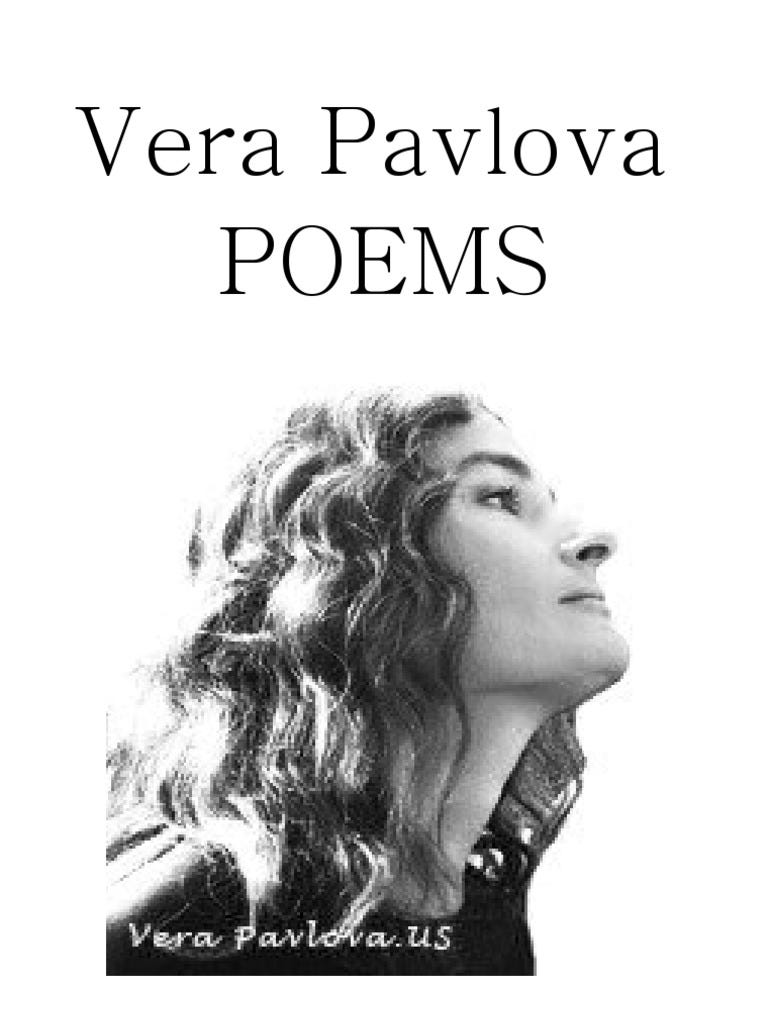
Vera Pavlova (1963-) is a leading contemporary Russian poet. Born in Moscow, she is a graduate of the Schnittke College of Music and the Gnessin Academy of Music, where she specialized in music history. Vera has worked as a guide at the Shalyapin Museum in Moscow and has published several essays on music. Her poetry has appeared in The New Yorker and other major literary publications.
I shattered your heart;
now I limp through the shards
barefoot.
―by Vera Pavlova, loose translation/interpretation by Michael R. Burch
I test the tightrope,
balancing a child
in each arm.
―by Vera Pavlova, loose translation/interpretation by Michael R. Burch
Immortalize me!
With your bare, warm palm
please sculpt and mold my malleable snow.
Polish me until I glow.
―by Vera Pavlova, loose translation/interpretation by Michael R. Burch
God saw
it was good.
Adam saw
it was impressive.
Eve saw
it was improvable.
―by Vera Pavlova, loose translation/interpretation by Michael R. Burch
Scales:
on the one hand joy;
on the other sorrow.
Sorrow is weightier;
therefore joy
elevates.
―by Vera Pavlova, loose translation/interpretation by Michael R. Burch
A muse inspires when she arrives,
a wife when she departs,
a mistress when she’s absent.
Would you like me to manage all that simultaneously?
―by Vera Pavlova, loose translation/interpretation by Michael R. Burch
You, my dear, are my shielding stone:
to sing behind, or bash my head on.
―by Vera Pavlova, loose translation/interpretation by Michael R. Burch
Remember me as I am this instant: abrupt and absent,
my words fluttering like moths trapped in a curtain.
―by Vera Pavlova, loose translation/interpretation by Michael R. Burch
I have been dropped
and fell from such
immense heights
for so long that
perhaps I still
have enough
time to learn
how to
fly.
―by Vera Pavlova, loose translation/interpretation by Michael R. Burch
Winter―a beast.
Spring―a bud.
Summer―a bug.
Autumn―a bird.
Otherwise I'm a woman.
―by Vera Pavlova, loose translation/interpretation by Michael R. Burch
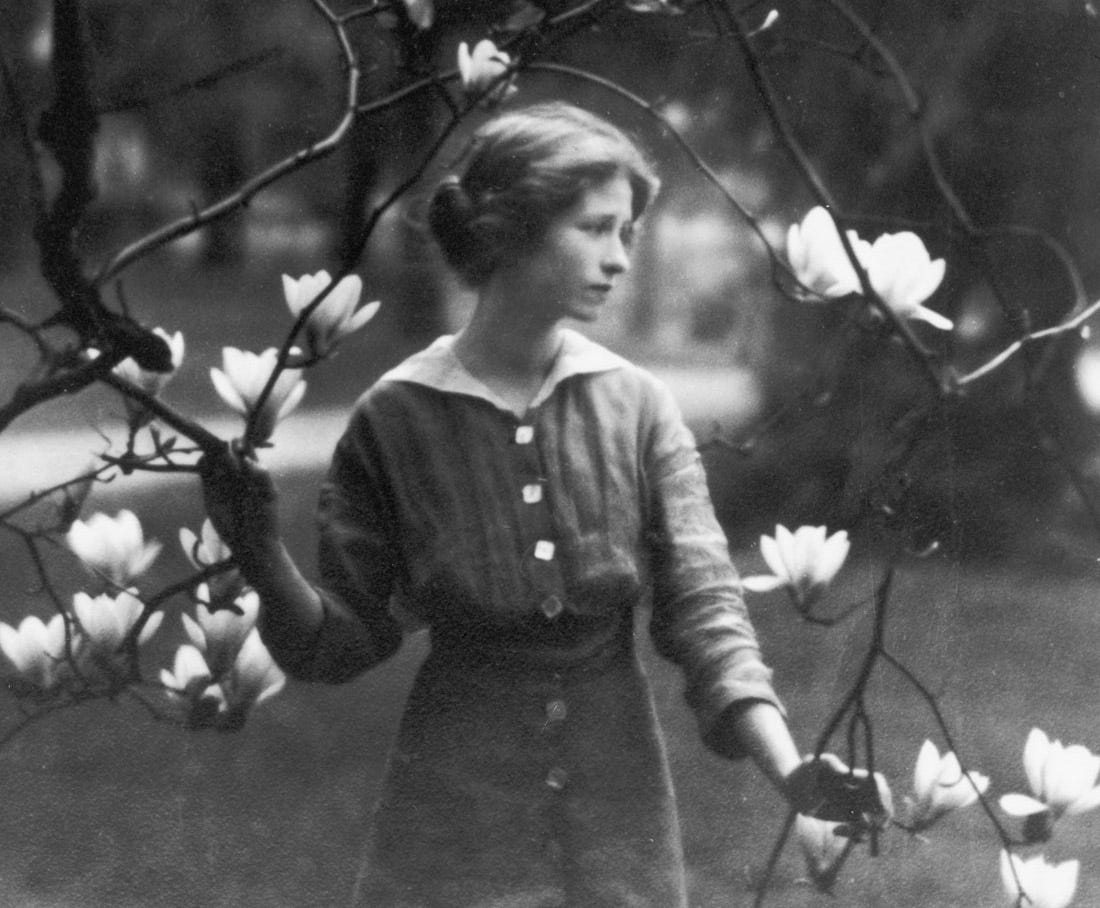
Edna St. Vincent Millay was the first woman to win a Pulitzer Prize for poetry. She was openly bisexual and had affairs with other women and married men. When she finally married, hers was an open marriage. Her 1920 poetry collection A Few Figs From Thistles drew controversy for its novel exploration of female sexuality. She was one of the earliest and strongest voices for what became known as feminism. One of the recurring themes of her poetry was that men might use her body, but not possess her or have any claim over her. (And perhaps that their desire for her body gave her the upper hand in relationships.)
I, Being Born a Woman, and Distressed
by Edna St. Vincent Millay
I, being born a woman, and distressed
By all the needs and notions of my kind,
Am urged by your propinquity to find
Your person fair, and feel a certain zest
To bear your body's weight upon my breast:
So subtly is the fume of life designed,
To clarify the pulse and cloud the mind,
And leave me once again undone, possessed.
Think not for this, however, this poor treason
Of my stout blood against my staggering brain,
I shall remember you with love, or season
My scorn with pity — let me make it plain:
I find this frenzy insufficient reason
For conversation when we meet again.
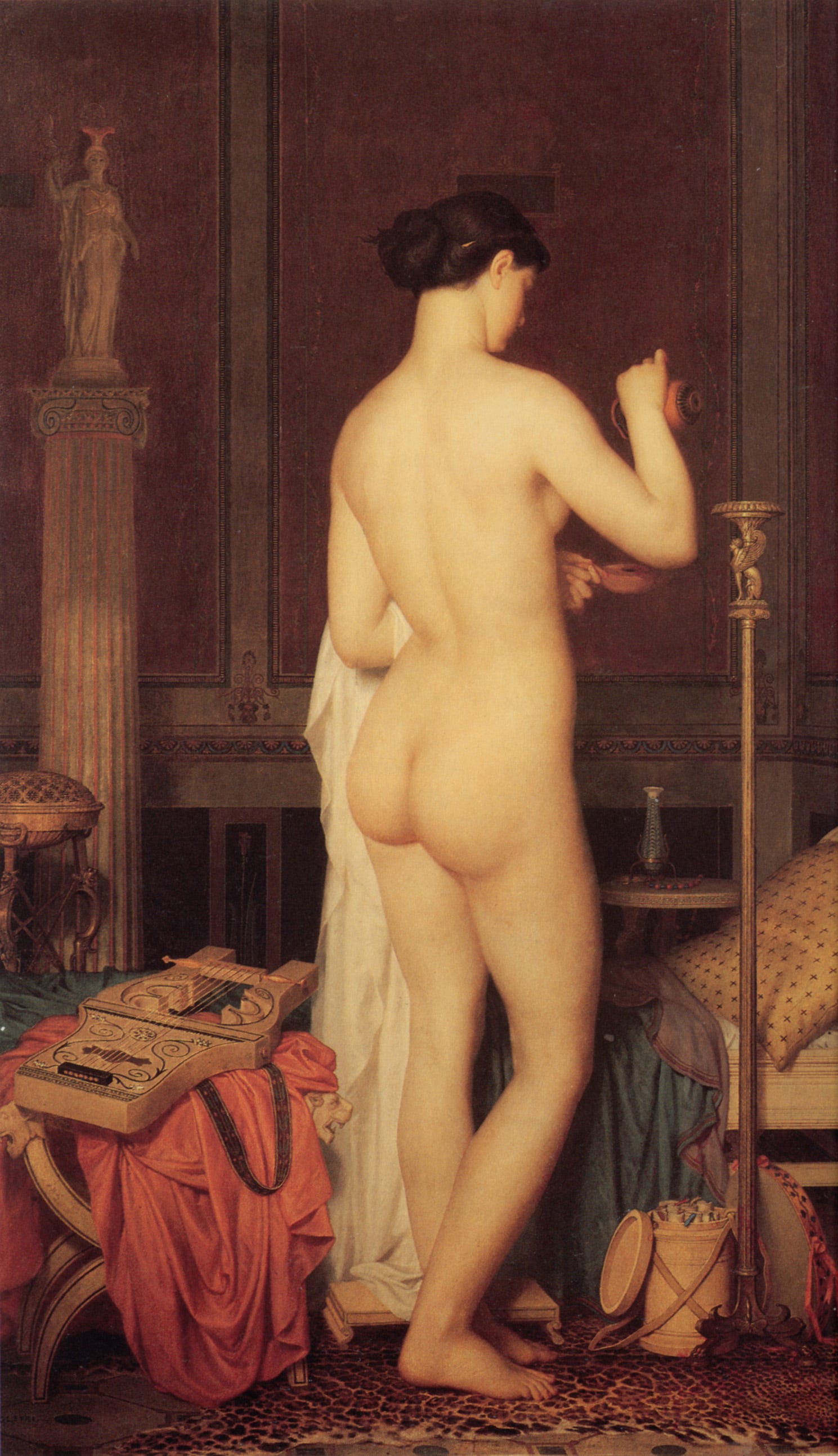
Sappho of Lesbos is the first great female poet still known to us today, and she remains one of the very best poets of all time, regardless of gender. She is so revered for her erotic love poetry that we get our terms "sapphic" and "lesbian" from her name and island of residence. Furthermore, as you can see from the two stellar epigrams below, she remains a timeless treasure:
My religion consists of your body's curves and crevasses.
—attributed to Sappho, translation by Michael R. Burch
Eros harrows my heart:
wild winds whipping desolate mountains
uprooting oaks.
—Sappho, translation by Michael R. Burch
A short revealing frock?
It's just my luck
your lips were made to mock!
—Sappho, translation by Michael R. Burch
Felicia Hemans was a child prodigy who had her first book of poems published at age fourteen. She corresponded with Percy Bysshe Shelley and was praised in poetic tributes by William Wordsworth and Walter Savage Landor.
There is in all this cold and hollow world,
no fount of deep, strong, deathless love:
save that within a mother's heart.
―Felicia Dorothea Hemans Browne
Percy Bysshe Shelley (below) and Felicia Hemans (above) were born a year apart―he in August 1792, she in September 1793. They look enough alike to be brother and sister. They were both poets, both child prodigies, and they corresponded after Hemans had her first book of poems published.
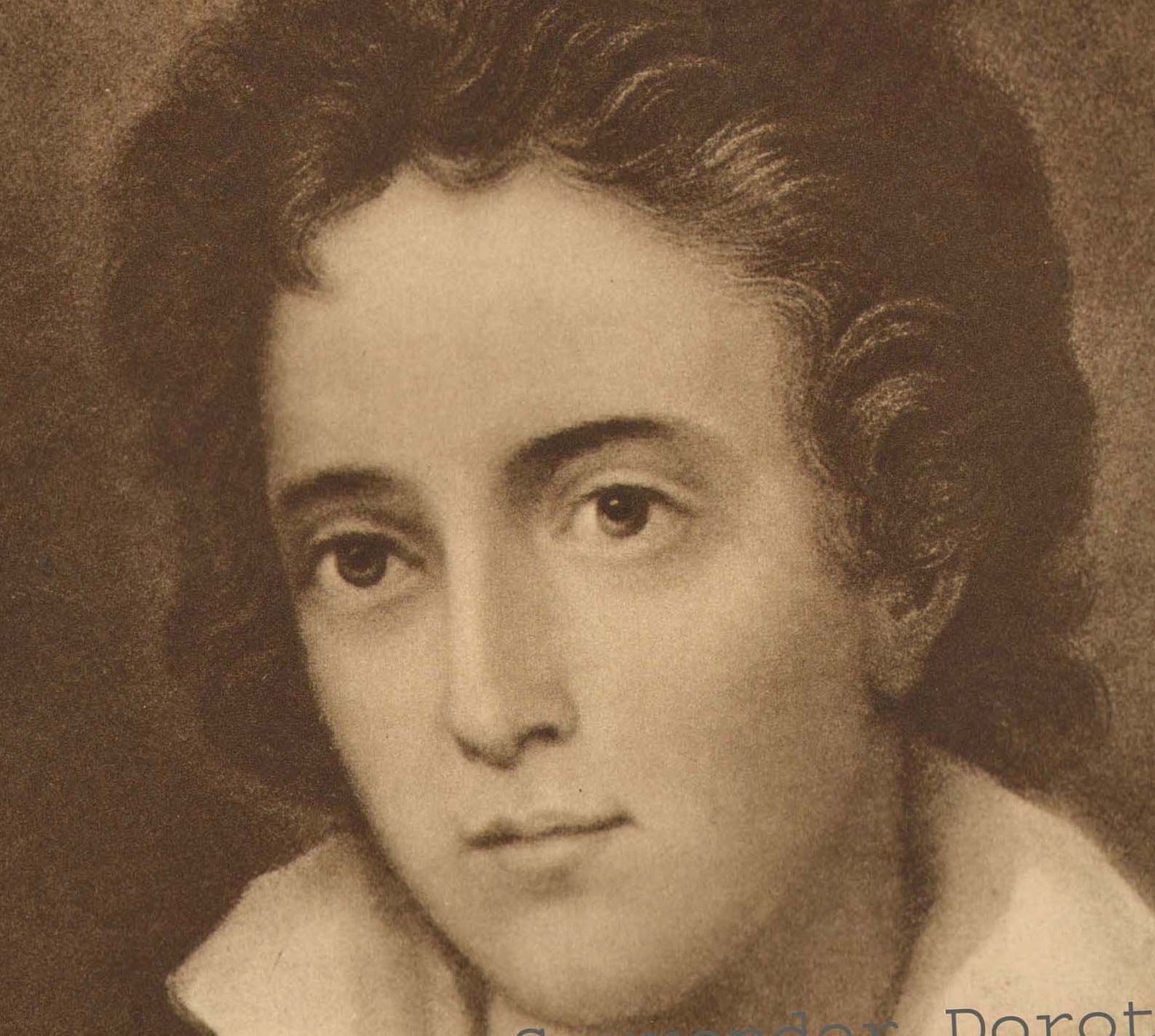
This is an especially lovely example of Shelley's wonderful touch with rhythm and rhyme:
Music When Soft Voices Die (To —)
by Percy Bysshe Shelley
Music, when soft voices die,
Vibrates in the memory—
Odours, when sweet violets sicken,
Live within the sense they quicken.
Rose leaves, when the rose is dead,
Are heaped for the belovèd's bed;
And so thy thoughts, when thou art gone,
Love itself shall slumber on.
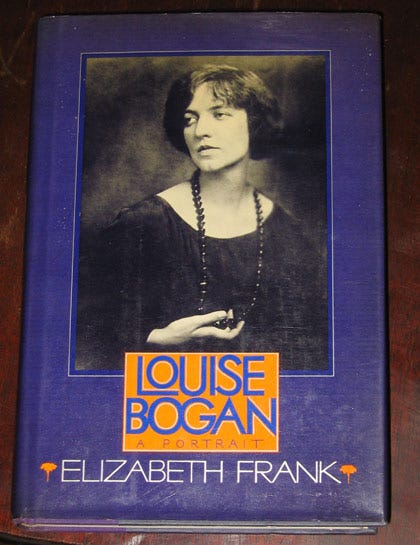
Song for the Last Act
by Louise Bogan
Now that I have your face by heart, I look
Less at its features than its darkening frame
Where quince and melon, yellow as young flame,
Lie with quilled dahlias and the shepherd's crook.
Beyond, a garden. There, in insolent ease
The lead and marble figures watch the show
Of yet another summer loath to go
Although the scythes hang in the apple trees.
Now that I have your face by heart, I look.
Now that I have your voice by heart, I read
In the black chords upon a dulling page
Music that is not meant for music's cage,
Whose emblems mix with words that shake and bleed.
The staves are shuttled over with a stark
Unprinted silence. In a double dream
I must spell out the storm, the running stream.
The beat's too swift. The notes shift in the dark.
Now that I have your voice by heart, I read.
Now that I have your heart by heart, I see
The wharves with their great ships and architraves;
The rigging and the cargo and the slaves
On a strange beach under a broken sky.
O not departure, but a voyage done!
The bales stand on the stone; the anchor weeps
Its red rust downward, and the long vine creeps
Beside the salt herb, in the lengthening sun.
Now that I have your heart by heart, I see.
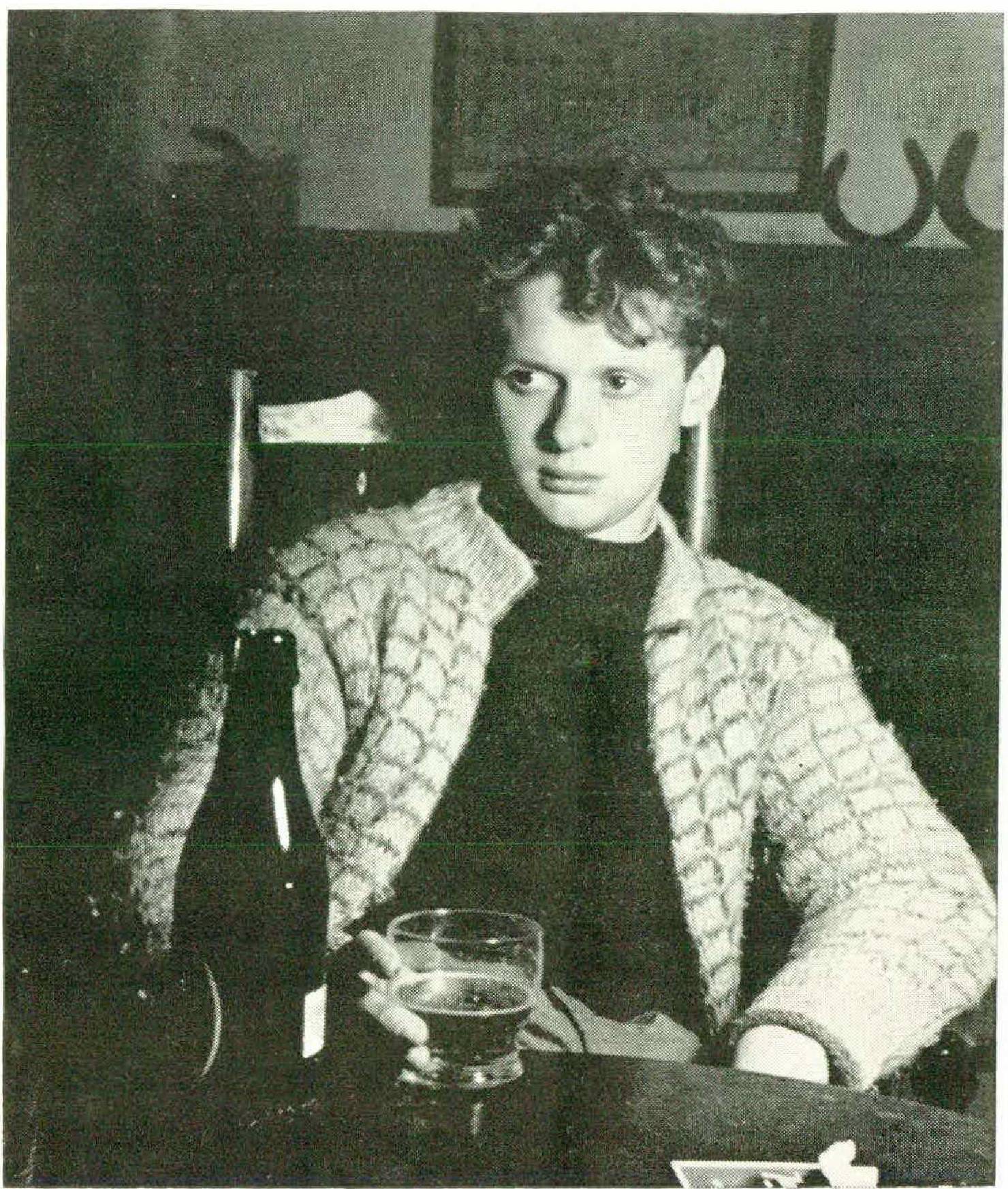
The great Welsh poet Dylan Thomas was one of the first superstars to be recorded on vinyl.
In My Craft Or Sullen Art
by Dylan Thomas
In my craft or sullen art
Exercised in the still night
When only the moon rages
And the lovers lie abed
With all their griefs in their arms,
I labour by singing light
Not for ambition or bread
Or the strut and trade of charms
On the ivory stages
But for the common wages
Of their most secret heart.
Not for the proud man apart
From the raging moon I write
On these spindrift pages
Nor for the towering dead
With their nightingales and psalms
But for the lovers, their arms
Round the griefs of the ages,
Who pay no praise or wages
Nor heed my craft or art.
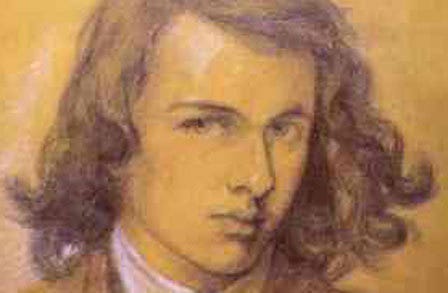
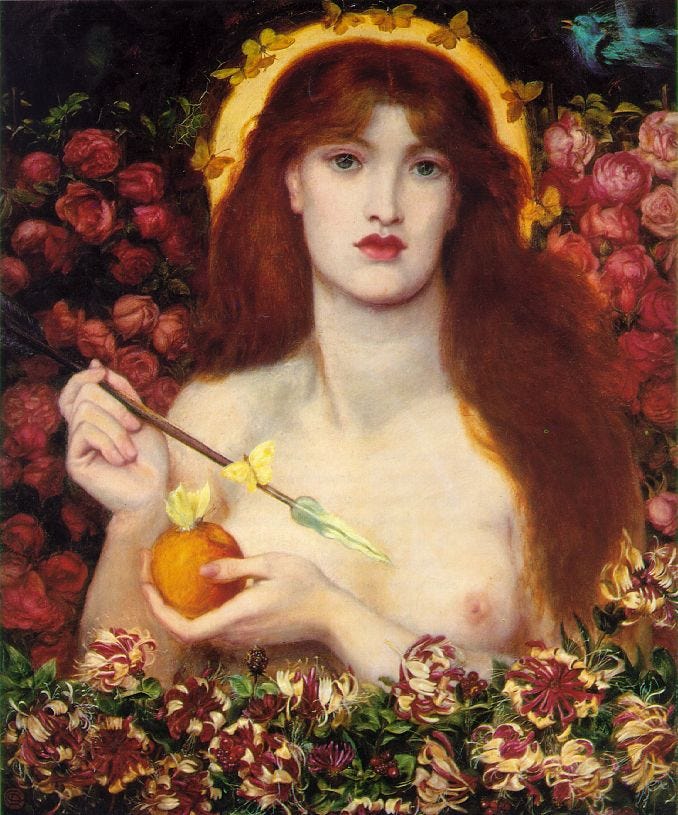
Dante Gabriel Rossetti was an English romantic poet, painter, illustrator and translator. He was also one of the founders of the Pre-Raphaelite Brotherhood. His art was characterized by sensuality and medieval revivalism. In 1850 he met Elizabeth Siddal, who became his model, his passion, and eventually in 1860, his wife. She also wrote poetry.
Sudden Light
by Dante Gabriel Rossetti
I have been here before,
But when or how I cannot tell:
I know the grass beyond the door,
The sweet keen smell,
The sighing sound, the lights around the shore.
You have been mine before,—
How long ago I may not know:
But just when at that swallow's soar
Your neck turned so,
Some veil did fall,—I knew it all of yore.
Has this been thus before?
And shall not thus time's eddying flight
Still with our lives our love restore
In death's despite,
And day and night yield one delight once more?
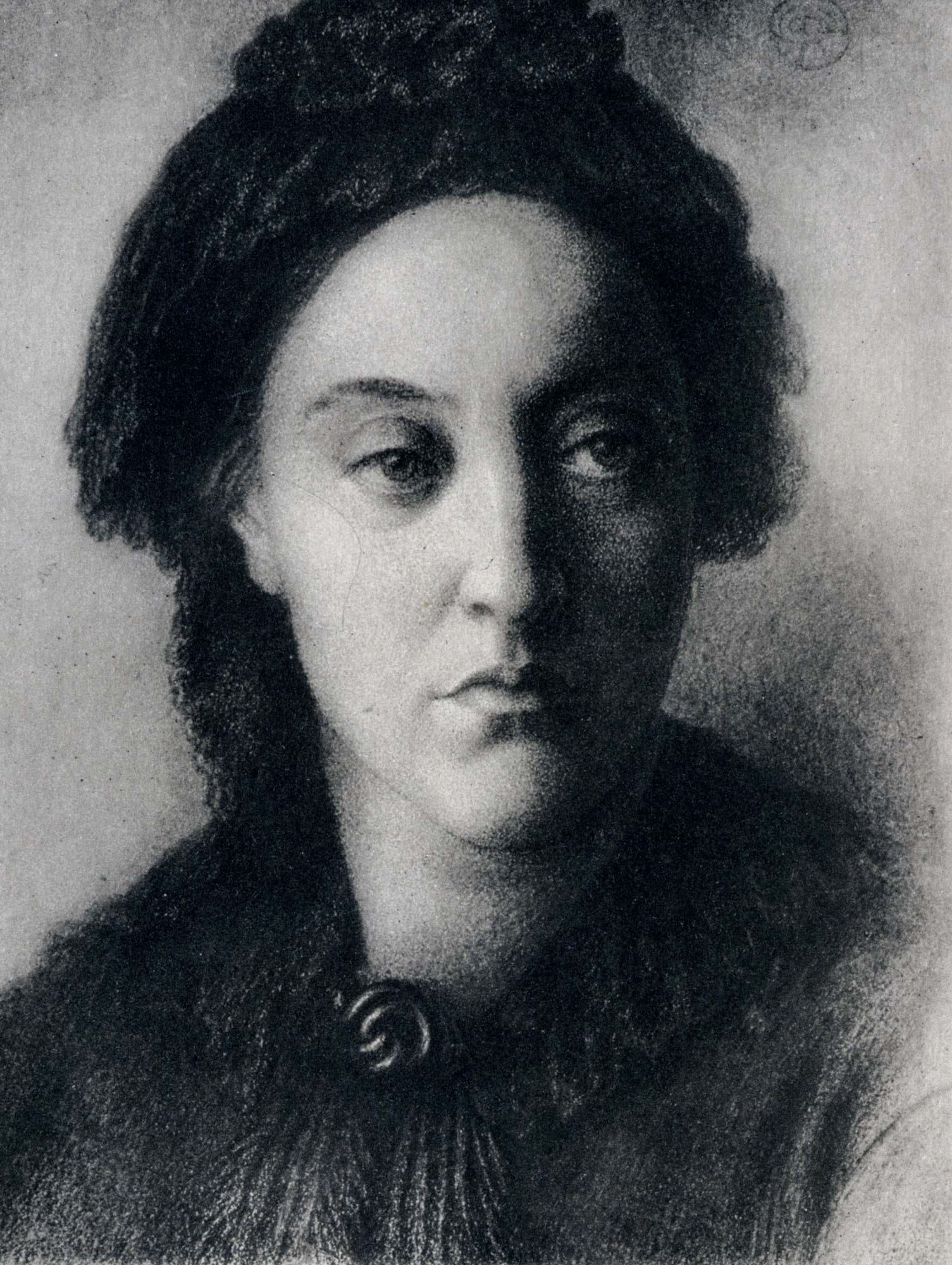
Dante Gabriel Rossetti's sister Christina was also a poet, and perhaps the better of the two.
Song
by Christina Rossetti
When I am dead, my dearest,
Sing no sad songs for me;
Plant thou no roses at my head,
Nor shady cypress tree:
Be the green grass above me
With showers and dewdrops wet;
And if thou wilt, remember,
And if thou wilt, forget.
I shall not see the shadows,
I shall not feel the rain;
I shall not hear the nightingale
Sing on, as if in pain:
And dreaming through the twilight
That doth not rise nor set,
Haply I may remember,
And haply may forget.