
Brother Iran
"Brother Iran" has been translated into Farsi by Dr. Mahnaz Badihian.

Brother Iran
by Michael R. Burch
Brother Iran, I feel your pain.
I feel it as when the Turk fled Spain.
As the Jew fled, too, that constricting span,
I feel your pain, Brother Iran.
Brother Iran, I know you are noble!
I too fear Hiroshima and Chernobyl.
But though my heart shudders, I have a plan,
and I know you are noble, Brother Iran.
Brother Iran, I salute your Poets!
your Mathematicians!, all your great Wits!
O, come join the earth’s great Caravan.
We’ll include your Poets, Brother Iran.
Brother Iran, I love your Verse!
Come take my hand now, let’s rehearse
the Rubaiyat of Omar Khayyam.
For I love your Verse, Brother Iran.
Bother Iran, civilization’s Flower!
How high flew your spires in man’s early hours!
Let us build them yet higher, for that’s my plan,
civilization’s first flower, Brother Iran.
Brother Iran
by Michael R. Burch
translated into Persian (Farsi) by Dr. Mahnaz Badihian
برادر ایران
حس می کنم تو را
چنان حس می کنم چونان زمانی
که ترک از اسپانیا گریخت
و یهودنیز گریخت، لحظه های فشرده
من درد تو را حس می کنم، برادر ایران
و میدانم تو نابی
من نیز از هیروشیما و چرنوبیل وحشت دارم
و هرچند قلبم ترک بر می دارد، در سراما نقشه ای دارم.
می دانم تو نابی برادر ایران
درود من بر شاعرانت
بر ریاضیدانان و همه ی دانایی عظیمت
آه بیا به کاروان بزرگ زمین بپیوند
آنجا که ما شاعران تو را در آن می گنجانیم
برادر ایران ، من عاشق شعرهای توام
حالا بیا دست مرا بگیر تا با هم
بخوانیم رباعیات عمر خیام را.
زیرا من شعرهای تو را دوست دارم
برادر ایران، ای گل تمدن!
چه نهایتی دارد پرواز روح تو
در ساعات اولیه ی انسان
بیا تا اوج بیشتری دهیم پرواز را
ای گل تمدن !، برادر ایران
War is Obsolete
by Michael R. Burch
"If we are to carry out a real war against war, we will have to begin with the children." — Gandhi
War is obsolete;
even the strange machinery of dread
weeps for the child in the street
who cannot lift her head
to reprimand the Man
who failed to countermand
her soft defeat.
But war is obsolete;
even the cold robotic drone
that flies far overhead
has sense enough to moan
and shudder at her plight
(only men bereft of Light
with hearts indurate stone
embrace war’s Siberian night.)
For war is obsolete;
man’s tribal “gods,” long dead,
have fled his awakening sight
while the true Sun, overhead,
has pity on her plight.
O sweet, precipitate Light! —
embrace her, reject the night
that leaves gentle fledglings dead.
For each brute ancestor lies
with his totems and his “gods”
in the slavehold of premature night
that awaited him in his tomb;
while Love, the ancestral womb,
still longs to give birth to the Light.
So which child shall we murder tonight,
or which Ares condemn to the gloom?
While campaigning for president in 2016, Donald Trump insisted that, as commander-in-chief of the American military, he would order American soldiers to track down and murder women and children as "retribution" for acts of terrorism. When disbelieving journalists asked Trump if he could possibly have meant what he said, he verified several times that he did.
Shock and Awe
by Michael R. Burch
With megatons of “wonder,”
we make our godhead clear:
Death. Destruction. Fear.
The world’s heart ripped asunder,
its dying pulse we hear:
Death. Destruction. Fear.
Strange Trinity! We ponder
this God we hold so dear:
Death. Destruction. Fear.
The vulture and the condor
proclaim: The feast is near!—
Death. Destruction. Fear.
Soon He will plow us under;
the Anti-Christ is here:
Death. Destruction. Fear.
We love to hear Him thunder!
With Shock and Awe, appear!—
Death. Destruction. Fear.
For God can never blunder;
we know He holds US dear:
Death. Destruction. Fear.
Death
loomed at the end of the hall
in the long shadows . . .
― Watanabe Hakusen, translation by Michael R. Burch
With their love of weaponry Americans have turned school hallways into war zones. I translated this poem as "Sandy Hook Hallways Haiku" after the massacre.
Stormfront
by Michael R. Burch
Our distance is frightening:
a distance like the abyss between heaven and earth
interrupted by bizarre and terrible lightning.
Childless
by Michael R. Burch
How can she bear her grief?
Mightier than Atlas, she shoulders the weight
of one fallen star.
A theme of my anti-war poems is the terrible price children and their mothers pay for alpha-male warlust.
Piercing the Shell
by Michael R. Burch
If we strip away all the accouterments of war,
perhaps we'll discover what the heart is for.
Autumn Conundrum
by Michael R. Burch
It's not that every leaf must finally fall,
it's just that we can never catch them all.
Styx
by Michael R. Burch
Black waters,
deep and dark and still . . .
all men have passed this way,
or will.
Modern Charon
by Michael R. Burch
I, too, have stood—paralyzed at the helm
watching onrushing, inevitable disaster.
I too have felt sweat (or ecstatic tears) plaster
damp hair to my eyes, as a slug’s dense film
becomes mucous-insulate. Always, thereafter
living in darkness, bright things overwhelm.
I wrote “Modern Charon” after the 9-11 terrorist attacks.
In addition to being an anti-war poet and writer, translator, editor and publisher of Holocaust and Nakba poetry, I am also a longtime peace activist and author of a peace plan for Israel/Palestine, the Burch-Elberry Peace Initiative, which you can read in a few minutes by clicking or tapping the hyperlinked title. Is it worth a few minutes of your time? I will quote John Lennon: “All we are saying is “Give peace a chance.”
Survivors
by Michael R. Burch
In truth, we do not feel the horror
of the survivors,
but what passes for horror:
a shiver of “empathy.”
We too are “survivors,”
if to survive is to snap back
from the sight of death
like a turtle retracting its neck.
Published by Gostinaya (Russia), Ulita (Russia), Promosaik (Germany), The Night Genre Project and Muddy Chevy; also turned into a YouTube video by Lillian Y. Wong.
Polish
by Michael R. Burch
Your fingers end in talons—
the ones you trim to hide
the predator inside.
Ten thousand creatures sacrificed;
but really, what’s the loss?
Apply a splash of gloss.
You picked the perfect color
to mirror nature’s law:
red, like tooth and claw.
The Vision of the Overseer’s Right Hand
by Michael R. Burch
“Dust to dust ...”
I stumbled, aghast,
into a valley of dust and bone
where all men become,
at last, the same color . . .
There a skeletal figure
groped through blonde sand
for a rigid right hand
lost long, long ago . . .
A hand now more white
than he had wielded before.
But he paused there, unsure,
for he could not tell
without the whip’s frenetic hiss
which savage white hand was his.
Slavery, both endorsed and regulated by the Bible, led to the Civil War, as much as many Christians refuse to admit it.
At Wilfred Owen's Grave
by Michael R. Burch
A week before the Armistice, you died.
They did not keep your heart like Livingstone's,
then plant your bones near Shakespeare's. So you lie
between two privates, sacrificed like Christ
to politics, your poetry unknown
except for one brief flurry: thirteen months
with Gaukroger beside you in the trench,
dismembered, as you babbled, as the stench
of gangrene filled your nostrils, till you clenched
your broken heart together and the fist
began to pulse with life, so close to death.
Or was it at Craiglockhart, in the care
of "ergotherapists" that you sensed life
is only in the work, and made despair
a thing that Yeats despised, but also breath,
a mouthful's merest air, inspired less
than wrested from you, and which we confess
we only vaguely breathe: the troubled air
that even Sassoon failed to share, because
a man in pieces is not healed by gauze,
and breath's transparent, unless we believe
the words are true despite their lack of weight
and float to us like chlorine—scalding eyes,
and lungs, and hearts. Your words revealed the fate
of boys who retched up life here, gagged on lies.
Originally published by The Chariton Review
The English are very hospitable,
but tea-less, alas, they grow pitiable ...
or pitiless, rather,
and quite in a lather!
O bother, they're more than formidable.
—"Of Tetley’s and V-2's," or, "Why Not to Bomb the Brits" by Michael R. Burch
Hymn for Ukrainian Soldiers
by Michael R. Burch
Sound the awesome cannons.
Pin medals to each breast.
Attention, honor guard!
Give them a hero’s rest.
Recite their names to the heavens
Till the stars acknowledge their kin.
Then let the land they defended
Gather them in again.
I would love for someone to set this poem to music. I’ve had 61 poems set to music by 32 composers, but this one would be especially meaningful, and for the best of causes.
War, the God
by Michael R. Burch
War lifts His massive head and turns ...
The world upon its axis spins.
... His head held low from weight of horns,
His hackles high. The sun He scorns
and seeks the rose not, but its thorns.
The sun must set, as night begins,
while, unrepentant of our sins,
we play His game, until He wins.
For War, our God, our bellicose Mars
still dominates our heavens, determines our Stars.
“Stars” in the sense of both our fates and our heroes. I usually avoid archaic language but it seemed appropriate here.
Athenian Epitaphs
Passerby,
Tell the Spartans we lie
Lifeless at Thermopylae:
Dead at their word,
Obedient to their command.
Have they heard?
Do they understand?
― Michael R. Burch, after Simonides
Here he lies in state tonight: great is his Monument!
Yet Ares cares not, neither does War relent.
― Michael R. Burch, after Anacreon
They observed our fearful fetters, braved the surrounding darkness.
Now we extol their excellence: bravely, they died for us.
― Michael R. Burch, after Mnasalcas
These men earned a crown of imperishable glory,
nor did the maelstrom of death obscure their story.
― Michael R. Burch, after Simonides
Be ashamed, O mountains and seas,
that these valorous men lack breath.
Assume, like pale chattels,
an ashen silence at death.
—Michael R. Burch, after Parmenio
Blame not the gale, nor the inhospitable sea-gulf, nor friends’ tardiness,
mariner! Just man’s foolhardiness.
—Michael R. Burch, after Leonidas of Tarentum
Everywhere the sea is the sea, the dead are the dead.
What difference to me—where I rest my head?
The sea knows I’m buried.
—Michael R. Burch, after Antipater of Sidon
Mariner, do not ask whose tomb this may be,
But go with good fortune: I wish you a kinder sea.
― Michael R. Burch, after Plato
Does my soul abide in heaven, or hell?
Only the sea gulls in their high, lonely circuits may tell.
― Michael R. Burch, after Glaucus
Stranger, flee!
But may Fortune grant you all the prosperity
she denied me.
—Michael R. Burch, after Leonidas of Tarentum
Stripped of her stripling, if asked, she’d confess:
“I am now less than nothingness.”
—Michael R. Burch, after Diotimus
There are more ancient Greek translations by Michael R. Burch at Athenian Epitaphs.
To Have Loved
by Michael R. Burch
"The face that launched a thousand ships ..."
Helen, bright accompaniment,
accouterment of war as sure as all
the polished swords of princes groomed to lie
in mausoleums all eternity ...
The price of love is not so high
as never to have loved once in the dark
beyond foreseeing. Now, as dawn gleams pale
upon small wind-fanned waves, amid white sails, ...
now all that war entails becomes as small,
as though receding. Paris in your arms
was never yours, nor were you his at all.
And should gods call
in numberless strange voices, should you hear,
still what would be the difference? Men must die
to be remembered. Fame, the shrillest cry,
leaves all the world dismembered.
Hold him, lie,
tell many pleasant tales of lips and thighs;
enthrall him with your sweetness, till the pall
and ash lie cold upon him.
Is this all? You saw fear in his eyes, and now they dim
with fear’s remembrance. Love, the fiercest cry,
becomes gasped sighs in his once-gallant hymn
of dreamed “salvation.” Still, you do not care
because you have this moment, and no man
can touch you as he can ... and when he’s gone
there will be other men to look upon
your beauty, and have done.
Smile—woebegone, pale, haggard. Will the tales
paint this—your final portrait? Can the stars
find any strange alignments, Zodiacs,
to spell, or unspell, what held beauty lacks?
“To Have Loved” is a poem about the roles men and women are often forced to play during times of war. Paris is no longer fully Helen's because he is being called away to battle. The calls of "fame" and "honor" can be stronger than the bonds of love. Helen feels obligated to offer Paris her body and her embraces until he lies dead (the "pall and ashes"). But she also feels that she has become an object, like the polished sword he carries, if he can choose it over her. In the final line "held beauty" has multiple meanings. Helen is being held physically by a man she may not see again. She is being held back from going with him because she is "only a woman." She is being held in a tower where everything will change if her husband dies. Will she have to find another man? The face that famously "launched ten thousand ships" may prove to be her downfall and undoing. This poem could, in some circumstances, perhaps help a soldier better understand his wife or lover's complex position.
Wulf and Eadwacer
(Anonymous, circa 960-990 AD)
loose translation/interpretation by Michael R. Burch
My clan's curs pursue him like crippled game.
They'll rip him apart if he approaches their pack.
We are so different.
Wulf's on one island; I'm on another.
His island's a fortress, fastened by fens.
Here bloodthirsty men howl for carnage.
They'll rip him apart if he approaches their pack.
We are so different.
My thoughts pursued Wulf like panting hounds.
Whenever it rained and I wept,
big, battle-strong arms embraced me.
It felt good, to a point, but the end was loathsome.
Wulf, oh, my Wulf! My desire for you
has made me sick; your seldom-comings
have left me famished, deprived of real meat.
Do you hear, Heaven-Watcher? A wolf has borne
our wretched whelp to the woods.
One can easily sever what never was one:
our song together.
"Wulf and Eadwacer" is one of the truly great poems in the English language: a harrowing account of the terrible price women have always paid for men’s lust for violence and war.
Child of 9-11
by Michael R. Burch
a poem for Christina-Taylor Green, who was born
on September 11, 2001 and died at the age of nine,
shot to death ...
Child of 9-11, beloved,
I bring this lily, lay it down
here at your feet, and eiderdown,
and all soft things, for your gentle spirit.
I bring this psalm — I hope you hear it.
Much love I bring — I lay it down
here by your form, which is not you,
but what you left this shell-shocked world
to help us learn what we must do
to save another child like you.
Child of 9-11, I know
you are not here, but watch, afar
from distant stars, where angels rue
the vicious things some mortals do.
I also watch; I also rue.
And so I make this pledge and vow:
though I may weep, I will not rest
nor will my pen fail heaven's test
till guns and wars and hate are banned
from every shore, from every land.
Child of 9-11, I grieve
your tender life, cut short ... bereaved,
what can I do, but pledge my life
to saving lives like yours? Belief
in your sweet worth has led me here ...
I give my all: my pen, this tear,
this lily and this eiderdown,
and all soft things my heart can bear;
I bear them to your final bier,
and leave them with my promise, here.
Veiled
by Michael R. Burch
She has belief
without comprehension
and in her crutchwork shack
she is
much like us . . .
tamping the bread
into edible forms,
regarding her children
at play
with something akin to relief . . .
ignoring the towers ablaze
in the distance
because they are not revelations
but things of glass,
easily shattered . . .
and if you were to ask her,
she might say—
sometimes God visits his wrath
upon an impious nation
for its leaders’ sins,
and we might agree:
seeing her mutilations.
American Eagle, Grounded
by Michael R. Burch
Her predatory eye,
the single feral iris,
scans.
Her raptor beak,
all jagged sharp-edged thrust,
juts.
Her hard talon,
clenched in pinched expectation,
waits.
Her clipped wings,
preened against reality,
tremble.
US Verse, after Auden
by Michael R. Burch
“Let the living creature lie,
Mortal, guilty, but to me
The entirely beautiful.”
Verse has small value in our Unisphere,
nor is it fit for windy revelation.
It cannot legislate less taxing fears;
it cannot make us, several, a nation.
Enumerator of our sins and dreams,
it pens its cryptic numbers, and it sings,
a little quaintly, of the ways of love.
(It seems of little use for lesser things.)
The Unisphere mentioned is a large stainless steel representation of the earth; it was commissioned to celebrate the beginning of the space age for the 1964 New York World's Fair.
Privilege
by Michael R. Burch
This poem is dedicated to Harvey Stanbrough, an ex-marine who was nominated for the 1999 Pulitzer Prize and has written passionately and eloquently about the horror and absurdity of war in “Lessons for a Barren Population.”
No, I will never know
what you saw or what you felt,
thrust into the maw of Eternity,
watching the mortars nightly
greedily making their rounds,
hearing the soft damp hiss
of men’s souls like helium escaping
their collapsing torn bodies,
or lying alone, feeling the great roar
of your own heart.
But I know:
there is a bitter knowledge
of death I have not achieved.
Thus in thankful ignorance,
and especially for my son
and for all who benefit so easily
at so unthinkable a price,
I thank you.
Mirror
by Kajal Ahmad, a Kurdish poet
loose translation/interpretation by Michael R. Burch
The obscuring mirror of my era
broke
because it magnified the small
and made the great seem insignificant.
Dictators and monsters monopolized its maze.
Now when I breathe
its jagged shards pierce my heart
and instead of sweat
I exude glass.
No One
by Michael R. Burch
No One hears the bells tonight;
they tell him something isn’t right.
But No One is not one to rush;
he smiles from beds soft, green and lush
as far away a startled thrush
escapes horned owls in sinking flight.
No One hears the cannon’s roar
and muses that its voice means war
comes knocking on men’s doors tonight.
He sleeps outside in awed delight
beneath the enigmatic stars
and shivers in their cooling light.
No One knows the world will end,
that he’ll be lonely, without friend
or foe to conquer. All will be
once more, celestial harmony.
He’ll miss men’s voices, now and then,
but worlds can be remade again.
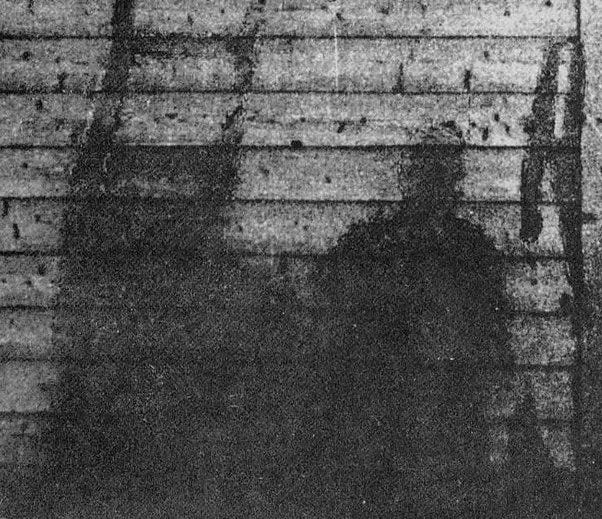
Hiroshima Shadows
by Michael R. Burch
Hiroshima shadows ... mother and child ...
Oh, when will our hearts ever be beguiled
to end mindless war ... to seek peace,
reconciled
to our common mortality?
The Hiroshima and Nagasaki atomic bombs burned permanent shadows of the human beings they annihilated into concrete walls.
Let Us Be Midwives!
by Hiroshima survivor Sadako Kurihara
loose translation/interpretation by Michael R. Burch
Midnight . . .
the basement of a shattered building . . .
atomic bomb survivors sniveling in the darkness . . .
not a single candle between them . . .
the odor of blood . . .
the stench of death . . .
the sickly-sweet smell of decaying humanity . . .
the groans . . .
the moans . . .
Out of all that, suddenly, miraculously, a voice:
"The baby's coming!"
In the hellish basement, unexpectedly,
a young mother has gone into labor.
In the dark, lacking a single match, what to do?
Scrambling to her side,
forgetting their own . . .
Hiroshima Child
by Nazim Hikmet
loose translation/interpretation by Michael R. Burch
I come to beg at every door,
but who can hear my phantom tread?
I knock and yet remain unseen,
for I am dead,
for I am dead.
I’m only seven, though I died
in Hiroshima so long ago.
I’m seven now, as I was then,
for how can phantom children grow?
White incandescence charred my hair;
my eyes grew dim, then I was blind;
my fragile bones became fine ash;
my ash was scattered by the wind.
Today I need no fruit, no rice;
I crave no sweets, nor even bread.
I beg for nothing for myself,
for I am dead,
for I am dead.
All that I beg of you is peace:
You fight today! You fight today!
Peace, so earth’s living children may
live and grow and laugh and play.
Oh, fallen camellias,
if I were you,
I'd leap into the torrent!
— Takaha Shugyo, loose translation/interpretation by Michael R. Burch
Lucifer, to the Enola Gay
by Michael R. Burch
Go then, and give them my meaning
so that their teeming
streets
become my city.
Bring back a pretty
flower,
a chrysanthemum,
perhaps, to bloom
if but an hour,
within a certain room
of mine
where
the sun does not rise or fall,
and the moon,
although it is content to shine,
helps nothing at all.
There,
if I hear the wistful call
of their voices
regretting choices
made
or perhaps not made
in time,
I can look back upon it and recall,
in all its pale forms sublime,
still
Death will never be holy again.
Bikini
by Michael R. Burch
Undersea, by the shale and the coral forming,
by the shell’s pale rose and the pearl’s bright eye,
through the sea’s green bed of lank seaweed worming
like tangled hair where cold currents rise ...
something lurks where the riptides sigh,
something old, and odd, and wise.
Something old when the world was forming
now lifts its beak, its snail-blind eye,
and, with tentacles like Medusa's squirming,
it feels the CLOUD blot out the skies' ...
then shudders, settles with a sigh,
understanding man’s demise.
Radiance
by Michael R. Burch
for and after Dylan Thomas
The poet delves earth’s detritus—hard toil—
for raw-edged nouns, barbed verbs, vowels’ lush bouquet;
each syllable his pen excretes—dense soil,
dark images impacted, rooted clay.
The poet sees the sea but feels its meaning—
the teeming brine, the mirrored oval flame
that leashes and excites its turgid surface ...
then squanders years imagining love’s the same.
Belatedly he turns to what lies broken—
the scarred and furrowed plot he fiercely sifts,
among death’s sicksweet dungs and composts seeking
one element whose scorching flame uplifts.
in-flight convergence
by Michael R. Burch
serene, almost angelic,
the lights of the city extend
over lumbering behemoths
shrilly screeching displeasure;
they say
that nothing is certain,
that nothing man dreams or ordains
long endures his command
here the streetlights that flicker
and those blazing steadfast
seem one: from a distance;
descend,
they abruptly
part ways,
so that nothing is one
which at times does not suddenly blend
into garish insignificance
in the familiar alleyways,
in the white neon flash
and the billboards of Convenience
and man seems the afterthought of his own Brilliance
as we thunder down the enlightened runways.
Ali’s Song
by Michael R. Burch
They say that gold don’t tarnish. It ain’t so.
They say it has a wild, unearthly glow.
A man can be more beautiful, more wild.
I flung their medal to the river, child.
I flung their medal to the river, child.
They hung their coin around my neck; they made
my name a bridle, “called a spade a spade.”
They say their gold is pure. I say defiled.
I flung their slave’s name to the river, child.
I flung their slave’s name to the river, child.
Ain’t got no quarrel with no Viet Cong
that never called me nigger, did me wrong.
A man can’t be lukewarm, ’cause God hates mild.
I flung their notice to the river, child.
I flung their notice to the river, child.
They said, “Now here’s your bullet and your gun,
and there’s your cell: we’re waiting, you choose one.”
At first I groaned aloud, but then I smiled.
I gave their “future” to the river, child.
I gave their “future” to the river, child.
My face reflected up, dark bronze like gold,
a coin God stamped in His own image—Bold.
My blood boiled like that river—strange and wild.
I died to hate in that dark river, child,
Come, be reborn in this bright river, child.
Cassius Clay, who converted to Islam and changed his “slave name” to Muhammad Ali, said that he threw his Olympic boxing gold medal into the Ohio River. Confirming his account, the medal was recovered by Robert Bradbury and his wife Pattie in 2014 during the Annual Ohio River Sweep, and the Ali family paid them $200,000 to regain possession of the medal. When drafted during the Vietnamese War, Ali refused to serve, reputedly saying: “I ain't got no quarrel with those Viet Cong; no Vietnamese ever called me a nigger.” My poem’s notice is Ali's draft notice, which metaphorically gets tossed into the river along with his slave name. “Ali’s Song” was originally published by the literary journal Black Medina.
Completing the Pattern
by Michael R. Burch
Walk with me now, among the transfixed dead
who kept life’s compact
and who thus endure
harsh sentence here—among pink-petaled beds
and manicured green lawns.
The sky’s azure,
pale blue once like their eyes, will gleam blood-red
at last when sunset staggers to the door
of each white mausoleum, to inquire—
What use, O things of erstwhile loveliness?
Momentum! Momentum!
by Michael R. Burch
for the neo-Cons
Crossing the Rubicon, we come!
Momentum! Momentum! Furious hooves!
The Gauls we have slaughtered, no man disapproves.
War’s hawks shrieking-strident, white doves stricken dumb.
Coo us no cooings of pale-breasted peace!
Momentum! Momentum! Imperious hooves!
The blood of barbarians brightens our greaves.
Pompey’s head in a basket? We slumber at ease.
Seduce us again, great Bellona, dark queen!
Momentum! Momentum! Curious hooves
Now pound out strange questions, but what can they mean
As the great stallions rear and their riders careen?
Bellona was the Roman goddess of war. The name "Bellona" derives from the Latin word for "war" (bellum), and is linguistically related to the English word "belligerent" (literally, "war-waging"). In earlier times she was called Duellona, that name being derived from a more ancient word for "battle."
Besieged
by Michael R. Burch
Life—the disintegration of the flesh
before the fitful elevation of the soul
upon improbable wings?
Life—it is all we know,
the travail one bright season brings...
Now the fruit hangs,
impendent, pregnant with death,
as the hurricane builds and flings
its white columns and banners of snow
and the rout begins.
Earthbound
by Michael R. Burch
Tashunka Witko, better known as Crazy Horse, had a vision of a red-tailed hawk at Sylvan Lake, South Dakota. In his vision he saw himself riding a floating and crazily-dancing spirit horse through a storm as the hawk flew above him, shrieking. When he awoke, a red-tailed hawk was perched near his horse.
Earthbound,
and yet I now fly
through the clouds that are aimlessly drifting ...
so high
that no sound
echoing by
below where the mountains are lifting
the sky
can be heard.
Like a bird,
but not meek,
like a hawk from a distance regarding its prey,
I will shriek,
not a word,
but a screech,
and my terrible clamor will turn them to clay—
the sheep,
the earthbound.
I believe I wrote this poem as a college sophomore, circa age 19 or perhaps a bit earlier. I did not know about the vision and naming of Crazy Horse at the time. But when I learned about the vision that gave Crazy Horse his name, it seemed to explain my poem and I changed the second line from "and yet I would fly" to "and yet I now fly." I believe that is the only revision I ever made to “Earthbound.”
The Leveler
by Michael R. Burch
The nature of Nature
is bitter survival
from Winter’s bleak fury
till Spring’s brief revival.
The weak implore Fate;
bold men ravish, dishevel her ...
till both are cut down
by mere ticks of the Leveler.
I believe I wrote “The Leveler” in my late teens. It has since been published by The Lyric, Tucumcari Literary Review, Romantics Quarterly and The Aurorean.
The King of Beasts in the Museum of the Extinct
by Michael R. Burch
The king of beasts, my child,
was terrible, and wild.
His roaring shook the earth
till the feeble cursed his birth.
For all things feared his might:
even the rhinos fled, in fright.
Now here these bones attest
to what the brute did best
and the pain he caused his prey
when he hunted in his day.
For he slew them just for sport
till his own pride was cut short
with a mushrooming cloud and wild thunder;
Exhibit "B" will reveal his blunder.
Poppy
by Michael R. Burch
“It is lonely to be born.” – Dannie Abse, “The Second Coming”
It is lonely to be born
between the intimate ears of corn . . .
the sunlit, flooded, shellshocked rows.
The scarecrow flutters, listens, knows . . .
Pale butterflies in staggering flight
ascend the gauntlet winds and light
before the scything harvester.
The winsome buds of cornflowers
prepare themselves to be airborne,
and it is lonely to be shorn,
decapitate, of eager life
so early in love’s blinding maze
of silks and tassels, goldened days
when life’s renewed, gone underground.
Sad confidante of worm and mound,
how little stands to be regained
of what is left.
A tiny cleft
now marks your birth, your reddening
among the amber waves. O, sing!
Another waits to be reborn
among bent thistle, down and thorn.
A hoofprint’s cleft, a ram’s curved horn
curled inward, turned against the heart,
a spoor like infamy. Depart.
You came too late, the signs are clear:
whose world this is, now watches, near.
There is no opiate for the heart.
Originally published by Borderless Journal (Singapore)
Recursion
by Michael R. Burch
In a dream I saw boys lying
under banners gaily flying
and I heard their mothers sighing
from some dark distant shore.
For I saw their sons essaying
into fields―gleeful, braying―
their bright armaments displaying;
such manly oaths they swore!
From their playfields, boys returning
full of honor’s white-hot burning
and desire’s restless yearning
sired new kids for the corps.
In a dream I saw boys dying
under banners gaily lying
and I heard their mothers crying
from some dark distant shore.
War
by Michael R. Burch
lysander lies in lauded greece
and sleeps and dreams, a stone for a pillow,
unseeing as sunset devours limp willows,
but War glares on.
and joab's sightless gaze is turned
beyond the jordan's ravaged shore;
his war-ax lies to be taxed no more,
but War hacks on.
and roland sleeps in poppied fields
with flowers flowing at his feet;
their fragrance lulls his soul to sleep,
but War raves on.
and patton sighs an unheard sigh
for sorties past and those to come;
he does not heed the battle drum,
but War rolls on.
for now new heroes grab up guns
and rush to fight their fathers' wars,
as warriors' children must, of course,
while War laughs on.
I believe I wrote the first version of this poem around age 17. I was never fully happy with the poem, although I liked some of the lines and revised it 46 years later.
An Ecstasy of Fumbling
by Michael R. Burch
The poets believe
everything resolves to metaphor—
a distillation,
a vapor
beyond filtration,
though perhaps not quite as volatile as before.
The poets conceive
of death in the trenches
as the price of art,
not war,
fumbling with their masque-like
dissertations
to describe the Hollywood-like gore
as something beyond belief,
abstracting concrete bunkers to Achaemenid bas-relief.
What the Poet Sees
by Michael R. Burch
What the poet sees,
he sees as a swimmer underwater,
watching the shoreline blur,
sees through his breath's weightless bubbles:
both worlds grow obscure.
Auschwitz Rose
by Michael R. Burch
There is a Rose at Auschwitz, in the briar,
a rose like Sharon's, lovely as her name.
The world forgot her, and is not the same.
I still love her and enlist this sacred fire
to keep her memory's exalted flame
unmolested by the thistles and the nettles.
On Auschwitz now the reddening sunset settles;
they sleep alike—diminutive and tall,
the innocent, the "surgeons."
Sleeping, all.
Red oxides of her blood, bright crimson petals,
if accidents of coloration, gall
my heart no less.
Amid thick weeds and muck
there lies a rose man's crackling lightning struck:
the only Rose I ever longed to pluck.
Soon I'll bed there and bid the world "Good Luck."
Cleansings
by Michael R. Burch
Walk here among the walking specters. Learn
inhuman patience. Flesh can only cleave
to bone this tightly if their hearts believe
that God is good, and never mind the Urn.
A lentil and a bean might plump their skin
with mothers’ bounteous, soft-dimpled fat
(and call it “health”), might quickly build again
the muscles of dead menfolk. Dream, like that,
and call it courage. Cry, and be deceived,
and so endure. Or burn, made wholly pure.
If one prayer is answered,
“G-d” must be believed.
No holy pyre this—death’s hissing chamber.
Two thousand years ago—a starlit manger,
weird Herod’s cries for vengeance on the meek,
the children slaughtered. Fear, when angels speak,
the prophesies of man.
Do what you "can,"
not what you must, or should.
They call you “good,”
dead eyes devoid of tears; how shall they speak
except in blankness? Fear, then, how they weep.
Escape the gentle clutching stickfolk. Creep
away in shame to retch and flush away
your vomit from their ashes. Learn to pray.
Published by Other Voices International, Promosaik (Germany), Inspirational Stories, Ulita (Russia), The Neovictorian/Cochlea and Trinacria
Cheyenne Proverb
loose translation/interpretation by Michael R. Burch
Before you judge
a man for his sins
be sure to trudge
many moons in his moccasins.
Why did Crazy Horse violently oppose white supremacists who preached sermons about “Manifest Destiny”? Why did the Jewish Resistance violently oppose the Nazis? Why do some Palestinians violently oppose the theft of their remaining land by Israel? As Yogi Berra noted, “You could look it up.” For instance, by reading what great Jewish intellectuals like Albert Einstein, Sigmund Freud, Noam Chomsky and Hannah Arendt wrote on the subject.
Starting from Scratch with Ol’ Scratch
by Michael R. Burch
for the Religious Right
Love, with a small, fatalistic sigh
went to the ovens. Please don’t bother to cry.
You could have saved her, but you were all tied up
complaining about the Jews to Reichmeister Grupp.
Scratch that. You were born after World War II.
You had something more important to do:
while the children of the Nakba were perishing in Gaza
with the complicity of your government, you had a noble cause (a
religious tract against homosexual marriage
and various things gods and evangelists disparage.)
Jesus will grok you? Ah, yes, I’m quite sure!
After all, your intentions were ineluctably pure.
And what the hell does THE LORD care about palestinians?
Certainly, Christians were correct about negroes and indians.
Scratch that. You’re one of the Devil’s minions.
The original closing stanza:
Jesus will grok you? Ah, yes, I’m quite sure
that your intentions were good and ineluctably pure.
After all, what the hell does he care about Palestinians?
Certainly, Christians were right about serfs, slaves and Indians.
Scratch that. You’re one of the Devil’s minions.
Excerpts from “Travels with Einstein”
by Michael R. Burch
for Trump
I went to Berlin to learn wisdom
from Adolph. The wild spittle flew
as he screamed at me, with great conviction:
“Please despise me! I look like a Jew!”
So I flew off to ’Nam to learn wisdom
from tall Yankees who cursed “yellow” foes.
“If we lose this small square,” they informed me,
earth’s nations will fall, dominoes!”
I then sat at Christ’s feet to learn wisdom,
but his Book, from its genesis to close,
said: “Men can enslave their own brothers!”
(I soon noticed he lacked any clothes.)
So I traveled to bright Tel Aviv
where great scholars with lofty IQs
informed me that (since I’m an Arab)
I’m unfit to lick dirt from their shoes.
At last, done with learning, I stumbled
to a well where the waters seemed sweet:
the mirage of American “justice.”
There I wept a real sea, in defeat.
Epitaph for a Palestinian Child
by Michael R. Burch
I lived as best I could, and then I died.
Be careful where you step: the grave is wide.
who, US?
by Michael R. Burch
jesus was born
a palestinian child
where there’s no Room
for the meek and the mild
... and in bethlehem still
to this day, lambs are born
to cries of “no Room!”
and Puritanical scorn ...
under Herod, Trump, Bibi
their fates are the same —
the slouching Beast mauls them
and WE have no shame:
“who’s to blame?”
Frail Envelope of Flesh
by Michael R. Burch
for the mothers and children of the Holocaust and Gaza
Frail envelope of flesh,
lying cold on the surgeon’s table
with anguished eyes
like your mother’s eyes
and a heartbeat weak, unstable ...
Frail crucible of dust,
brief flower come to this—
your tiny hand
in your mother’s hand
for a last bewildered kiss ...
Brief mayfly of a child,
to live two artless years!
Now your mother’s lips
seal up your lips
from the Deluge of her tears ...
I read the phrase "Frail envelope of flesh!" in a comic book as a boy and never forgot it. Eventually, it occurred to me to write a poem with that title and theme. I wrote the poem circa 1978 around age 20. When I published the poem online, probably around 2002 after it had been published by The Lyric, I scoured the Internet for the phrase "frail envelope of flesh" trying the find the comic where I had read it as a boy, but the phrase was unknown to Google. But today other writers are using it, so I suspect that I gave it a second life. At the height of its popularity, "Frail Envelope of Flesh" had 1.4K Google results. It has been set to music by the composer Eduard de Boer and performed in Europe by the Palestinian soprano Dima Bawab. It has also been translated into Arabic by Nizar Sartawi, into Italian by Mario Rigli, and into Vietnamese by Ngu Yen. It is being taught in online courseware by Course Hero. "Frail Envelope of Flesh" has been published by The Lyric, Promosaik (Germany), Setu (India), Sindhu News (India), Tho Tru Tinh (in a Vietnamese translation by Ngu Yen), Sejak Sajak Di (Indonesia), Orphans of Gaza, Irish Blog, Alarshef, ArtVilla, Borderless Journal (Singapore), Daily Motion, Poetry Life & Times, Generations Shall Call Them Blessed (a Holocaust book by Dan Paulos) and Academia.edu.
First They Came for the Muslims
by Michael R. Burch
after Martin Niemöller
First they came for the Muslims
and I did not speak out
because I was not a Muslim.
Then they came for the homosexuals
and I did not speak out
because I was not a homosexual.
Then they came for the feminists
and I did not speak out
because I was not a feminist.
Now when will they come for me
because I was too busy and too apathetic
to defend my sisters and brothers?
"First They Came for the Muslims" has been adopted by Amnesty International for its Words That Burn anthology, a free online resource for students and educators. According to Google the poem once appeared on a staggering 823K web pages. That's a lot of cutting and pasting! It is indeed an honor to have one of my poems published by such an outstanding organization as Amnesty International, one of the world's finest. Not only is the cause good―a stated goal is to teach students about human rights through poetry―but so far the poetry published seems quite good to me. My poem appears beneath the famous Holocaust poem that inspired it, "First They Came" by Martin Niemöller. Here's a bit of background information: Words That Burn is an online poetry anthology and human rights educational resource for students and teachers created by Amnesty International in partnership with The Poetry Hour. Amnesty International is the world’s largest human rights organization, with seven million supporters. Its new webpage has been designed to "enable young people to explore human rights through poetry whilst developing their voice and skills as poets." This exemplary resource was inspired by the poetry anthology Words that Burn, curated by Josephine Hart of The Poetry Hour, which in turn was inspired by Thomas Gray's observation that "Poetry is thoughts that breathe and words that burn."
Fascination with Light
by Michael R. Burch
Death glides in on calico wings,
a breath of a moth
seeking a companionable light,
where it hovers, unsure,
sullen, shy or demure,
in the margins of night,
a soft blur.
With a frantic dry rattle
of alien wings,
it rises and thrums one long breathless staccato
then flutters and drifts on in dark aimless flight.
And yet it returns
to the flame, its delight,
as long as it burns.
My nightmare ...
by Michael R. Burch writing as The Child Poets of Gaza
I had a dream of Jesus!
Mama, his eyes were so kind!
But behind him I saw a billion Christians
hissing "You're nothing!," so blind.
I, too, have a dream ...
by Michael R. Burch writing as The Child Poets of Gaza
I, too, have a dream ...
that one day Jews and Christians
will see me as I am:
a small child, lonely and afraid,
staring down the barrels of their big bazookas,
knowing I did nothing
to deserve such hatred.
Suffer the Little Children
by Nakba, a pseudonym of Michael R. Burch
I saw the carnage . . . saw girls' dreaming heads
blown to red atoms, and their dreams with them . . .
saw babies liquefied in burning beds
as, horrified, I heard their murderers’ phlegm . . .
I saw my mother stitch my shroud’s black hem,
for in that moment I was one of them . . .
I saw our Father’s eyes grow hard and bleak
to see frail roses severed at the stem . . .
How could I fail to speak?
Lockheed, Take Heed
by Nakba, a pseudonym of Michael R. Burch
Terror fell upon my children. Wailing,
they ran toward my arms—small, pale with fright.
They seemed eternities from me . . . so distant!
Their day exploded. Now I live in night.
"Made in America." I find that tragic.
Though far less tragic than my sweet doves, blown
to atoms by your profits’ ill-bought magic.
Land of the "brave," the "free"? Brave freedom’s flown
to heights unknown—too high to see my people
crushed in the dust by those you "love" so well.
Sing hymns. Praise God. Erect some higher steeple.
Condemn my kind to poverty, and hell.
"Shock and awe?" Yes, I feel awe—and shock.
You jackals killed my doves, my lambs, my flock!
Apollyon I — Night of the Apocalypse
by Nakba, a pseudonym of Michael R. Burch
His eyes meet mine with blank incomprehension.
How did you come, my friend, to harm this child?
"She was not mine, and no report’s been filed.
So what, old chum?" (Strange lines beyond my scansion.)
A girl so sweet, if woebegone?
Why, surely she was everyone’s!
He lifts his eyes, shifts, sighs, spits, unbeguiled.
He does not know that I have come to judge him.
"What’s it to you?" he threatens, with a leer.
She was my child . . .
"That thing defiled?"
Ten trillion wavering stars blink, disappear.
Her Slender Arm
by Nakba, a pseudonym of Michael R. Burch
Her slender arm, her slender arm,
I see it reaching out to me!—
wan, vulnerable, without a charm
or amulet to guard it. Flee!
I scream at her in wild distress.
She chides me with defiant eyes.
Where shall I go? They scream, "Confess!
Confess yourself, your children lice,
your husband mantis, all your kind
unfit to live!"
See, or be blind.
I cannot see beyond the gloom
that shrouds her in their terrible dungeon.
I only see the nightmare room,
the implements of torture.
Sudden
shocks contort her slender frame!
She screams, I scream, we scream in pain!
I sense the shadow-men, insane,
who gibber, drooling, Why are you
not just like US, the Chosen Few?
Suddenly, she stares through me
and suddenly I understand:
I hear the awful litany
of names I voted for. My hand
lies firmly on the implement
they plan to use, next, on her children
who huddle in the corner. Bent,
their bidden pawn, I heil Amen!
to their least wish. I hone the blade
"Made in America," their slave.
She has no words, but only tears.
I turn and retch. I vomit bile.
I hear the shadow men’s cruel jeers.
I sense, I feel their knowing smiles.
I paid for this. I built this place.
The little that she had, they took
at my expense. Now they erase
her family from life’s tattered book.
I cannot meet her eyes again.
I stand one with the shadow men.
The Least of These
by Nakba, a pseudonym of Michael R. Burch
Here lies a child of the Holocaust.
And here lie her dreams: lost, buried, unknown . . .
lie buried, unlived. And who knows their cost?
No roses grace this stone, stark as cold bone.
"Dearly Beloved," her white marker reads,
as many bright sermons on Love have begun,
but this is her end. She lies among weeds
more somber than widows’, six feet from the sun.
Whom shall we cherish? Friends, whom shall we love?
The war profiteer, or the peaceable dove?
"Made in America," her Cruise Line said:
now Palestine’s dove lies here—cold, shattered, dead.
Here lie her pieces. Friend, read them, and weep.
Stand firmly for justice, or lie, in your sleep.
The Horror
by Nakba, a pseudonym of Michael R. Burch
the Horror is a child who died because
we closed our eyes to tribal Nature’s laws,
who knows no justice, but red fangs and claws.
the Horror is the child we led to stray
into dark wilds where evil Men hold sway,
abandoned her, then swiftly walked away.
now she lies dead, and many innocents!
the Tyger prowls; He longs to kill; He pants
for blood, as children die, unheard, like ants.
the Tyger rules by Law: red Claw and Tooth,
while Barnums laugh, count Beans, and sip Vermouth.
In her dread repose (I)
by Nakba, a pseudonym of Michael R. Burch
Find in her pallid, dread repose—
no hope, alas!, for the Rose.
In her dread repose (II)
by Nakba, a pseudonym of Michael R. Burch
Find in her pallid, dread repose—
no hope for the World. O, my violated Rose!
Lines for a Palestinian Mother and Child
by Nakba, a pseudonym of Michael R. Burch
I swear her eyes were gentle . . . that she was
a child herself, although she bore a child
close to her breast: her one and only cause.
I watched in apprehension as men filed
in close, goose-stepping ranks on either side,
as if they longed for blood, on Eastertide.
I thought of women slain for being born
the "wrong" race, sex, caste, or the "wrong" religion.
I thought of Joan of Arc, her tunic torn,
her breasts exposed, her bloody Inquisition.
I felt the flames and then her screams explode.
I thought of Mary and her dolorous road.
When will religion learn men must repent
of killing even one mild innocent—
whether before or after Lent?
US Schoolboys
by Nakba, a pseudonym of Michael R. Burch
The simple path to peace
begins with a single step,
as the sun breaks bright to the East
though the schoolboy has long overslept.
O, when will he rise and yawn!
Will he miss how dew spangles the lawn?
The simple path to peace begins
when the schoolboy repents of his childish sins,
for his balmy vacation’s long over.
There’s no time to be lolling in clover!
Now that the bright day has begun,
he must rise in accord with the sun.
The path is called Justice . . . and now
he must walk it, and stoutly avow
to follow wherever it leads
till the sun sets its blaze to the weeds . . .
He must thresh, so his brothers can find
peace’s path, though the world seems blind.
Flight 93
by Michael R. Burch
I held the switch in trembling fingers, asked
why existence felt so small, so purposeless,
like a minnow wriggling feebly in my grasp ...
vibrations of huge engines thrummed my arms
as, glistening with sweat, I nudged the switch
to OFF ... I heard the klaxon-shrill alarms
like vultures’ shriekings ... earthward, in a stall ...
we floated ... earthward ... wings outstretched, aghast
like Icarus ... as through the void we fell ...
till nothing was so beautiful, so blue ...
so vivid as that moment ... and I held
an image of your face, and dreamed I flew
into your arms. The earth rushed up. I knew
such comfort, in that moment, loving you.
Because Her Heart Is Tender
by Michael R. Burch
for Beth
She scrawled soft words in soap: "Never Forget,"
Dove-white on her car's window, and the wren,
because her heart is tender, might regret
it called the sun to wake her. As I slept,
she heard lost names recounted, one by one.
She wrote in sidewalk chalk: "Never Forget,"
and kept her heart's own counsel. No rain swept
away those words, no tear leaves them undone.
Because her heart is tender with regret,
bruised by razed towers' glass and steel and stone
that shatter on and on and on and on,
she stitches in wet linen: "NEVER FORGET,"
and listens to her heart's emphatic song.
The wren might tilt its head and sing along
because its heart once understood regret
when fledglings fell beyond, beyond, beyond ...
its reach, and still the boot-heeled world strode on.
She writes in adamant: "NEVER FORGET"
because her heart is tender with regret.
This is a true poem about what my wife Beth did on the first anniversary of 9-11. This is the sort of unabashedly sentimental poem that no self-respecting "major journal" would publish ... but then what do any of them know about poetry, much less human hearts? I love this villanelle because it captures Beth in all her fury and all her love. It may not be a great poem, but I think readers will grok Beth, so hopefully the poem accomplishes its purpose.
911 Carousel
by Michael R. Burch
“And what rough beast ... slouches towards Bethlehem to be born?”—W. B. Yeats
They laugh and do not comprehend, nor ask
which way the wind is blowing, no, nor why
the reeling azure fixture of the sky
grows pale with ash, and whispers “Holocaust.”
They think to seize the ring, life’s tinfoil prize,
and, breathless with endeavor, shriek aloud.
The voice of terror thunders from a cloud
that darkens over children adult-wise,
far less inclined to error, when a step
in any wrong direction is to fall
a JDAM short of heaven. Decoys call,
their voices plangent, honking to be shot . . .
Here, childish dreams and nightmares whirl, collide,
as East and West, on slouching beasts, they ride.
Mending
by Michael R. Burch
I am besieged with kindnesses;
sometimes I laugh,
delighted for a moment,
then resume
the more seemly occupation of my craft.
I do not taste the candies…
The perfume
of roses is uplifted
in a draft
that vanishes into the ceiling’s fans
which spin like old propellers
till the room
is full of ghostly bits of yarn ...
My task
is not to knit,
but not to end too soon.
This is a poem for the survivors of 9–11 whose families lost loved ones in the terrorist attacks.
Salve
by Michael R. Burch
for the victims and survivors of 9-11
The world is unsalvageable ...
but as we lie here
in bed
stricken to the heart by love
despite war’s
flickering images,
sometimes we still touch,
laughing, amazed,
that our flesh
does not despair
of love
as we do,
that our bodies are wise
in ways we refuse
to comprehend,
still insisting we eat,
drink ...
even multiply.
And so we touch ...
touch, and only imagine
ourselves immune:
two among billions
in this night of wished-on stars,
caresses,
kisses,
and condolences.
We are not lovers of irony,
we
who imagine ourselves
beyond the redemption
of tears
because we have salvaged
so few
for ourselves ...
and so we laugh
at our predicament,
fumbling for the ointment.
They Take Their Shape
by Michael R. Burch
“We will not forget moments of silence and days of mourning ...”—George W. Bush
We will not forget ...
the moments of silence and the days of mourning,
the bells that swung from leaden-shadowed vents
to copper bursts above “hush!”-chastened children
who saw the sun break free (abandonment
to run and laugh forsaken for the moment),
still flashing grins they could not quite repent ...
Nor should they—anguish triumphs just an instant;
this every child accepts; the nymphet weaves;
transformed, the grotesque adult-thing emerges:
damp-winged, huge-eyed, to find the sun deceives ...
But children know; they spin limpwinged in darkness
cocooned in hope—the shriveled chrysalis
that paralyzes time. Suspended, dreaming,
they do not fall, but grow toward what is,
then grope about to find which transformation
might best endure the light or dark. “Survive”
becomes the whispered mantra of a pupa’s
awakening ... till What takes shape and flies
shrieks, parroting Our own shrill, restive cries.
Nucleotidings
by Michael R. Burch
“We will walk taller!” said Gupta,
sorta abrupta,
hand-in-hand with his mom,
eyeing the A-bomb.
“Who needs a mahatma
in the aftermath of NAFTA?
Now, that was a disaster,”
cried glib Punjab.
“After Y2k,
time will spin out of control anyway,”
flamed Vijay.
“My family is relatively heavy,
too big even for a pig-barn Chevy;
we need more space,”
spat What’s His Face.
“What does it matter,
dirge or mantra,”
sighed Serge.
“The world will wobble
in Hubble’s lens
till the tempest ends,”
wailed Mercedes.
“The world is going to hell in a bucket.
So fuck it and get outta my face!
We own this place!
Me and my friends got more guns than ISIS,
so what’s the crisis?”
cried Bubba Billy Joe Bob Puckett.
Trade Wars
by Michael R. Burch
Have no patience with pacifists
erecting their palatial liberties
out of the bone heaps of patriots,
calling their mothers “whores,”
their fathers “mongers.”
War is a trade
and here lie the many taxed
beyond endurance, who endured
only long enough to pay
the commutations of our freedom.
Heed their voices:
evil is not a vice
but a commerce,
an industry
daily employing the mechanisms of destruction.
And if we do not understand
the economies of hate,
the bull market in salvage,
or the inflation of the price
of the redemption of freedom,
it is enough to know that blood has its price:
most expensive when watered.
We should all be pacifists by preferring peace to war, but some wars are necessary, such as combating fascism during World War II. We should not insult those who risk their lives on our behalf, but we must pressure our governments to only wage war as the very last resort. And then with the goal of a just peace.
Lay Down Your Arms
by Michael R. Burch
Lay down your arms; come, sleep in the sand.
The battle is over and night is at hand.
Our voyage has ended; there's nowhere to go . . .
the earth is a cinder still faintly aglow.
Lay down your pamphlets; let's bicker no more.
Instead, let us sleep here on this ravaged shore.
The sea is still boiling; the air is wan, thin . . .
lay down your pamphlets; now no one will “win.”
Lay down your hymnals; abandon all song.
If God was to save us, He waited too long.
A new world emerges, but this world is through . . .
so lay down your hymnals, or write something new.
I wrote “Lay Down Your Arms” around age 20, as a college student. It was one of my first acceptances by a literary journal, The Romantist. But I never received a copy, so I can’t be sure that it was actually published, drat!
I Pray Tonight
by Michael R. Burch
I pray tonight
the starry Light
might
surround you.
I pray
by day
that, come what may,
no dark thing confound you.
I pray ere the morrow
an end to your sorrow.
May angels' white chorales
sing, and astound you.
"I Pray Tonight" has been set to music by three composers: Mark Buller, David Hamilton and Kyle Scheuing. That's quite a compliment! At the height of its popularity, "I Pray Tonight" had 1.1K Google results. While I don't think this is the third-best poem that I've written, as Google does, I like to think it has magical powers of comfort and protection. If I told you why, you wouldn't believe me. But perhaps print it out and keep in in your wallet or purse, in case you ever need white chorales of angels to watch over you. How Google figured this one out, I haven't a clue, but I do approve.
It is truly wonderful to see and read this fine poem expressing solidarity and kinship with the ordinary people of Iran because Iran is not our enemy, as some western propagandists would now have us believe, only those who rule through tyranny, warfare and oppression.