
FLIGHT!
These are poems about flying, sometimes via flights of fancy.

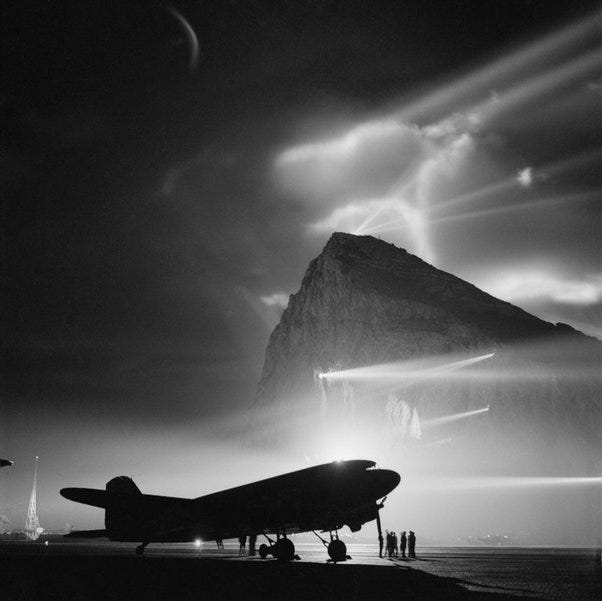
Flight
by Michael R. Burch
It is the nature of loveliness to vanish
as butterfly wings, batting against nothingness
seek transcendence ...
Originally published by Hibiscus (India)
Learning to Fly
by Michael R. Burch
We are learning to fly
every day . . .
learning to fly—
away, away . . .
O, love is not in the ephemeral flight,
but love, Love! is our destination—
graced land of eternal sunrise, radiant beyond night!
Let us bear one another up in our vast migration.
Springtime Prayer
by Michael R. Burch
They’ll have to grow like crazy,
the springtime baby geese,
if they’re to fly to balmier climes
when autumn dismembers the leaves ...
And so I toss them loaves of bread,
then whisper an urgent prayer:
“Watch over these, my Angels,
if there’s anyone kind, up there.”
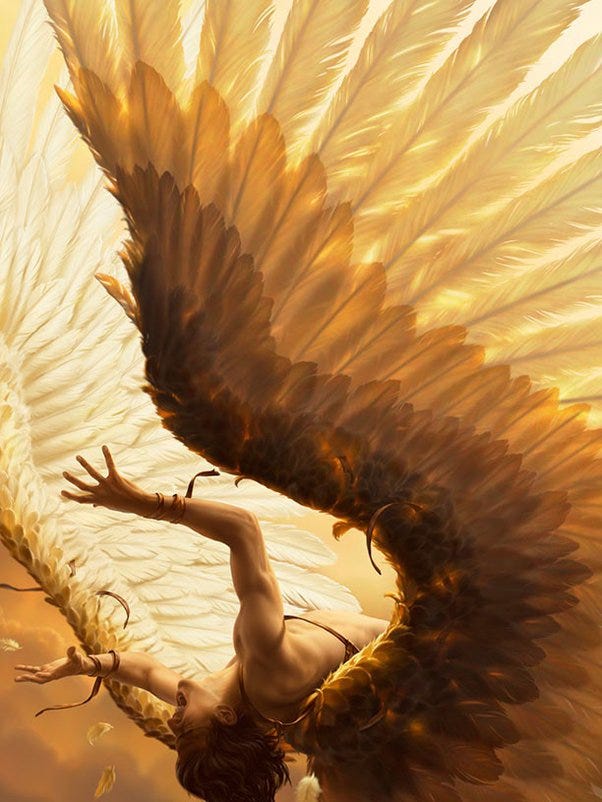
Southern Icarus
by Michael R. Burch
Windborne, lover of heights,
unspooled from the truck’s wildly lurching embrace,
you climb, skittish kite . . .
What do you know of the world’s despair,
gliding in vast . . . solitariness . . . there,
so that all that remains is to
fall?
Only a little longer the wind invests its sighs;
you
stall,
spread-eagled, as the canvas snaps
and flaps
its white rebellious wings,
and all
the houses watch with baffled eyes.
The Wonder Boys
by Michael R. Burch
(for Leslie Mellichamp, the late editor of The Lyric,
who was a friend and mentor to many poets, and
a fine poet in his own right)
The stars were always there, too-bright cliches:
scintillant truths the jaded world outgrew
as baffled poets winged keyed kites—amazed,
in dream of shocks that suddenly came true . . .
but came almost as static—background noise,
a song out of the cosmos no one hears,
or cares to hear. The poets, starstruck boys,
lay tuned in to their kite strings, saucer-eared.
They thought to feel the lightning’s brilliant sparks
electrify their nerves, their brains; the smoke
of words poured from their overheated hearts.
The kite string, knotted, made a nifty rope . . .
You will not find them here; they blew away—
in tumbling flight beyond nights’ stars. They clung
by fingertips to satellites. They strayed
too far to remain mortal. Elfin, young,
their words are with us still. Devout and fey,
they wink at us whenever skies are gray.
Originally published by The Lyric
Earthbound, a Vision of Crazy Horse
by Michael R. Burch
Tashunka Witko, a Lakota Sioux better known as Crazy Horse, had a vision of a red-tailed hawk at Sylvan Lake, South Dakota. In his vision he saw himself riding a spirit horse, flying through a storm, as the hawk flew above him, shrieking. When he awoke, a red-tailed hawk was perched near his horse.
Earthbound,
and yet I now fly
through the clouds that are aimlessly drifting ...
so high
that no sound
echoing by
below where the mountains are lifting
the sky
can be heard.
Like a bird,
but not meek,
like a hawk from a distance regarding its prey,
I will shriek,
not a word,
but a screech,
and my terrible clamor will turn them to clay—
the sheep,
the earthbound.
Published by American Indian Pride and Boston Poetry Magazine
Sioux Vision Quest
by Crazy Horse, Oglala Lakota Sioux (circa 1840-1877)
loose translation/interpretation by Michael R. Burch
A man must pursue his Vision
as the eagle explores
the sky's deepest blues.
Published by Better Than Starbucks, A Hundred Voices
in-flight convergence
by Michael R. Burch
serene, almost angelic,
the lights of the city ——— extend ———
over lumbering behemoths
shrilly screeching displeasure;
they say
that nothing is certain,
that nothing man dreams or ordains
long endures his command
here the streetlights that flicker
and those blazing steadfast
seem one: from a distance;
descend,
they abruptly
part ———— ways,
so that nothing is one
which at times does not suddenly blend
into garish insignificance
in the familiar alleyways,
in the white neon flash
and the billboards of Convenience
and man seems the afterthought of his own Brilliance
as we thunder down the enlightened runways.
Originally published by The Aurorean and nominated for the Pushcart Prize
Flight 93
by Michael R. Burch
I held the switch in trembling fingers, asked
why existence felt so small, so purposeless,
like a minnow wriggling feebly in my grasp ...
vibrations of huge engines thrummed my arms
as, glistening with sweat, I nudged the switch
to OFF ... I heard the klaxon's shrill alarms
like vultures’ shriekings ... earthward, in a stall ...
we floated ... earthward ... wings outstretched, aghast
like Icarus ... as through the void we fell ...
till nothing was so beautiful, so blue ...
so vivid as that moment ... and I held
an image of your face, and dreamed I flew
into your arms. The earth rushed up. I knew
such comfort, in that moment, loving you.
Album
by Michael R. Burch
I caress them—trapped in brittle cellophane—
and I see how young they were, and how unwise;
and I remember their first flight—an old prop plane,
their blissful arc through alien blue skies ...
And I touch them here through leaves which—tattered, frayed—
are also wings, but wings that never flew:
like insects’ wings—pinned, held. Here, time delayed,
their features never merged, remaining two ...
And Grief, which lurked unseen beyond the lens
or in shadows where It crept on furtive claws
as It scritched Its way into their hearts, depends
on sorrows such as theirs, and works Its jaws ...
and slavers for Its meat—those young, unwise,
who naively dare to dream, yet fail to see
how, lumbering sunward, Hope, ungainly, flies,
clutching to Her ruffled breast what must not be.
In the Whispering Night
by Michael R. Burch
for George King
In the whispering night, when the stars bend low
till the hills ignite to a shining flame,
when a shower of meteors streaks the sky
while the lilies sigh in their beds, for shame,
we must steal our souls, as they once were stolen,
and gather our vigor, and all our intent.
We must heave our bodies to some famished ocean
and laugh as they vanish, and never repent.
We must dance in the darkness as stars dance before us,
soar, Soar! through the night on a butterfly's breeze ...
blown high, upward-yearning, twin spirits returning
to the heights of awareness from which we were seized.
Published by Songs of Innocence, Romantics Quarterly, The Chained Muse and Poetry Life & Times. This is a poem I wrote at age 18 for my favorite college English teacher, George King, about poetic kinship, brotherhood and romantic flights of fancy.
For a Palestinian Child, with Butterflies
by Michael R. Burch
Where does the butterfly go
when lightning rails,
when thunder howls,
when hailstones scream,
when winter scowls,
when nights compound dark frosts with snow ...
Where does the butterfly go?
Where does the rose hide its bloom
when night descends oblique and chill
beyond the capacity of moonlight to fill?
When the only relief's a banked fire's glow,
where does the butterfly go?
And where shall the spirit flee
when life is harsh, too harsh to face,
and hope is lost without a trace?
Oh, when the light of life runs low,
where does the butterfly go?
Published by Tucumcari Literary Review
American Eagle, Grounded
by Michael R. Burch
Her predatory eye,
the single feral iris,
scans.
Her raptor beak,
all jagged sharp-edged thrust,
juts.
Her hard talon,
clenched in pinched expectation,
waits.
Her clipped wings,
preened against reality,
tremble.
Published as “Tremble” by The Lyric
When Pigs Fly
by Michael R. Burch
On the Trail of Tears,
my Cherokee brothers,
why hang your heads?
Why shame your mothers?
Laugh wildly instead!
We will soon be dead.
When we lie in our graves,
let the white-eyes take
the woodlands we loved
for the hoe and the rake.
It is better to die
than to live out a lie
in so narrow a sty.
Years after the Cherokees had been rounded up and driven down the Trail of Tears, John G. Burnett reflected on what he and his fellow soldiers had done, saying, "Schoolchildren of today do not know that we are living on lands that were taken from a helpless race at the bayonet point, to satisfy the white man's greed ... Murder is murder and somebody must answer, somebody must explain the streams of blood that flowed in the Indian country ... Somebody must explain the four thousand silent graves that mark the trail of the Cherokees to their exile."
Flight
by Michael R. Burch
Eagle, raven, blackbird, crow . . .
What you are I do not know.
Where you go I do not care.
I’m unconcerned whose meal you bear.
But as you mount the sunlit sky,
I only wish that I could fly.
I only wish that I could fly.
Robin, hawk or whippoorwill . . .
Should men care that you hunger still?
I do not wish to see your home.
I do not wonder where you roam.
But as you scale the sky's bright stairs,
I only wish that I were there.
I only wish that I were there.
Sparrow, lark or chickadee . . .
Your markings I disdain to see.
Where you fly concerns me not.
I scarcely give your flight a thought.
But as you wheel and arc and dive,
I, too, would feel so much alive.
I, too, would feel so much alive.
This is a poem that I wrote at age 16 as a high school sophomore.
Flying
by Michael R. Burch
I shall rise
and try the bloody wings of thought
ten thousand times
before I fly ...
and then I'll sleep
and waste ten thousand nights
before I dream;
but when at last ...
I soar the distant heights of undreamt skies
where never hawks nor eagles dared to go,
as I laugh among the meteors flashing by
somewhere beyond the bluest earth-bound seas ...
if I'm not told
I’m just a man,
then I shall know
just what I am.
This is one of my early poems, written around age 16-17.
Stage Craft-y
by Michael R. Burch
There once was a dromedary
who befriended a crafty canary.
Budgie said, "You can’t sing,
but now, here’s the thing—
just think of the tunes you can carry!"
Clyde Lied!
by Michael R. Burch
There once was a mockingbird, Clyde,
who bragged of his prowess, but lied.
To his new wife he sighed,
"When again, gentle bride?"
"Nevermore!" bright-eyed Raven replied.
Less Heroic Couplets: Murder Most Fowl!
by Michael R. Burch
“Murder most foul!”
cried the mouse to the owl.
“Friend, I’m no sinner;
you’re merely my dinner.
As you fall on my sword,
take it up with the LORD!”
the wise owl replied
as the tasty snack died.
Published by Lighten Up Online and in Potcake Chapbook #7
Lance-Lot
by Michael R. Burch
Preposterous bird!
Inelegant! Absurd!
Until the great & mighty heron
brandishes his fearsome sword.
Kissin’ ’n’ buzzin’
by Michael R. Burch
Kissin’ ’n’ buzzin’ the bees rise
in a dizzy circle of two.
Oh, when I’m with you,
I feel like kissin’ ’n’ buzzin’ too.
Delicacy
by Michael R. Burch
for all good mothers
Your love is as delicate
as a butterfly cleaning its wings,
as soft as the predicate
the hummingbird sings
to itself, gently murmuring—
“Fly! Fly! Fly!”
Your love is the string
soaring kites untie.
Within the CPU
by Michael R. Burch
Here the electronic rush of meaning,
the impulse of mathematics
and rationality,
becomes almost a restless dreaming
never satisfied—
the first stirrings of some fetal Entity.
Here within a sterile void
flash wild electrons,
portent stars.
Once the earth was an asteroid
this inert, this barren
till a force
flashed across the face of formless waters
and a zigzag bolt of lightning
sparked life within an ocean.
Now inquisitive voltage crackles
along pathways
never engineered. A notion
stirs. And what we have created
creates within itself
something we cannot hope to comprehend.
Whatever It is,
when It emerges from the mist,
its god will not be man.
I wrote “Within the CPU” as a freshman computer science major, age 18 or 19.
Veiled
by Michael R. Burch
She has belief
without comprehension
and in her crutchwork shack
she is
much like us . . .
tamping the bread
into edible forms,
regarding her children
at play
with something akin to relief . . .
ignoring the towers ablaze
in the distance
because they are not revelations
but things of glass,
easily shattered . . .
and if you were to ask her,
she might say—
sometimes God visits his wrath
upon an impious nation
for its leaders’ sins,
and we might agree:
seeing her mutilations.
Published by Poetry Super Highway and Modern War Poems
Lone Wild Goose
by Du Fu (712-770)
loose translation/interpretation by Michael R. Burch
The abandoned goose refuses food and drink;
he cries querulously for his companions.
Who feels kinship for that strange wraith
as he vanishes eerily into the heavens?
You watch it as it disappears;
its plaintive calls cut through you.
The indignant crows ignore you both:
the bickering, bantering multitudes.
Du Fu (712-770) is also known as Tu Fu. The first poem is addressed to the poet's wife, who had fled war with their children. Ch'ang-an is an ironic pun because it means "Long-peace."
The Red Cockatoo
by Po Chu-I (772-846)
loose translation/interpretation by Michael R. Burch
A marvelous gift from Annam—
a red cockatoo,
bright as peach blossom,
fluent in men's language.
So they did what they always do
to the erudite and eloquent:
they created a thick-barred cage
and shut it up.
Po Chu-I (772-846) is best known today for his ballads and satirical poems. Po Chu-I believed poetry should be accessible to commoners and is noted for his simple diction and natural style. His name has been rendered various ways in English: Po Chu-I, Po Chü-i, Bo Juyi and Bai Juyi.
The Migrant Songbird
Li Qingzhao aka Li Ching-chao (c. 1084-1155)
loose translation/interpretation by Michael R. Burch
The migrant songbird on the nearby yew
brings tears to my eyes with her melodious trills;
this fresh downpour reminds me of similar spills:
another spring gone, and still no word from you ...
Lines from Laolao Ting Pavilion
by Li Bai (701-762)
loose translation/interpretation by Michael R. Burch
The spring breeze knows partings are bitter;
The willow twig knows it will never be green again.
The Day after the Rain
Lin Huiyin (1904-1955)
loose translation/interpretation by Michael R. Burch
I love the day after the rain
and the meadow's green expanses!
My heart endlessly rises with wind,
gusts with wind ...
away the new-mown grasses and the fallen leaves ...
away the clouds like smoke ...
vanishing like smoke ...
Untitled Translations
Cupid, if you incinerate my soul, touché!
For like you she has wings and can fly away!
—Meleager, loose translation by Michael R. Burch
As autumn deepens,
a butterfly sips
chrysanthemum dew.
—Basho, loose translation/interpretation by Michael R. Burch
Come, butterfly,
it’s late
and we’ve a long way to go!
—Basho, loose translation/interpretation by Michael R. Burch
Up and at ’em! The sky goes bright!
Let’s hit the road again,
Companion Butterfly!
—Matsuo Basho, loose translation/interpretation by Michael R. Burch
Ah butterfly,
what dreams do you ply
with your beautiful wings?
—Chiyo-ni, loose translation by Michael R. Burch
Oh, dreamlike winter butterfly:
a puff of white snow
cresting mountains
—Kakio Tomizawa, loose translation by Michael R. Burch
Dry leaf flung awry:
bright butterfly,
goodbye!
—Michael R. Burch, original haiku
Will we remain parted forever?
Here at your grave:
two flowerlike butterflies
—Matsuo Basho, loose translation by Michael R. Burch
a soaring kite flits
into the heart of the sun?
Butterfly & Chrysanthemum
—Michael R. Burch, original haiku
The cheerful-chirping cricket
contends gray autumn's gay,
contemptuous of frost
—Matsuo Basho, loose translation by Michael R. Burch
Whistle on, twilight whippoorwill,
solemn evangelist
of loneliness
—Matsuo Basho, loose translation by Michael R. Burch
The sea darkening,
the voices of the wild ducks:
my mysterious companions!
—Matsuo Basho, loose translation by Michael R. Burch
Lightning
shatters the darkness—
the night heron's shriek
—Matsuo Basho, loose translation by Michael R. Burch
This snowy morning:
cries of the crow I despise
(ah, but so beautiful!)
—Matsuo Basho, loose translation by Michael R. Burch
A crow settles
on a leafless branch:
autumn nightfall.
—Matsuo Basho, loose translation/interpretation by Michael R. Burch
Hush, cawing crows; what rackets you make!
Heaven's indignant messengers,
you remind me of wordsmiths!
—O no Yasumaro (circa 711), loose translation by Michael R. Burch
Higher than a skylark,
resting on the breast of heaven:
this mountain pass.
—Matsuo Basho, loose translation/interpretation by Michael R. Burch
An exciting struggle
with such a sad ending:
cormorant fishing.
—Matsuo Basho, loose translation/interpretation by Michael R. Burch
Does my soul abide in heaven, or hell?
Only the sea gull
in his high, lonely circuits, may tell.
—Glaucus, translation by Michael R. Burch
The eagle sees farther
from its greater height—
our ancestors’ wisdom
—Michael R. Burch, original haiku
A kite floats
at the same place in the sky
where yesterday it floated ...
—Yosa Buson, loose translation/interpretation by Michael R. Burch
Descent
by Michael R. Burch
I have listened to the rain all this morning
and it has a certain gravity,
as if it knows its destination,
perhaps even its particular destiny.
I do not believe mine is to be uplifted,
although I, too, may be flung precipitously
and from a great height.
Ultimate Sunset
by Michael R. Burch
for my father, Paul Ray Burch, Jr.
he now faces the Ultimate Sunset,
his body like the leaves that fray as they dry,
shedding their vital fluids (who knows why?)
till they’ve become even lighter than the covering sky,
ready to fly ...
Free Fall
by Michael R. Burch
for my father, Paul Ray Burch, Jr.
I see the longing for departure gleam
in his still-keen eye,
and I understand his desire
to test this last wind, like those late autumn leaves
with nothing left to cling to ...
Leaf Fall
by Michael R. Burch
Whatever winds encountered soon resolved
to swirling fragments, till chaotic heaps
of leaves lay pulsing by the backyard wall.
In lieu of rakes, our fingers sorted each
dry leaf into its place and built a high,
soft bastion against earth's gravitron—
a patchwork quilt, a trampoline, a bright
impediment to fling ourselves upon.
And nothing in our laughter as we fell
into those leaves was like the autumn's cry
of also falling. Nothing meant to die
could be so bright as we, so colorful—
clad in our plaids, oblivious to pain
we'd feel today, should we leaf-fall again.
Originally published by The Neovictorian/Cochlea
The Folly of Wisdom
by Michael R. Burch
She is wise in the way that children are wise,
looking at me with such knowing, grave eyes
I must bend down to her to understand.
But she only smiles, and takes my hand.
We are walking somewhere that her feet know to go,
so I smile, and I follow ...
And the years are dark creatures concealed in bright leaves
that flutter above us, and what she believes—
I can almost remember—goes something like this:
the prince is a horned toad, awaiting her kiss.
She wiggles and giggles, and all will be well
if only we find him! The woodpecker’s knell
as he hammers the coffin of some dying tree
that once was a fortress to someone like me
rings wildly above us. Some things that we know
we are meant to forget. Life is a bloodletting, maple-syrup-slow.
Originally published by Romantics Quarterly
Kin
by Michael R. Burch
for Richard Moore
1.
Shrill gulls,
how like my thoughts
you, struggling, rise
to distant bliss—
the weightless blue of skies
that are not blue
in any atmosphere,
but closest here ...
2.
You seek an air
so clear,
so rarified
the effort leaves you famished;
earthly tides
soon call you back—
one long, descending glide ...
3.
Disgruntledly you grope dirt shores for orts
you pull like mucous ropes
from shells’ bright forts ...
You eye the teeming world
with nervous darts—
this way and that ...
Contentious, shrewd, you scan—
the sky, in hope,
the earth, distrusting man.
Songstress
by Michael R. Burch
Within its starkwhite ribcage, how the heart
must flutter wildly, O, and always sing
against the pressing darkness: all it knows
until at last it feels the numbing sting
of death. Then life's brief vision swiftly passes,
imposing night on one who clearly saw.
Death held your bright heart tightly, till its maw–
envenomed, fanged–could swallow, whole, your Awe.
And yet it was not death so much as you
who sealed your doom; you could not help but sing
and not be silenced. Here, behold your tomb's
white alabaster cage: pale, wretched thing!
But you'll not be imprisoned here, wise wren!
Your words soar free; rise, sing, fly, live again.
A poet like Nadia Anjuman can be likened to a caged bird, deprived of flight, who somehow finds it within herself to sing of love and beauty. But when the world finally robs her of both flight and song, what is left for her but to leave the world, thus bereaving the world of herself and her song?
Performing Art
by Michael R. Burch
Who teaches the wren
in its drab existence
to explode into song?
What parodies of irony
does the jay espouse
with its sharp-edged tongue?
What instinctual memories
lend stunning brightness
to the strange dreams
of the dull gray slug
—spinning its chrysalis,
gluing rough seams—
abiding in darkness
its transformation,
till, waving damp wings,
it applauds its performance?
I am done with irony.
Life itself sings.
Lean Harvests
by Michael R. Burch
for T.M.
the trees are shedding their leaves again:
another summer is over.
the Christians are praising their Maker again,
but not the disconsolate plover:
i hear him berate
the fate
of his mate;
he claims God is no body’s lover.
Published by The Rotary Dial and Angle
My Forty-Ninth Year
by Michael R. Burch
My forty-ninth year
and the dew remembers
how brightly it glistened
encrusting September, ...
one frozen September
when hawks ruled the sky
and death fell on wings
with a shrill, keening cry.
My forty-ninth year,
and still I recall
the weavings and windings
of childhood, of fall ...
of fall enigmatic,
resplendent, yet sere, ...
though vibrant the herald
of death drawing near.
My forty-ninth year
and now often I've thought on
the course of a lifetime,
the meaning of autumn,
the cycle of autumn
with winter to come,
of aging and death
and rebirth ... on and on.
Originally published by Romantics Quarterly as “My Twenty-Ninth Year”
Myth
by Michael R. Burch
Here the recalcitrant wind
sighs with grievance and remorse
over fields of wayward gorse
and thistle-throttled lanes.
And she is the myth of the scythed wheat
hewn and sighing, complete,
waiting, lain in a low sheaf—
full of faith, full of grief.
Here the immaculate dawn
requires belief of the leafed earth
and she is the myth of the mown grain—
golden and humble in all its weary worth.
What Works
by Michael R. Burch
for David Gosselin
What works—
hewn stone;
the blush the iris shows the sun;
the lilac’s pale-remembered bloom.
The frenzied fly: mad-lively, gay,
as seconds tick his time away,
his sentence—one brief day in May,
a period. And then decay.
A frenzied rhyme’s mad tip-toed time,
a ballad’s languid as the sea,
seek, striving—immortality.
When gloss peels off, what works will shine.
When polish fades, what works will gleam.
When intellectual prattle pales,
the dying buzzing in the hive
of tedious incessant bees,
what works will soar and wheel and dive
and milk all honey, leap and thrive,
and teach the pallid poem to seethe.
Transplant
by Michael R. Burch
You float, unearthly angel, clad in flesh
as strange to us who briefly knew your flame
as laughter to disease. And yet you laugh.
Behind your smile, the sun forfeits its claim
to earth, and floats forever now the same—
light captured at its moment of least height.
You laugh here always, welcoming the night,
and, just a photograph, still you can claim
bright rapture: like an angel, not of flesh—
but something more, made less. Your humanness
this moment of release becomes a name
and something else—a radiance, a strange
brief presence near our hearts. How can we stand
and chain you here to this nocturnal land
of burgeoning gray shadows? Fly, begone.
I give you back your soul, forfeit all claim
to radiance, and welcome grief’s dark night
that crushes all the laughter from us. Light
in someone Else’s hand, and sing at ease
some song of brightsome mirth through dawn-lit trees
to welcome morning’s sun. O daughter! these
are eyes too weak for laughter; for love’s sight,
I welcome darkness, overcome with light.
Prodigal
by Michael R. Burch
This poem is dedicated to Kevin Longinotti, who died four days short of graduation from Vanderbilt University, the victim of a tornado that struck Nashville on April 16, 1998.
You have graduated now,
to a higher plane
and your heart’s tenacity
teaches us not to go gently
though death intrudes.
For eighteen days
—jarring interludes
of respite and pain—
with life only faintly clinging,
like a cashmere snow,
testing the capacity
of the blood banks
with the unstaunched flow
of your severed veins,
in the collapsing declivity,
in the sanguine haze
where Death broods,
you struggled defiantly.
A city mourns its adopted son,
flown to the highest ranks
while each heart complains
at the harsh validity
of God’s ways.
On ponderous wings
the white clouds move
with your captured breath,
though just days before
they spawned the maelstrom’s
hellish rift.
Throw off this mortal coil,
this envelope of flesh,
this brief sheath
of inarticulate grief
and transient joy.
Forget the winds
which test belief,
which bear the parchment leaf
down life’s last sun-lit path.
We applaud your spirit, O Prodigal,
O Valiant One,
in its percussive flight into the sun,
winging on the heart’s last madrigal.
The opening two poems in this really fine sequence of poems about flying (in different ways) really appeal to me and I am unable to choose between them for a restack, so I will simply include both.
Flight
by Michael R. Burch
It is the nature of loveliness to vanish
as butterfly wings, batting against nothingness
seek transcendence ...
Originally published by Hibiscus (India)
Learning to Fly
by Michael R. Burch
We are learning to fly
every day . . .
learning to fly—
away, away . . .
O, love is not in the ephemeral flight,
but love, Love! is our destination—
graced land of eternal sunrise, radiant beyond night!
Let us bear one another up in our vast migration.