
Lullabies
These are my lullabies and lullaby-like poems...

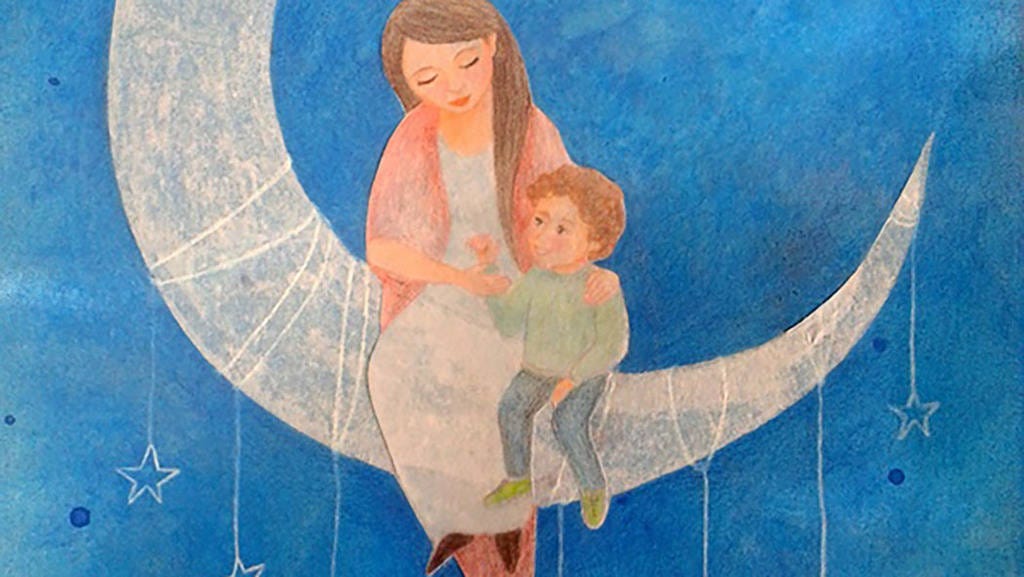
I have a theory that most modern poets are unable to write lullabies because they lack musicality and the ability to communicate tenderness. Modern poets may howitzer us with ideas, some of them passing strange, but can they charm us? Can they console us? These are bedtime poems, some for children, some for adults…
Lullaby
by Michael R. Burch
for Jeremy
Cherubic laugh; sly, impish grin;
Angelic face; wild chimp within.
It does not matter; sleep awhile
As soft mirth tickles forth a smile.
Gray moths will hum a lullaby
Of feathery wings, then you and I
Will wake together, by and by.
Life’s not long; those days are best
Spent snuggled to a loving breast.
The earth will wait; a sun-filled sky
Will bronze lean muscle, by and by.
Soon you will sing, and I will sigh,
But sleep here, now, for you and I
Know nothing but this lullaby.
Copyright © 2020 by Michael R. Burch
Important factors in lullabies are comfort, consolation, and the recipient feeling cared for. Deeply, profoundly and intimately cared for. Lullabies are consoling songs and they require intimacy. This goes beyond clever turns of phrases, the hallmark (if you’ll pardon the reciprocal pun) of modern free verse. Examples of wonderful lullabies include William Blake’s incredibly tender “Cradle Song” and W. H. Auden’s magnificent “Lullaby.” Songs I especially like include Brahms’ “Lullaby” or “Cradle Song,” Claude Debussy’s Suit bergamasque (inspired by the French poet Paul Verlaine’s “Clair de Lune,” Judy Garland’s and Israel Kamakawiwo’ole’s versions of “Somewhere Over the Rainbow,” Cat Stevens’ funky “Moonshadow,” the Beatles’ “Golden Slumbers,” “Mockingbird” as performed by Carly Simon and James Taylor, and Simon and Garfunkel’s magical “Scarborough Fair/Canticle.” Lullabies seem to like being sung in rounds. I think “Let It Be” and the song that inspired it, “Bridge Over Troubled Water,” qualify as adult lullabies. My favorite classic children’s lullabies include “Hush Little Baby (Don’t You Cry),” “Rock-a-Bye Baby,” “Bye, Baby Bunting,” “Frère Jacques” and “When You Wish Upon a Star.”
Final Lullaby
by Michael R. Burch
for my mother, Christine Ena Burch
Sleep peacefully—for now your suffering’s over.
Sleep peacefully—immune to all distress,
like pebbles unaware of raging waves.
Sleep peacefully—like fields of fragrant clover
unmoved by any motion of the wind.
Sleep peacefully—like clouds untouched by earthquakes.
Sleep peacefully—like stars that never blink
and have no thoughts at all, nor need to think.
Sleep peacefully—in your eternal vault,
immaculate, past perfect, without fault.
Amen
Copyright © 2020 by Michael R. Burch
Sappho’s Lullaby
by Michael R. Burch
for Jeremy
Hushed yet melodic, the hills and the valleys
sleep unaware of the nightingale's call
while the dew-laden lilies lie
listening,
glistening…
this is their night, the first night of fall.
Son, tonight, a woman awaits you;
she is more vibrant, more lovely than spring.
She'll meet you in moonlight,
soft and warm,
all alone…
then you'll know why the nightingale sings.
Just yesterday the stars were afire;
then how desire flashed through my veins!
But now I am older;
night has come,
I’m alone…
for you I will sing as the nightingale sings.
Copyright © 2020 by Michael R. Burch
Let me sing you a lullaby
by Michael R. Burch
for Jeremy (written from his mother’s perspective)
Oh, let me sing you a lullaby
of a love that shall come to you by and by.
Oh, let me sing you a lullaby
of a love that shall come to you by and by.
Oh, my dear son, how you’re growing up!
You’re taller than me, now I’m looking up!
You’re a long tall drink and I’m half a cup!
And so let me sing you this lullaby.
Oh, my sweet son, as I watch you grow,
there are so many things that I want you to know.
Most importantly this: that I love you so.
And so let me sing you this lullaby.
Soon a tender bud will thrust forth and grow
after the winter’s long virgin snow;
and because there are things that you have to know...
Oh, let me sing you this lullaby.
Soon, in a green garden a new rose will bloom
and fill all the world with its wild perfume.
And though it’s hard for me, I must give it room.
And so let me sing you this lullaby.
Copyright © 2020 by Michael R. Burch
Midnight Lullaby
by Michael R. Burch
I.
A measureless rhythm rules the night—
few have heard it,
but I have shared it,
and its secret is mine.
To put it into words
is as to extract the sweetness from honey
and must be done as gently
as a butterfly cleans its wings.
But when it is captured, it is gone again;
its usefulness is only
that it lulls to sleep.
II.
So sleep, my love, to the cadence of night,
to the moans of the moonlit hills'
bass chorus of frogs, while the deep valleys fill
with the nightjar’s shrill, cryptic trills.
But I will not sleep this night, nor any…
how can I—when my dreams
are always of your perfect face
ringed by soft whorls of fretted lace,
framed by your tear-drenched pillowcase?
Copyright © 2021 by Michael R. Burch
All the More Human, for Eve Pandora
by Michael R. Burch
a lullaby for the first human Clone
God provide the soul, and let her sleep
be natural as ours, unplagued by dreams
of being someone else, lost in the deep
wild swells of grieving all that human means ...
and do not let her come to doubt herself—
that she is as we are, so much alike
in frailty, in the books that line the shelf
that tell us who we are—a rickety dike
against the flood of doubt—that we are more
than cells and chance, that love, perhaps, exists
because of someone else who would endure
such pain because some part of her persists
in us, and calls us blesséd by her bed,
become a saint at last, in whose frail arms
we see ourselves—the gray won out of red,
the ash of blonde—till love is safe from harm
and all that human means is that we live
in doubt, and die in doubt, and only love
the more because together we must strive
against an end we loathe and fear. What of?—
we cannot say, imagining the Night
as some weird darkened structure caving in
to cold enormous pressure. Lacking sight,
we lie unbreathing, thinking breath a sin ...
and that is to be human. You are us—
true mortal, child of doubt, hopeful and curious.
Peace Prayer
by Michael R. Burch
for Jim Dunlap
Be calm.
Be still.
Be silent, content.
Be one with the buffalo cropping the grass to a safer height.
Seek the composure of the great depths, barely moved by exterior storms.
Lift your face to the dawning light; feel how it warms.
And be calm.
Be still.
Be silent, content.
Published by Hibiscus (India), Ethos Literary Journal, The Peacemaker, Lullabies Behind My Eyelids, The Episcopal Church of St. Matthew (San Mateo, CA) and Mad Hatter
Stay With Me Tonight
by Michael R. Burch
Stay with me tonight;
be gentle with me as the leaves are gentle
falling to the earth.
And whisper, O my love,
how that every bright thing, though scattered afar,
retains yet its worth.
Stay with me tonight;
be as a petal long-awaited blooming in my hand.
Lift your face to mine
and touch me with your lips
till I feel the warm benevolence of your breath’s
heady fragrance like wine.
That which we had
when pale and waning as the dying moon at dawn,
outshone the sun.
And so lead me back tonight
through bright waterfalls of light
to where we shine as one.
Copyright © 2019 by Michael R. Burch
Ave Maria
by Michael R. Burch
Ave Maria,
Maiden mild,
listen to my earnest prayer.
Listen, O, and be beguiled.
Ave Maria.
Ave Maria,
Maiden mild,
be Mother now to every child
beset by earth’s thorned briars wild.
Ave Maria.
Ave Maria,
Maiden mild,
embrace us with your Love and Grace.
Let us look upon your Face.
Ave Maria.
Ave Maria,
Maiden mild,
please attend to our earnest call—
When will Love be All in All?
Ave Maria.
Copyright © 2020 by Michael R. Burch
Myth
by Michael R. Burch
Here the recalcitrant wind
sighs with grievance and remorse
over fields of wayward gorse
and thistle-throttled lanes.
And she is the myth of the scythed wheat
hewn and sighing, complete,
waiting, lain in a low sheaf—
full of faith, full of grief.
Here the immaculate dawn
requires belief of the leafed earth
and she is the myth of the mown grain—
golden and humble in all its weary worth.
Copyright © 2020 by Michael R. Burch
Instruction
by Michael R. Burch
Toss this poem aside
to the filigreed and the prettified tide
of sunset.
Strike my name,
and still it is all the same.
The onset
of night is in the despairing skies;
each hut shuts its bright bewildered eyes.
The wind sighs
and my heart sighs with her—
my only companion, O Lovely Drifter!
Still, men are not wise.
The moon appears; the arms of the wind lift her,
pooling the light of her silver portent,
while men, impatient,
are beings of hurried and harried despair.
Now willows entangle their fragrant hair.
Men sleep.
Cornsilk tassels the moonbright air.
Deep is the sea; the stars are fair.
I reap.
Copyright © 2020 by Michael R. Burch
The Toast
by Michael R. Burch
For longings warmed by tepid suns
(brief lusts that animated clay),
for passions wilted at the bud
and skies grown desolate and gray,
for stars that fell from tinseled heights
and mountains bleak and scarred and lone,
for seas reflecting distant suns
and weeds that thrive where seeds were sown,
for waltzes ending in a hush,
for rhymes that fade as pages close,
for flames' exhausted, drifting ash,
and petals falling from the rose, ...
I raise my cup before I drink,
saluting ghosts of loves long dead,
and silently propose a toast—
to joys set free, and those I fled.
i wrote a giddy little song
by michael r. burch
i wrote a giddy little song,
which u can dance to, all night long;
i wrote a giddy little poem,
it’ll tempt a smile, like sea foam;
i wrote a giddy nonsense rhyme,
it’ll tease a laugh, like a dandelion;
i wrote a song and took the trouble,
it’ll make u smile, like a soap bubble;
i wrote this giddy bit of fluff,
now dance to it, get off ur duff!
Copyright © 2023 by Michael R. Burch
Mother’s Smile
by Michael R. Burch
There never was a fonder smile
than mother’s smile, no softer touch
than mother’s touch. So sleep awhile
and know she loves you more than “much.”
So more than “much,” much more than “all.”
Though tender words, these do not speak
of love at all, nor how we fall
and mother’s there, nor how we reach
from nightmares in the ticking night
and she is there to hold us tight.
There never was a stronger back
than father’s back, that held our weight
and lifted us, when we were small,
and bore us till we reached the gate,
then held our hands that first bright mile
till we could run, and did, and flew.
But, oh, a mother’s tender smile
will leap and follow after you!
Copyright © 2020 by Michael R. Burch
Moon Lake
by Michael R. Burch
Starlit recorder of summer nights,
what magic spell bewitches you?
They say that all lovers love first in the dark . . .
Is it true?
Is it true?
Is it true?
Starry-eyed seer of all that appears
and all that has appeared—
What sights have you seen?
What dreams have you dreamed?
What rhetoric have you heard?
Is love an oration,
or is it a word?
Have you heard?
Have you heard?
Have you heard?
Copyright © 1976 by Michael R. Burch
If You Come to San Miguel
by Michael R. Burch
If you come to San Miguel
before the orchids fall,
we might stroll through lengthening shadows
those deserted streets
where love first bloomed ...
You might buy the same cheap musk
from that mud-spattered stall
where with furtive eyes the vendor
watched his fragrant wares
perfume your breasts ...
Where lean men mend tattered nets,
disgruntled sea gulls chide;
we might find that cafetucho
where through grimy panes
sunset implodes ...
Where tall cranes spin canvassed loads,
the strange anhingas glide.
Green brine laps splintered moorings,
rusted iron chains grind,
weighed and anchored in the past,
held fast by luminescent tides ...
Should you come to San Miguel?
Let love decide.
Copyright © 2020 by Michael R. Burch
Will There Be Starlight
by Michael R. Burch
Will there be starlight
tonight
while she gathers
damask
and lilac
and sweet-scented heathers?
And will she find flowers,
or will she find thorns
guarding the petals
of roses unborn?
Will there be starlight
tonight
while she gathers
seashells
and mussels
and albatross feathers?
And will she find treasure
or will she find pain
at the end of this rainbow
of moonlight on rain?
Copyright © 2001 by Michael R. Burch
Where Does the Butterfly Go?
by Michael R. Burch
Where does the butterfly go
when lightning rails,
when thunder howls,
when hailstones scream,
when winter scowls,
when nights compound dark frosts with snow ...
Where does the butterfly go?
Where does the rose hide its bloom
when night descends oblique and chill
beyond the capacity of moonlight to fill?
When the only relief's a banked fire's glow,
where does the butterfly go?
And where shall the spirit flee
when life is harsh, too harsh to face,
and hope is lost without a trace?
Oh, when the light of life runs low,
where does the butterfly go?
Copyright © 2012 by Michael R. Burch
In the Whispering Night
by Michael R. Burch
for George King
In the whispering night, when the stars bend low
till the hills ignite to a shining flame,
when a shower of meteors streaks the sky
while the lilies sigh in their beds, for shame,
we must steal our souls, as they once were stolen,
and gather our vigor, and all our intent.
We must heave our bodies to some famished ocean
and laugh as they vanish, and never repent.
We must dance in the darkness as stars dance before us,
soar, Soar! through the night on a butterfly's breeze:
blown high, upward-yearning, twin spirits returning
to the heights of awareness from which we were seized.
Copyright © 1977 by Michael R. Burch
Let Me Give Her Diamonds
by Michael R. Burch
Let me give her diamonds
for my heart's
sharp edges.
Let me give her roses
for my soul's
thorn.
Let me give her solace
for my words
of treason.
Let the flowering of love
outlast a winter
season.
Let me give her books
for all my lack
of reason.
Let me give her candles
for my lack
of fire.
Let me kindle incense,
for our hearts
require
the breath-fanned
flaming perfume
of desire.
Copyright © 2020 by Michael R. Burch
When I Think of You, I Think of Love
by Michael R. Burch
for Beth
When I think of you, I think of Love.
Oh, when I think of you, I think of Love
as magical as the moon and stars above.
And when I think of you, I think of Love.
When I think of you, I start to cry.
Yes, when I think of you, I start to cry.
And I think you know the reason why.
For when I think of you, I think of Love.
When I think of you, I start to smile.
Oh, when I think of you, I start to smile.
I think of you and, dreaming all the while,
when I think of you, I start to smile.
When I think of you, I have to laugh.
Yes, when I think of you, I have to laugh
because it’s certain: you’re my better half!
So when I think of you, I have to laugh.
I think of you as Eve, and at your feet
blooms everything that’s equally as sweet,
as magical as the moon and stars above.
And when I think of you, I think of Love.
I think of you with babies at your breast,
and does and fawns that come at your behest,
as magical as the moon and starts above.
And when I think of you, I think of Love.
I think of you and find myself at peace.
I feed the ducks, the turtles and the geese,
all as magical as the moon and stars above,
and when I think of you, I think of Love.
I think of you as Love, a Love that heals ...
the gentlest Dove that soars and flies and wheels
then looks down on the earth from high above.
And when I think of you, I think of Love.
Copyright © 2020 by Michael R. Burch
Tonight, Let’s Remember
by Michael R. Burch
July 7, 2007 (7-7-7)
Tonight, let’s remember the fond ways
our fingers engendered new methods to praise
the gray at my temples, your thinning hair.
Tonight, let’s remember, and let us draw near ...
Tonight, let’s remember, as mortals do,
how cutely we chortled when work was through,
society sated, all gods put to rest,
and you in my arms, and I at your breast ...
Tonight, let’s remember how daring, how free
the Madeira made us, recumbently.
Our inhibitions?—we laid them to rest.
Earth, heaven or hell—we knew we were blessed.
Tonight, let’s remember the dwindling days
we’ve spent here together—the sun’s rays
spending their power beyond somber hills.
Soon we’ll rest together; there’ll be no more bills.
Tonight, let’s remember: we’ve paid all our dues,
we’ve suffered our sorrows, we’ve learned how to lose.
What’s left now to take, only God can tell.
Be with me in heaven, or “bliss” will be hell!
Her Grace Flows Freely
by Michael R. Burch
July 7, 2007 (7-7-7)
Her love is always chaste, and pure.
This I vow. This I aver.
If she shows me her grace, I will honor her.
This I vow. This I aver.
Her grace flows freely, like her hair.
This I vow. This I aver.
For her generousness, I would worship her.
This I vow. This I aver.
I will not damn her for what I bear
This I vow. This I aver.
like a most precious incense–desire for her,
This I vow. This I aver.
nor call her “whore” where I seek to repair.
This I vow. This I aver.
I will not wink, nor smirk, nor stare
This I vow. This I aver.
like a foolish child at the foot of a stair
This I vow. This I aver.
where I long to go, should another be there.
This I vow. This I aver.
I’ll rejoice in her freedom, and always dare
This I vow. This I aver.
the chance that she’ll flee me–my starling rare.
This I vow. This I aver.
And then, if she stays, without stays, I swear
This I vow. This I aver.
that I will joy in her grace beyond compare.
This I vow. This I aver.
Her Grace Flows Freely
by Michael R. Burch
Italian translation by Comasia Aquaro
La sua grazia vola libera
7 luglio 2007
Il suo amore è sempre casto, e puro.
Lo giuro. Lo prometto.
Se mi mostra la sua grazia, le farò onore.
Lo giuro. Lo prometto.
La sua grazia vola libera, come i suoi capelli.
Lo giuro. Lo prometto.
Per la sua generosità, la venererò.
Lo giuro. Lo prometto.
Non la maledirò per ciò che soffro
Lo giuro. Lo prometto.
come il più prezioso desiderio d’incenso per lei,
Lo giuro. Lo prometto.
non chiamarla “sgualdrina” laddove io cerco di aggiustare.
Lo giuro. Lo prometto.
Io non strizzerò l’occhio, non riderò soddisfatto, non fisserò lo sguardo
Lo giuro. Lo prometto.
Come un bambino sciocco ai piedi di una scala
Lo giuro. Lo prometto.
Laddove io desidero andare, ci sarebbe forse un altro.
Lo giuro. Lo prometto.
Mi rallegrerò nella sua libertà, e sempre sfiderò
Lo giuro. Lo prometto.
la sorte che lei mi sfuggirà—il mio raro storno
Lo giuro. Lo prometto.
E dopo, se lei resta, senza stare, io lo garantisco
Lo giuro. Lo prometto.
Gioirò nella sua grazia al di là del confrontare.
Lo giuro. Lo prometto.
Caveat
by Michael R. Burch
If only we were not so eloquent,
we might sing, and only sing, not to impress,
but only to enjoy, to be enjoyed.
We might inundate the earth with thankfulness
for light, although it dies, and make a song
of night descending on the earth like bliss,
with other lights beyond—not to be known—
but only to be welcomed and enjoyed,
before all worlds and stars are overthrown…
as a lover’s hands embrace a sleeping face
and find it beautiful for emptiness
of all but joy. There is no thought to love
but love itself. How senseless to redress,
in darkness, such becoming nakedness…
Nightingale
by Michael R. Burch
Write me some gorgeous rhythm
about the gently falling night
in words with similar cadences
and a moon as occultly bright,
and if your lullaby pleases
and if your charms persist,
then I will gladly add you
to my bookmarked favorites list.
But as for pay or hire
and as for fortune and fame —
they seem unlikely, minstrel,
and while that might seem a shame,
are nightingales “rewarded”
for their sweetly pensive songs?
Your poems are too damn expensive —
add that to your warbled wrongs!
I Pray Tonight
by Michael R. Burch
(The music is initially melancholy.)
I pray tonight
the starry Light
might
surround you.
(The music remains melancholy.)
I pray
by day
that, come what may,
no dark thing confound you.
(With the last two lines, the music becomes brighter, more hopeful, and if possible, heavenly.)
I pray ere the morrow
an end to your sorrow.
May angels' white chorales
sing, and astound you.
Copyright © 2006 by Michael R. Burch
These Hallowed Halls
by Michael R. Burch
a young Romantic Poet mourns the passing of an age . . .
I.
A final stereo fades into silence
and now there is seldom a murmur
to trouble the slumber
of these ancient halls.
I stand by a window where others have watched
the passage of time—alone,
not untouched.
And I am as they were
unsure
for the days
stretch out ahead,
a bewildering maze.
II.
Ah, faithless lover—
that I had never touched your breast,
nor felt the stirrings of my heart,
which until that moment had peacefully slept.
For now I have known the exhilaration
of a heart that has vaulted the Pinnacle of Love,
and the result of each such infatuation—
the long freefall to earth, as the moon glides above.
III.
A solitary clock chimes the hour
from far above the campus,
but my peers,
returning from their dances,
heed it not.
And so it is
that we seldom gauge Time’s speed
because He moves so unobtrusively
about His task.
Still, when at last
we reckon His mark upon our lives,
we may well be surprised
at His thoroughness.
IV.
Ungentle maiden—
when Time has etched His little lines
so carelessly across your brow,
perhaps I will love you less than now.
And when cruel Time has stolen
your youth, as He certainly shall in course,
perhaps you will wish you had taken me
along with my broken heart,
even as He will take you with yours.
V.
A measureless rhythm rules the night—
few have heard it,
but I have shared it,
and its secret is mine.
To put it into words
is as to extract the sweetness from honey
and must be done as gently
as a butterfly cleans its wings.
But when it is captured, it is gone again;
its usefulness is only
that it lulls to sleep.
VI.
So sleep, my love, to the cadence of night,
to the moans of the moonlit hills'
bass chorus of frogs, while the deep valleys fill
with the nightjar’s shrill, cryptic trills.
But I will not sleep this night, nor any . . .
how can I—when my dreams
are always of your perfect face
ringed by soft whorls of fretted lace,
framed by your perfect pillowcase?
VII.
If I had been born when knights roamed the earth
and mad kings ruled savage lands,
I might have turned to the ministry,
to the solitude of a monastery.
But there are no monks or hermits today—
theirs is a lost occupation
carried on, if at all,
merely for sake of tradition.
For today man abhors solitude—
he craves companions, song and drink,
seldom seeking a quiet moment,
to sit alone, by himself, to think.
VIII.
And so I cannot shut myself
off from the rest of the world,
to spend my days in philosophy
and my nights in tears of self-sympathy.
No, I must continue as best I can,
and learn to keep my thoughts away
from those glorious, uproarious moments of youth,
centuries past though lost but a day.
IX.
Yes, I must discipline myself
and adjust to these lackluster days
when men display no chivalry
and romance is the "old-fashioned" way.
X.
A single stereo flares into song
and the first faint light of morning
has pierced the sky's black awning
once again.
XI.
This is a sacred place,
for those who leave,
leave better than they came.
But those who stay, while they are here,
add, with their sleepless nights and tears,
quaint sprigs of ivy to the walls
of these hallowed halls.