
Medieval War Poems
These are my modern English translations of medieval war poems and poems about knights, sailors and other warriors...

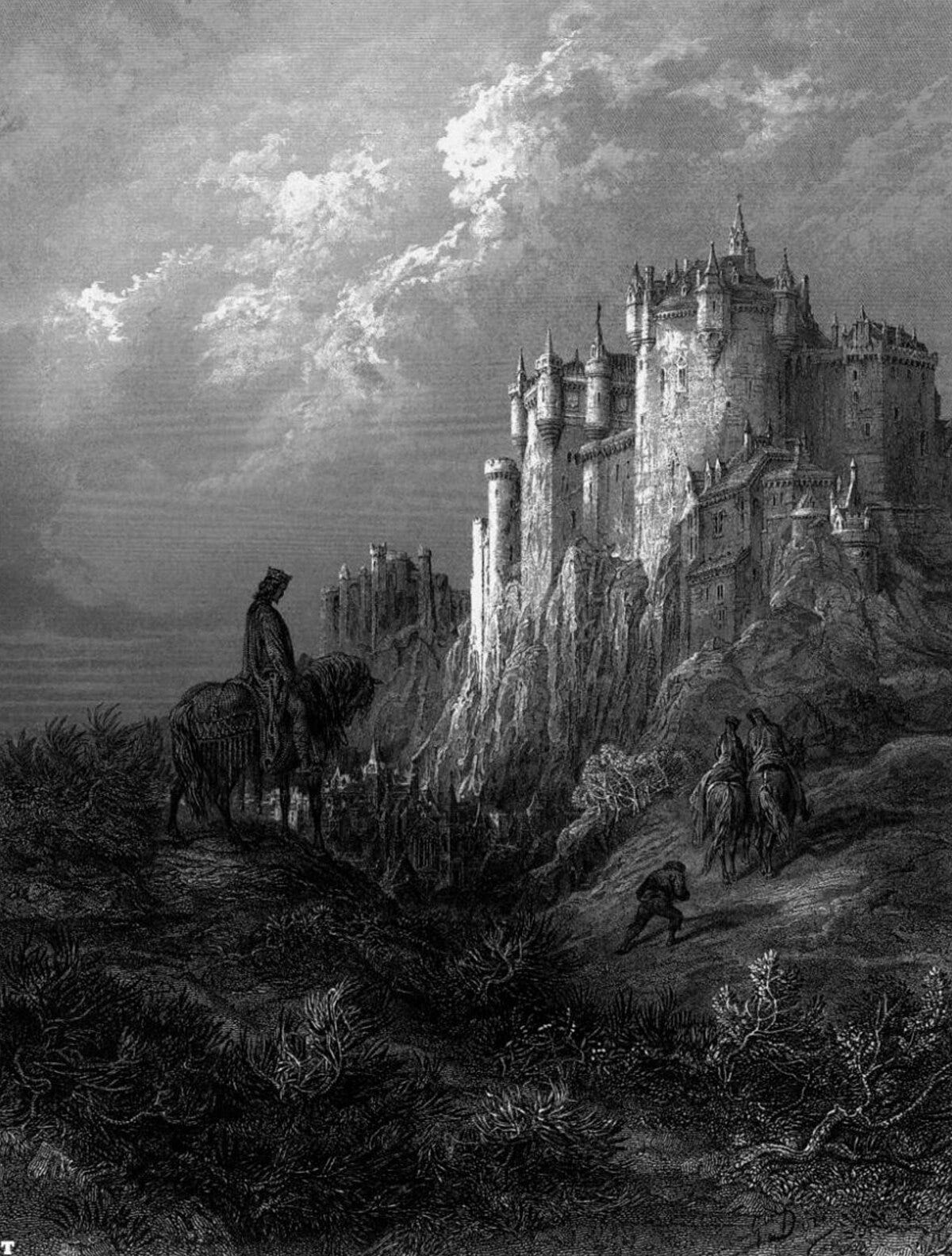
This collection includes my modern English translations of Old English and Middle English war poems by Alfred the Great, Deor, William Herebert, Layamon, Laurence Minot, and the greatest of the ancient poets, Anonymous.
Needless to say, there will be no Gandhis or Wilfred Owens in this company. Anti-war poems would have to bide their time. Even Anonymous declined to “go there.”
WALDERE
“Waldere” recounts the exploits of Walter of Aquitaine, a legendary king of the Visigoths. In the poem Waldere and Hildeguth or Hildegyth flee the court of Attila, where they were being held hostage, for Aquitaine. The poem mentions names that appear in “Deor’s Lament,” such as Theodric, Widia and Beadohild. Unfortunately, only 63 lines of “Waldere” survived, in two fragments of around 30 lines each.
Waldere Excerpt
Old English poem circa 1000 AD
loose translation/interpretation by Michael R. Burch
Thus Hildeguth spoke, heartening him:
“Surely the work of Wayland shall never fail,
the savage sword Mimming, when held by a man
who bolsters its blade. Felled, the fiercest fighters
lie broken, bleeding profusely from terrible wounds,
lords and aethelings laid low on the battlefield,
heirs of grim war-graves.
Son of Aelfhere, right hand of Attila,
best and boldest of his warlords,
don’t let your heart faint, nor your courage wilt.
The time has come to summon all your daring,
to gain glory or give up living for a long doom.”
...
ALFRED THE GREAT
King Alfred the Great may have done more to lay the groundwork for English literacy than any other English monarch. And he was quite the scholar himself, although there is no consensus that the following translations were primarily Alfred’s work. He could have done the translations himself; he could have overseen the work; or he may have commissioned the translations. No one really knows.
Alfred the Great undertook to translate “the most needful works for all men to know.” He wanted to succeed “both in war and in wisdom.” Alfred has been credited with helping to develop a new English prose style.
The Meters of Boethius: Prelude or Verse Preface
attributed to King Alfred the Great, circa 880 AD
loose translation/interpretation by Michael R. Burch
Thus begin the tales King Alfred taught us.
The great West Saxon ruler, in his cunning,
Understood the art of all songmen,
Revealed his great skill as a poet.
Keenly he longed for Saxons to craft such songs,
To make men merry with manifold amusements,
To ward away world-weariness with pleasing poems.
Alfred loved poetry for its art and power,
Longed for it to free men from both boredom and pride.
But the arrogant man, in his self-importance,
Pays little heed to wise words. Still I must speak,
Begin my singing, weave tales well-known
For attentive mortals. Hear me, if you will.
Boethius Lay I: The Goths
from King Alfred the Great's Meters of Boethius, circa 880 AD
loose translation/interpretation by Michael R. Burch
Long ago the Goths left Scythia,
swarms of shieldmen streaming from the east,
two savage tribes tramping southward,
both growing in greatness year by year.
Under the rule of two remarkable kings,
Raedgod and Aleric, their people prospered.
Many Goths made it across the Alps,
intent on conquest, raging with war-lust.
Braying brazen battle-boasts, eager to attack
the awaiting Romans, their armor flashing,
stout shieldmen descended, waving war-banners
and slashing swords.
They intended to overrun Italy...
Boethius Lay VI: Nothing Permanent on Earth
from King Alfred the Great's Meters of Boethius, circa 880 AD
loose translation/interpretation by Michael R. Burch
Wisdom once again unlocked her word-hoard,
Sang her glorious maxims, another truth-song
For Boethius, sharing her knowledge:
"When the sun shines clearest, serenest in the heavens,
All the other stars are quickly obscured
Everywhere on earth, because their brightness
Is not brightness at all, compared to his.
When the wind blows mildly from the southwest,
The flowers joyfully adorn the fields everywhere beneath the clouds.
But then the stark strong storm emerges from the northeast
To quickly rend the rose's beauty.
The destructive northern storm, compelled by necessity,
Wildly agitated, lashes out at the spacious sea,
Litters its shores with debris.
Alas! Nothing lovely lasts on earth.
Here nothing is permanent;
Time in the end will take its toll
And fears torment the soul.”
King Alfred the Great Quote Translations
Remember the suffering that befell us when we did not cherish learning ourselves, nor communicate it to others. — King Alfred the Great, to his bishops, translation by Michael R. Burch
The saddest thing about any man is ignorance, the gladdest thing knowledge. — King Alfred the Great, translation by Michael R. Burch
As often as you can, free yourself from worldly affairs to acquire wisdom. — King Alfred the Great, translation by Michael R. Burch
I desire my name to be remembered for good works. — King Alfred the Great, translation by Michael R. Burch
The premature vow snaps itself. — King Alfred the Great, translation by Michael R. Burch
Such chaos, when love and duty clash! — King Alfred the Great, translation by Michael R. Burch
Should life be labor alone? — King Alfred the Great, translation by Michael R. Burch
Time speeds even in the middle of the night. — King Alfred the Great, translation by Michael R. Burch
I embrace destiny and the doom assigned. — King Alfred the Great, translation by Michael R. Burch
The Corpus Christi Carol
anonymous Middle English poem, circa early 16th century
loose translation/interpretation by Michael R. Burch
He bore him up, he bore him down,
He bore him into an orchard brown.
Lully, lullay, lully, lullay!
The falcon has borne my mate away.
In that orchard there stood a hall
Hanged all over with purple and pall.
Lully, lullay, lully, lullay!
The falcon has borne my mate away.
And in that hall there stood a bed
hanged all over with gold so red.
Lully, lullay, lully, lullay!
The falcon has borne my mate away.
And in that bed there lies a knight,
His wounds all bleeding both day and night.
Lully, lullay, lully, lullay!
The falcon has borne my mate away.
By that bed's side there kneels a maid,
And she weeps both night and day.
Lully, lullay, lully, lullay!
The falcon has borne my mate away.
And by that bedside stands a stone,
"Corpus Christi" written thereon.
Lully, lullay, lully, lullay!
The falcon has borne my mate away.
I Have Labored Sore
anonymous medieval lyric circa the fifteenth century
loose translation/interpretation by Michael R. Burch
I have labored sore and suffered death,
so now I rest and catch my breath.
But I shall come and call right soon
heaven and earth and hell to doom.
Then all shall know both devil and man
just who I was and what I am.
I haue laborede sore and suffered deyeth
and now I Rest and draw my [b]reyght
But I schall com and call Ryght sone
heuen and erthe and hell to dome
and than schall know both devyll and man
what I was and what I am
Brut, an excerpt
by Layamon, circa 1100 AD
loose translation/interpretation by Michael R. Burch
Now he stands on a hill overlooking the Avon,
seeing steel fishes girded with swords in the stream,
their swimming days done,
their scales a-gleam like gold-plated shields,
their fish-spines floating like shattered spears.
Layamon's Brut is a 32,000-line poem composed in Middle English that shows a strong Anglo-Saxon influence and contains the first known reference to King Arthur in English. The passage above is a good example of Layamon's gift for imagery. It's interesting, I think, that a thousand years ago a poet was dabbling in surrealism, with dead warriors being described as if they were both men and fish.
Tegner's Drapa
loose translation/interpretation by Michael R. Burch
I heard a voice, that cried,
“Balder the beautiful lies dead, lies dead …”
a voice like the flight of white cranes
intent on a sun sailing high overhead—
but a sun now irretrievably setting.
Then I saw the sun’s corpse
—dead beyond all begetting—
borne through disconsolate skies
as blasts from the Nifel-heim rang out with dread,
“Balder lies dead, our fair Balder lies dead! …”
Lost—the sweet runes of his tongue,
so sweet every lark hushed its singing!
Lost, lost forever—his beautiful face,
the grace of his smile, all the girls’ hearts wild-winging!
O, who ever thought such strange words might be said,
as “Balder lies dead, gentle Balder lies dead! …”
Les Espagnols-sur-mer
by Laurence Minot
loose translation/interpretation by Michael R. Burch
I would not spare to speak, if I wished success,
of strong men with weapons in worthy armor,
who were driven to deeds and now lie dead.
Who sailed the seas, fishes to feed.
Fell fishes they feed now, for all their vaunting fanfare;
for it was with the waning of the moon that they came there.
They sailed forth into perils on a summer’s tide,
with trumpets and tabors and exalted pride. …
When they sailed westward, although they were mighty in war,
their bulwarks, their anchors were of no avail.
For mighty men of the west drew nearer and nearer
and they stumbled into the snare, because they had no fear.
For those who fail to flee become prey in the end
and those who once plundered, perish.
Original Middle English Text:
I wald noght spare for to speke, wist I to spede,
of wight men with wapin and worthly in wede
that now er driven to dale and ded all thaire dede.
Thai sail in the see gronde fissches to fede.
Fele fissches thai fede for all thaire grete fare;
it was in the waniand that thai come thare.
Thai sailed furth in the Swin in a somers tyde,
with trompes and taburns and mekill other pride. …
When thai sailed westward, tho wight men in were,
thaire hurdis, thaire ankers hanged thai on here.
Wight men of the west neghed tham nerr
and gert tham snaper in the snare – might thai no ferr.
Fer might thai noght flit, bot thare most thai fine,
and that thai bifore reved than most thai tyne.
On the Siege of Calais, 1436
by Laurence Minot, possibly
loose translation/interpretation by Michael R. Burch
On the 19th of July, 1436, the Duke of Burgundy laid siege to the city of Calais, but was forced to lift the siege just six days later.
The next morrow, while it was day,
Early, the Duke fled away,
And with him, they off Ghent.
For after Bruges and Apres both
To follow after they were not loath;
Thus they made their departure.
For they had knowledge
Of the Duke of Gloucester’s coming,
Calais to rescue.
Because they bode not there,
In Flanders, he sought them far and near,
That ever after they might rue it.
Original Middle English Text:
The next morow, or yt was day,
Erly the duk fled oway,
And with hym they off Gant.
And after Bruges and Apres both
To folow after they wer not loth;
Thus kept they ther avaunt.
For they had very knowyng
Off the duk off Gloceturs cumyng,
Caleys to rescue.
Bycaus they bod not ther
In Flanders he soght hem fer and ner,
That ever may they yt rew.
In the following poem Finnsburuh means "Finn's stronghold" and Finn was a Frisian king. This battle between Danes and Frisians is also mentioned in the epic Anglo-Saxon poem Beowulf. Hnaef and his 60 retainers were house-guests of Finn at the time of the battle.
The Finnesburg Fragment or The Fight at Finnsburg
anonymous Old English/Anglo-Saxon poem, circa 10th-11th century AD
loose translation/interpretation by Michael R. Burch
Battle-bred Hnaef broke the silence:
"Are the eaves aflame, is there dawn in the east,
are there dragons aloft? No, only the flares of torches
borne on the night breeze. Evil is afoot. Soon the hoots of owls,
the weird wolf's howls, cries of the carrion crows, the arrow's screams,
and the shield's reply to the lance's shaft, shall be heard.
Heed the omens of the moon, that welkin-wanderer.
We shall soon feel in full this folk's fury for us.
Shake yourselves awake, soldiers! On your feet!
Who's with me? Grab your swords and shields. Loft your linden!"
"The Battle of Brunanburh" is the first poem to appear in the Anglo-Saxon Chronicle. Aethelstan and Edmund were the grandsons of King Alfred the Great.
The Battle of Brunanburh or The Battle of Brunanburgh
anonymous Old English/Anglo-Saxon poem, circa 937 AD or later
loose translation/interpretation by Michael R. Burch
Her Aethelstan cyning, / Aethelstan the King,
eorla dryhten, / Lord over earls,
beorna beag-giefa, / bracelet-bestower,
and his brothor eac, / and with him his brother,
Eadmund aetheling, / Edmund the Atheling,
ealdor-lange tir / earned unending glory:
geslogon aet saecce / glory they gained in battle
sweorda ecgum / as they slew with the sword's edge
ymbe Brunanburh. / many near Brunanburgh…
The Battle of Maldon
anonymous Old English/Anglo-Saxon poem, circa 991 AD or later
loose translation/interpretation by Michael R. Burch
…would be broken.
Then he bade each warrior unbridle his horse,
set it free, drive it away and advance onward afoot,
intent on deeds of arms and dauntless courage.
It was then that Offa's kinsman kenned
their Earl would not accept cowardice,
for he set his beloved falcon free, let it fly woods-ward,
then stepped forward to battle himself, nothing withheld.
By this his men understood their young Earl's will full well,
that he would not weaken when taking up weapons.
Eadric desired to serve his Earl,
his Captain in the battle to come; thus he also advanced forward,
his spear raised, his spirit strong,
boldly grasping buckler and broadsword,
ready to keep his vow to stand fast in the fight.
Byrhtnoth marshalled his men,
teaching each warrior his task:
how to stand, where to be stationed…
“What is he, this lordling, that cometh from the fight?”
by William Herebert, circa early 14th century
loose translation/interpretation by Michael R. Burch
Who is he, this lordling, who staggers from the fight,
with blood-red garb so grisly arrayed,
once appareled in lineaments white?
Once so seemly in sight?
Once so valiant a knight?
“It is I, it is I, who alone speaks right,
a champion to heal mankind in this fight.”
Why then are your clothes a bloody mess,
like one who has trod a winepress?
“I trod the winepress alone,
else mankind was done.”
“Stafell Gynddylan” (“The Hall of Cynddylan”) belongs to the cycle of Welsh englynion (three-line stanzas) traditionally called “Canu Heledd” (“The Song of Heledd”). Some englynion such as “Canu Llywarch Hen,” “Canu Urien” and “Canu Heledd” are called saga englynion because they are considered to be part of saga cycles. “Stafell Gynddylan” laments the destruction of Cynddylan and his warband at the hands of the English (at that time the Saxons). These poems are attested principally in the Red Book of Hergest, which was written circa 1382 to 1410.
The Welsh “dd” is pronounced “th.”
Cynddylan is pronounced KahN-THIHL-aeN.
Stafell Gynddylan (“The Hall of Cynddylan”)
Welsh englynion circa 1382-1410
loose translation/interpretation by Michael R. Burch
The hall of Cynddylan lies dark tonight.
Lacking fire and a bed,
I will weep awhile then lapse into silence.
The hall of Cynddylan lies dark tonight.
Lacking fire or a candle,
save God, who will preserve my sanity?
The hall of Cynddylan lies dark tonight.
Lacking fire, lacking light,
grief for you overwhelms me!
The hall of Cynddylan’s roof is dark.
After the blessed assembly,
still little the good that comes of it.
Hall of Cynddylan, you have become shapeless, amorphous.
Your shield lies in the grave.
While he lived, no one breached these gates.
The hall of Cynddylan mourns tonight,
mourns for its lost protector.
Alas death, why did you spare me?
The hall of Cynddylan trembles tonight,
atop the shivering rock,
lacking lord, lacking liege, lacking protector.
The hall of Cynddylan lies dark tonight.
Lacking fire, lacking mirth, lacking songs.
My cheeks are eroded by tears.
The hall of Cynddylan lies dark tonight.
Lacking fire, lacking heroes, lacking a warband.
Abundant, my tears’ rains.
The hall of Cynddylan offends my eyes,
lacking roof, lacking fire.
My lord lies dead, and yet I still live?
The hall of Cynddylan lies shattered tonight,
without her steadfast warriors,
Elfan, and gold-torqued Cynddylan.
The hall of Cynddylan lies desolate tonight,
no longer respected
without the men and women who maintained it.
The hall of Cynddylan lies quiet tonight,
stunned to silence by losing its lord.
Merciful God, what must I do?
The hall of Cynddylan’s roof is dark,
after the Saxons destroyed
shining Cynddylan and Elfan of Powys.
The hall of Cynddylan lies dark tonight:
lost, the race of the Cyndrwyn,
of Cynon and Gwion and Gwyn.
Hall of Cynddylan, you wound me, hourly,
having lost that great company
who once warmed hands at your hearth.
Beowulf
anonymous Old English/Anglo-Saxon poem, circa 8th-10th century AD
loose translation/interpretation by Michael R. Burch
LO, praise the prowess of the Spear-Danes
whose clan-thanes ruled in days bygone,
possessed of dauntless courage and valor.
All have heard the honors the athelings won,
of Scyld Scefing, scourge of rebellious tribes,
wrecker of mead-benches, harrier of warriors,
awer of earls. He had come from afar,
first friendless, a foundling, till Fate intervened:
for he waxed under the welkin and persevered,
until folk, far and wide, on all coasts of the whale-path,
were forced to yield to him, bring him tribute.
A good king!
To him an heir was afterwards born,
a lad in his yards, a son in his halls,
sent by heaven to comfort the folk.
Knowing they'd lacked an earl a long while,
the Lord of Life, the Almighty, made him far-renowned.
Beowulf’s fame flew far throughout the north,
the boast of him, this son of Scyld,
through Scandian lands.
…
Grendel was known of in Geatland, far-asea,
the horror of him.
…
Beowulf bade a seaworthy wave-cutter
be readied to bear him to Heorot,
over the swan's riding,
to defense of that good king, Hrothgar.
Wise men tried to dissuade him
because they held Beowulf dear,
but their warnings only whetted his war-lust.
Yet still he pondered the omens.
The resolute prince handpicked his men,
the fiercest of his folk, to assist him:
fourteen men sea-wise, stout-hearted,
battle-tested. Led them to the land's edge.
Hardened warriors hauled bright mail-coats,
well-wrought war gear, to the foot of her mast.
At high tide she rode the waves, hard in by headland,
as they waved their last farewells, then departed.
Away she broke like a sea-bird, skimming the waves,
wind-borne, her curved prow plowing the ocean,
till on the second day the skyline of Geatland loomed.
…
“Wulf and Eadwacer” is a gripping portrayal of what happens to too many women when men go to war…
Wulf and Eadwacer
Old English poem circa 960-990 AD
loose translation/interpretation by Michael R. Burch
My people pursue him like crippled prey.
They'll rip him apart if he approaches their pack.
We are so different!
Wulf's on one island; I'm on another.
His island's a fortress, fastened by fens.
Here, bloodthirsty curs howl for carnage.
They'll rip him apart if he approaches their pack.
We are so different!
My thoughts pursued Wulf like panting hounds.
Whenever it rained, as I wept,
the bold warrior came; he took me in his arms:
good feelings, to a point, but the end loathsome!
Wulf, O, my Wulf, my ache for you
has made me sick; your infrequent visits
have left me famished, deprived of real meat!
Do you hear, Eadwacer? Watchdog!
A wolf has borne our wretched whelp to the woods.
One can easily sever what never was one:
our song together.
What an earthy, dirty, brutally honest poem written from a female perspective about what sounds like war, a family being split apart, and perhaps rape, sex slavery and child abduction and/or infanticide. Much remains in doubt: did Wulf abduct the child, perhaps thinking the child was his, or did the mother, the rapist or perhaps the rapist's wife get rid of the child? In my opinion the original poem is one of the truly great poems in the English language, so my translation seems like a worthwhile endeavor, especially if other people like what I've done.
Deor's Lament
Anglo Saxon poem, circa 10th century AD
loose translation/interpretation by Michael R. Burch
Weland knew the agony of exile.
That indomitable smith was wracked by grief.
He endured countless troubles:
sorrows were his only companions
in his frozen island dungeon
after Nithad had fettered him,
many strong-but-supple sinew-bonds
binding the better man.
That passed away; this also may.
Beadohild mourned her brothers' deaths
but even more, her own sad state
once she discovered herself with child.
She predicted nothing good could come of it.
That passed away; this also may.
We have heard that the Geat's moans for Matilda,
his lady, were limitless,
that his sorrowful love for her
robbed him of regretless sleep.
That passed away; this also may.
For thirty winters Theodric ruled
the Mæring stronghold with an iron hand;
many knew this and moaned.
That passed away; this also may.
We have also heard of Ermanaric's wolfish ways,
of how he held wide sway in the realm of the Goths.
He was a grim king! Many a warrior sat,
full of cares and maladies of the mind,
wishing constantly that his kingdom might be overthrown.
That passed away; this also may.
If a man sits long enough, sorrowful and anxious,
bereft of joy, his mind constantly darkening,
soon it seems to him that his troubles are endless.
Then he must consider that the wise Lord
often moves through the earth
granting some men honor, glory and fame,
but others only shame and hardship.
This I will say for myself:
that for awhile I was the Heodeninga's scop,
dear to my lord. My name was Deor.
For many winters I held a fine office,
faithfully serving a just lord. But now Heorrenda
a man skilful in songs, has received the estate
the protector of warriors gave me.
That passed away; this also may.
WIDSITH
Widsith, the "wide-wanderer" or "far-traveler," was a fictional poet and harper who claimed to have sung for everyone from Alexander the Great, Caesar and Attila, to the various kings of the Angles, Saxons and Vikings! The poem that bears his name is a thula, or recited list of historical and legendary figures, and an ancient version of, "I've Been Everywhere, Man."
Widsith, the Far-Traveler
anonymous Old English/Anglo-Saxon poem, circa 680-950 AD
loose translation/interpretation by Michael R. Burch
Widsith the wide-wanderer began to speak,
unlocked his word-hoard, manifested his memories,
he who had travelled earth's roads furthest
among the races of men—their tribes, peoples and lands.
He had often prospered in the mead-halls,
competing for precious stones with his tale-trove.
His ancestors hailed from among the Myrgings,
whence his lineage sprung, a scion of Ealhhild,
the fair peace-weaver. On his first journey, east of the Angles,
he had sought out the home of Eormanric,
the angry oath-breaker and betrayer of men.
Widsith, rich in recollections, began to share his wisdom thus:
I have learned much from mighty men, their tribes' mages,
and every prince must live according to his people's customs,
acting honorably, if he wishes to prosper upon his throne.
Hwala was the best, for awhile,
Alexander the mightiest, beyond compare,
his empire the most prosperous and powerful of all,
among all the races of men, as far as I have heard tell.
Attila ruled the Huns, Eormanric the Goths,
Becca the Banings, Gifica the Burgundians,
Caesar the Greeks, Caelic the Finns,
Hagena the Holmrigs, Heoden the Glomms,
Witta the Swæfings, Wada the Hælsings,
Meaca the Myrgings, Mearchealf the Hundings,
Theodric the Franks, Thyle the Rondings,
Breoca the Brondings, Billing the Wærns,
Oswine the Eowan, Gefwulf the Jutes,
Finn Folcwalding the Frisians,
Sigehere ruled the Sea-Danes for decades,
Hnæf the Hockings, Helm the Wulfings,
Wald the Woings, Wod the Thuringians,
Sæferth the Secgan, Ongendtheow the Swedes,
Sceafthere the Ymbers, Sceafa the Lombards,
Hun the Hætwera, Holen the Wrosnas,
Hringweald was king of the Herefara.
Offa ruled the Angles, Alewih the Danes,
the bravest and boldest of men,
yet he never outdid Offa.
For Offa, while still a boy, won in battle the broadest of kingdoms.
No one as young was ever a worthier Earl!
With his stout sword he struck the boundary of the Myrgings,
fixed it at Fifeldor, where afterwards the Angles and Swæfings held it.
Hrothulf and Hrothgar, uncle and nephew,
for a long time kept a careful peace together
after they had driven away the Vikings' kinsmen,
vanquished Ingeld's spear-hordes,
and hewed down at Heorot the host of the Heathobards.
Thus I have traveled among many foreign lands,
crossing the earth's breadth,
experiencing both goodness and wickedness,
cut off from my kinsfolk, far from my family.
Thus I can speak and sing these tidings in the mead-halls,
of how how I was received by the most excellent kings.
Many were magnanimous to me!
I was among the Huns and the glorious Ostrogoths,
among the Swedes, the Geats, and the South-Danes,
among the Vandals, the Wærnas, and the Vikings,
among the Gefthas, the Wends, and the Gefflas,
among the Angles, the Swabians, and the Ænenas,
among the Saxons, the Secgan, and the Swordsmen,
among the Hronas, the Danes, and the Heathoreams,
among the Thuringians and the Throndheims,
also among the Burgundians, where I received an arm-ring;
Guthhere gave me a gleaming gem in return for my song.
He was no gem-hoarding king, slow to give!
I was among the Franks, the Frisians, and the Frumtings,
among the Rugas, the Glomms, and the Romans.
I was likewise in Italy with Ælfwine,
who had, as I'd heard, commendable hands,
fast to reward fame-winning deeds,
a generous sharer of rings and torques,
the noble son of Eadwine.
I was among the Saracens and also the Serings,
among the Greeks, the Finns, and also with Caesar,
the ruler of wine-rich cities and formidable fortresses,
of riches and rings and Roman domains.
He also controlled the kingdom of Wales.
I was among the Scots, the Picts and the Scrid-Finns,
among the Leons and Bretons and Lombards,
among the heathens and heroes and Huns,
among the Israelites and Assyrians,
among the Hebrews and Jews and Egyptians,
among the Medes and Persians and Myrgings,
and with the Mofdings against the Myrgings,
among the Amothings and the East-Thuringians,
among the Eolas, the Ista and the Idumings.
I was also with Eormanric for many years,
as long as the Goth-King availed me well,
that ruler of cities, who gave me gifts:
six hundred shillings of pure gold
beaten into a beautiful neck-ring!
This I gave to Eadgils, overlord of the Myrgings
and my keeper-protector, when I returned home,
a precious adornment for my beloved prince,
after which he awarded me my father's estates.
Ealhhild gave me another gift,
that shining lady, that majestic queen,
the glorious daughter of Eadwine.
I sang her praises in many lands,
lauded her name, increased her fame,
the fairest of all beneath the heavens,
that gold-adorned queen, glad gift-sharer!
Later, Scilling and I created a song for our war-lord,
my shining speech swelling to the sound of his harp,
our voices in unison, so that many hardened men, too proud for tears,
called it the most moving song they'd ever heard.
Afterwards I wandered the Goths' homelands,
always seeking the halest and heartiest companions,
such as could be found within Eormanric's horde.
I sought Hethca, Beadeca and the Herelings,
Emerca, Fridlal and the Ostrogoths,
even the wise father of Unwen.
I sought Secca and Becca, Seafola and Theodric,
Heathoric and Sifeca, Hlithe and Ongentheow,
Eadwine and Elsa, Ægelmund and Hungar,
even the brave band of the Broad-Myrgings.
I sought Wulfhere and Wyrmhere where war seldom slackened,
when the forces of Hræda with hard-striking swords
had to defend their imperiled homestead
in the Wistla woods against Attila's hordes.
I sought Rædhere, Rondhere, Rumstan and Gislhere,
Withergield and Freotheric, Wudga and Hama,
never the worst companions although I named them last.
Often from this band flew shrill-whistling wooden shafts,
shrieking spears from this ferocious nation,
felling enemies because they wielded the wound gold,
those good leaders, Wudga and Hama.
Thus I have always found this to be true in my far-venturing:
that the dearest man among earth-dwellers
is the one God gives to rule ably over others.
But the makar's weird is to be a wanderer. [maker's/minstrel's fate]
The minstrel travels far, from land to land,
singing his needs, speaking his grateful thanks,
whether in the sunny southlands or the frigid northlands,
measuring out his word-hoard to those unstingy of gifts,
to those rare elect rulers who understand art's effect on the multitudes,
to those open-handed lords who would have their fame spread,
via a new praise-verse, thus earning enduring reputations
under the heavens.
Westron Wynde (I)
anonymous Middle English lyric, found in a partbook circa 1530 AD
loose translation/interpretation by Michael R. Burch
Western wind, when will you blow,
bringing the drizzling rain?
Christ, that my love were in my arms,
and I in my bed again!
The original poem has “the smalle rayne down can rayne” which suggests a drizzle or mist.
Westron Wynde (II)
anonymous Middle English lyric, found in a partbook circa 1530 AD
loose translation/interpretation by Michael R. Burch
Western wind, when will you blow,
bringing the stinging rain?
Christ, that my love were in my arms,
and I in my bed again!
Related Pages: Song of Amergin, Caedmon's Hymn, Bede's Death Song, Deor's Lament, Wulf and Eadwacer, The Wife's Lament, Anglo-Saxon Poems, Anglo-Saxon Riddles and Kennings, Middle English Poems, Ballads, Tom O'Bedlam's Song
These are stunning, resonating with all the woe and reverence for a world unceasingly at war.
The reading of Medieval history is not given the weight it deserves. Lessons learned, the acceptance of fate. All the reasons we need to strive, but somehow do not.