
METAPHOR!
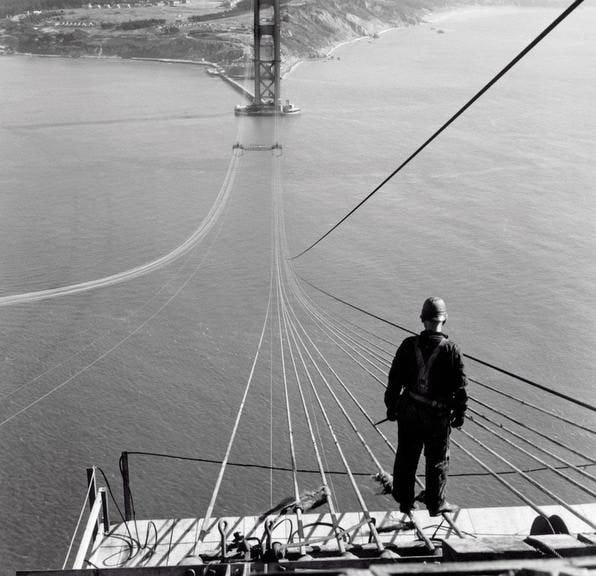
A metaphor is a bridge, usually between something material, like a lemon, and something abstract, like a deal that's bitter and hard to swallow.

These poems have some of my best metaphors, whether in original poems or translations.
Eros harrows my heart:
wild winds whipping desolate mountains,
uprooting oaks.
—Sappho, fragment 42, loose translation/interpretation by Michael R. Burch
Sappho of Lesbos was arguably the first great lyric poet we know by name. Her metaphor of lust — Eros was the Greek god of erotic love — being like a thunderstorm uprooting oaks is both powerful and timeless.
Grasses wilt:
the braking locomotive
grinds to a halt.
—Yamaguchi Seishi, loose translation/interpretation by Michael R. Burch
In this haiku the wilting grasses and the braking locomotive both represent the process of things slowing down, aging and dying.
Come, investigate loneliness!
a solitary leaf
clings to the Kiri tree
—Matsuo Basho, loose translation/interpretation by Michael R. Burch
A single leaf can be a convincing metaphor for loneliness and alienation, in the hands of a master of haiku like Matsuo Basho.
Oh, fallen camellias,
if I were you,
I'd leap into the torrent!
— Takaha Shugyo, loose translation/interpretation by Michael R. Burch
Our life here on earth:
to what shall we compare it?
Perhaps to a rowboat
departing at daybreak,
leaving no trace of us in its wake?
—Takaha Shugyo, loose translation/interpretation by Michael R. Burch
Wulf and Eadwacer
loose translation/interpretation by Michael R. Burch
My clan's curs pursue him like crippled game;
they'll rip him apart if he approaches their pack.
It is otherwise with us.
Wulf's on one island; I'm on another.
His island's a fortress, fastened by fens. (fastened=secured)
Here, bloodthirsty curs howl for carnage.
They'll rip him apart if he approaches their pack.
It is otherwise with us.
My hopes pursued Wulf like panting hounds,
but whenever it rained—how I wept!—
the boldest cur clutched me in his paws:
good feelings, to a point, but the end loathsome!
Wulf, O, my Wulf, my ache for you
has made me sick; your seldom-comings
have left me famished, deprived of real meat.
Have you heard, Eadwacer? Watchdog!
A wolf has borne our wretched whelp to the woods.
One can easily sever what never was one:
our song together.
The metaphor of a loveless relationship being like a song in which two voices never really harmonized remains one of the strongest in the English language, or any language.
The oldest extant English poem employs the metaphors of God being the first Architect and Poet ...
Cædmon's Hymn
Anglo-Saxon poem circa 658-680 AD
loose translation/interpretation by Michael R. Burch
Now let us honour heaven-kingdom's Guardian,
the might of the Architect and his mind-plans,
the work of the Glory-Father. First he, the Eternal Lord,
established the foundation of wonders.
Then he, the First Poet, created heaven as a roof
for the sons of men, Holy Creator,
Maker of mankind. Then he, the eternal Lord,
afterwards made men middle-earth: Master almighty!
The imbecile
constructs cages
for everyone he knows,
while the sage
(who has to duck his head
whenever the moon glows)
keeps dispensing keys
all night long
to the beautiful, rowdy,
prison gang.
—Hafiz, loose translation/interpretation by Michael R. Burch
I love the wisdom and spirit of Hafiz in the subversive (pardon the pun) little poem above. I can see Trump putting refugees in cages, while Hafiz goes around letting them out for a moondance! In this poem, keys represent freedom.
What the Poet Sees
by Michael R. Burch
What the poet sees,
he sees as a swimmer underwater
watching the shoreline blur
sees through his breath’s weightless bubbles ...
Both worlds grow obscure.
A local symbol is one that is "local" to a particular poem or other work of literature. In this short poem of mine, I describe "poetic vision" as being like a scuba diver swimming through the bubbles created by his own breath.
Last Night
by Faiz Ahmed Faiz
loose translation by Michael R. Burch
Last night, your memory stole into my heart
as spring sweeps uninvited into barren gardens,
as morning breezes reinvigorate dormant deserts,
as a patient suddenly feels well, for no apparent reason ...
Shema
by Primo Levi
loose translation/interpretation by Michael R. Burch
You who live secure
in your comfortable homes,
who return each evening to find
warm food and welcoming faces ...
Consider: is this a "man"
who slogs through the mud,
who knows no peace,
who fights for crusts of bread,
who dies at another man's whim,
at his "yes" or "no" lies dead.
Consider: is this is a "woman"
bald and bereft of a name
because she lacks the strength to remember,
her eyes as void and her womb as frigid
as a winter frog's.
Consider that such horrors have indeed been!
I commend these words to you.
Engrave them in your hearts
when you lounge in your beds
and again when you rise,
when you venture outside.
Repeat them to your children,
or may your houses crumble
and disease render you helpless
so that even your offspring avert their eyes.
Primo Levi’s metaphor of a female Holocaust victim having eyes as void and a womb as frigid as a winter frog’s is arresting and powerful.
Buna
by Primo Levi
loose translation/interpretation by Michael R. Burch
Mangled feet, cursed earth,
the long interminable line in the gray morning
as Buna smokes corpses through industrious chimneys ...
Another gray day like every other day awaits us.
The terrible whistle shrilly announces dawn:
"Rise, wretched multitudes, with your lifeless faces,
welcome the monotonous hell of the mud ...
another day’s suffering has begun!"
Weary companion, I know you well.
I see your dead eyes, my disconsolate friend.
In your breast you bear the burden of cold, deprivation, emptiness.
Life long ago broke what remained of the courage within you.
Colorless one, you once were a real man;
a considerable woman once accompanied you.
But now, my invisible companion, you lack even a name.
So forsaken, you are unable to weep.
So poor in spirit, you can no longer grieve.
So tired, your flesh can no longer shiver with fear ...
My once-strong man, now spent,
were we to meet again
in some other world, beneath some sunnier sun,
with what unfamiliar faces would we recognize each other?
Buna was the largest Auschwitz sub-camp, with around 40,000 foreign “workers” who had been enslaved by the Nazis.
The image of Buna’s chimneys "smoking" corpses to ash, the way smokers produce ash from cigarettes, is stunning. Levi's metaphor may also suggest that the morning is gray because of the ash rising from Buna's chimneys, the way smoking cigarettes can cloud the surrounding air.
Levi called the Jews of Buna the “slaves of slaves” because the other slaves outranked them. Despite Buna’s immense size and four years of activity, according to Levi it never produced a single kilo of its intended product: synthetic rubber. Levi described Buna as “desperately and essentially opaque and gray.” He said not a blade of grass grew within the compound because its soil had been impregnated with the “poisonous juices of coal and petroleum” so that nothing was alive but machines and slaves, with the former “more alive” than the latter. Levi also related hearing a Buna Kapo say that the only way Jews could leave Auschwitz was “through the Chimney” of the crematorium. It is possible that the companion being addressed in “Buna” is Primo Levi himself, recognizing what he had been reduced to by such an existence.
Todesfuge (“Death Fugue”)
by Paul Celan
loose translation/interpretation by Michael R. Burch
Black milk of daybreak, we drink you come dusk;
we drink you come midday, come morning, come night;
we drink you and drink you.
We’re digging a grave like a hole in the sky;
there’s sufficient room to lie there.
The man of the house plays with vipers; he writes
in the Teutonic darkness, “Your golden hair Margarete ...”
He composes by starlight, whistles hounds to stand by,
whistles Jews to dig graves, where together they’ll lie.
He commands us to strike up bright tunes for the dance!
Black milk of daybreak, we drink you come dusk;
we drink you come dawn, come midday, come night;
we drink you and drink you.
The man of the house plays with serpents; he writes ...
he writes as the night falls, “Your golden hair Margarete ...
Your ashen hair Shulamith ...”
We are digging dark graves where there’s more room, on high.
His screams, “Hey you, dig there!” and “Hey you, sing and dance!”
He grabs his black nightstick, his eyes pallid blue,
screaming, “Hey you—dig deeper! You others—sing, dance!”
Black milk of daybreak, we drink you come dusk;
we drink you come midday, come morning, come night;
we drink you and drink you.
The man of the house writes, “Your golden hair Margarete ...
Your ashen hair Shulamith ...” as he cultivates snakes.
He screams, “Play Death more sweetly! Death’s the master of Germany!”
He cries, “Scrape those dark strings, soon like black smoke you’ll rise
to your graves in the skies; there’s sufficient room for Jews there!”
Black milk of daybreak, we drink you come midnight;
we drink you come midday; Death’s the master of Germany!
We drink you come dusk; we drink you and drink you ...
He’s a master of Death, his pale eyes deathly blue.
He fires leaden slugs, his aim level and true.
He writes as the night falls, “Your golden hair Margarete ...”
He unleashes his hounds, grants us graves in the skies.
He plays with his serpents; Death’s the master of Germany ...
“Your golden hair Margarete ...
your ashen hair Shulamith ...”
Paul Celan’s famous Holocaust poem is full of vivid imagery and powerful, disturbing metaphors. Celan mixes metaphor with reality, to paint a picture of a Nazi who writes romantic love poems while sending Jews to mass graves ("where together they'll lie"). We cannot take the "hole in the sky" and "plays with vipers" literally, nor is the darkness really "Teutonic." But we can certainly "get" what Celan wants us to see and understand. It is also vital to the poem that the Nazis considered fair-skinned human beings with "golden hair" to be "superior" to people with darker skin and hair. So when the Nazi poet writes "Your golden hair Margarete" in the Teutonic darkness, this is probably a metaphor for the primary cause of the Holocaust. It was not the Jews who were "dark" but the hearts, minds and beliefs of their Nazi oppressors.
I lived as best I could, and then I died.
Be careful where you step: the grave is wide.
—Michael R. Burch, "Epitaph for a Palestinian Child"
In my original poem above, the grave is a metaphor for death and "the grave is wide" does not refer to the physical characteristics of an actual grave, but to how Israeli and U.S. injustices that cause Palestinian children to suffer and die can lead to events like 9-11, and thus cause Israeli and American children to suffer and die.
Sweet Rose of Virtue
by William Dunbar [1460-1525]
loose translation by Michael R. Burch
Sweet rose of virtue and of gentleness,
delightful lily of youthful wantonness,
richest in bounty and in beauty clear
and in every virtue that is held most dear?
except only that you are merciless.
Into your garden, today, I followed you;
there I saw flowers of freshest hue,
both white and red, delightful to see,
and wholesome herbs, waving resplendently?
yet everywhere, no odor but bitter rue.
I fear that March with his last arctic blast
has slain my fair rose of pallid and gentle cast,
whose piteous death does my heart such pain
that, if I could, I would compose her roots again?
so comforting her bowering leaves have been.
I love all the haiku you've included in this post, Mike, and the explanations of the metaphors within them. I especially like this one by Yamaguchi Seishi:
Grasses wilt:
the braking locomotive
grinds to a halt.
—Yamaguchi Seishi, loose translation/interpretation by Michael R. Burch
In this haiku the wilting grasses and the braking locomotive both represent the process of things slowing down, aging and dying.