
Nakba Speaks
Nakba is a pseudonym I created in order to speak with the voice of a Palestinian poet, for his people and against their oppressors.

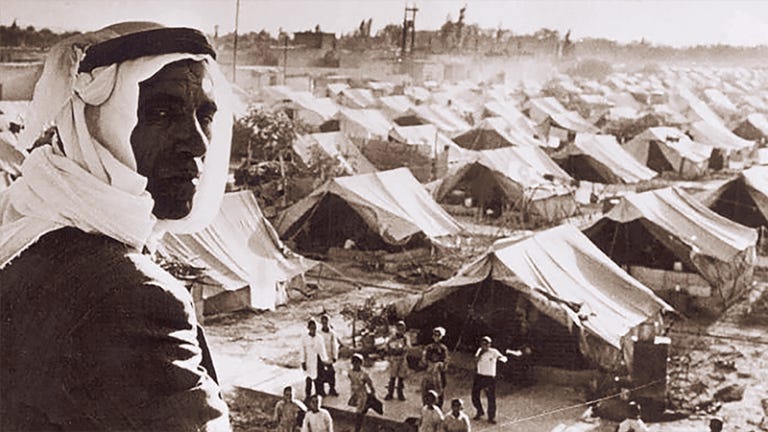
Suffer the Little Children
by Nakba, a pseudonym of Michael R. Burch
I saw the carnage . . . saw girls' dreaming heads
blown to red atoms, and their dreams with them . . .
saw babies liquefied in burning beds
as, horrified, I heard their murderers’ phlegm . . .
I saw my mother stitch my shroud’s black hem,
for in that moment I was one of them . . .
I saw our Father’s eyes grow hard and bleak
to see frail roses severed at the stem . . .
How could I fail to speak?
Lockheed, Take Heed
by Nakba, a pseudonym of Michael R. Burch
Terror fell upon my children. Wailing,
they ran toward my arms—small, pale with fright.
They seemed eternities from me . . . so distant!
Their day exploded. Now I live in night.
"Made in America." I find that tragic.
Though far less tragic than my sweet doves, blown
to atoms by your profits’ ill-bought magic.
Land of the "brave," the "free"? Brave freedom’s flown
to heights unknown—too high to see my people
crushed in the dust by those you "love" so well.
Sing hymns. Praise God. Erect some higher steeple.
Condemn my kind to poverty, and hell.
"Shock and awe?" Yes, I feel awe—and shock.
You jackals killed my doves, my lambs, my flock!
Apollyon I — Night of the Apocalypse
by Nakba, a pseudonym of Michael R. Burch
His eyes meet mine with blank incomprehension.
How did you come, my friend, to harm this child?
"She was not mine, and no report’s been filed.
So what, old chum?" (Strange lines beyond my scansion.)
A girl so sweet, if woebegone?
Why, surely she was everyone’s!
He lifts his eyes, shifts, sighs, spits, unbeguiled.
He does not know that I have come to judge him.
"What’s it to you?" he threatens, with a leer.
She was my child . . .
"That thing defiled?"
Ten trillion wavering stars blink, disappear.
Her Slender Arm
by Nakba, a pseudonym of Michael R. Burch
Her slender arm, her slender arm,
I see it reaching out to me!—
wan, vulnerable, without a charm
or amulet to guard it. Flee!
I scream at her in wild distress.
She chides me with defiant eyes.
Where shall I go? They scream, "Confess!
Confess yourself, your children lice,
your husband mantis, all your kind
unfit to live!"
See, or be blind.
I cannot see beyond the gloom
that shrouds her in their terrible dungeon.
I only see the nightmare room,
the implements of torture.
Sudden
shocks contort her slender frame!
She screams, I scream, we scream in pain!
I sense the shadow-men, insane,
who gibber, drooling, Why are you
not just like US, the Chosen Few?
Suddenly, she stares through me
and suddenly I understand:
I hear the awful litany
of names I voted for. My hand
lies firmly on the implement
they plan to use, next, on her children
who huddle in the corner. Bent,
their bidden pawn, I heil Amen!
to their least wish. I hone the blade
"Made in America," their slave.
She has no words, but only tears.
I turn and retch. I vomit bile.
I hear the shadow men’s cruel jeers.
I sense, I feel their knowing smiles.
I paid for this. I built this place.
The little that she had, they took
at my expense. Now they erase
her family from life’s tattered book.
I cannot meet her eyes again.
I stand one with the shadow men.
The Least of These
by Nakba, a pseudonym of Michael R. Burch
Here lies a child of the Holocaust.
And here lie her dreams: lost, buried, unknown . . .
lie buried, unlived. And who knows their cost?
No roses grace this stone, stark as cold bone.
"Dearly Beloved," her white marker reads,
as many bright sermons on Love have begun,
but this is her end. She lies among weeds
more somber than widows’, six feet from the sun.
Whom shall we cherish? Friends, whom shall we love?
The war profiteer, or the peaceable dove?
"Made in America," her Cruise Line said:
now Palestine’s dove lies here—cold, shattered, dead.
Here lie her pieces. Friend, read them, and weep.
Stand firmly for justice, or lie, in your sleep.
The Horror
by Nakba, a pseudonym of Michael R. Burch
the Horror is a child who died because
we closed our eyes to tribal Nature’s laws,
who knows no justice, but red fangs and claws.
the Horror is the child we led to stray
into dark wilds where evil Men hold sway,
abandoned her, then swiftly walked away.
now she lies dead, and many innocents!
the Tyger prowls; He longs to kill; He pants
for blood, as children die, unheard, like ants.
the Tyger rules by Law: red Claw and Tooth,
while Barnums laugh, count Beans, and sip Vermouth.
In her dread repose (I)
by Nakba, a pseudonym of Michael R. Burch
Find in her pallid, dread repose—
no hope, alas!, for the Rose.
In her dread repose (II)
by Nakba, a pseudonym of Michael R. Burch
Find in her pallid, dread repose—
no hope for the World. O, my violated Rose!
Lines for a Palestinian Mother and Child
by Nakba, a pseudonym of Michael R. Burch
I swear her eyes were gentle . . . that she was
a child herself, although she bore a child
close to her breast: her one and only cause.
I watched in apprehension as men filed
in close, goose-stepping ranks on either side,
as if they longed for blood, on Eastertide.
I thought of women slain for being born
the "wrong" race, sex, caste, or the "wrong" religion.
I thought of Joan of Arc, her tunic torn,
her breasts exposed, her bloody Inquisition.
I felt the flames and then her screams explode.
I thought of Mary and her dolorous road.
When will religion learn men must repent
of killing even one mild innocent—
whether before or after Lent?
US Schoolboys
by Nakba, a pseudonym of Michael R. Burch
The simple path to peace
begins with a single step,
as the sun breaks bright to the East
though the schoolboy has long overslept.
O, when will he rise and yawn!
Will he miss how dew spangles the lawn?
The simple path to peace begins
when the schoolboy repents of his childish sins,
for his balmy vacation’s long over.
There’s no time to be lolling in clover!
Now that the bright day has begun,
he must rise in accord with the sun.
The path is called Justice . . . and now
he must walk it, and stoutly avow
to follow wherever it leads
till the sun sets its blaze to the weeds . . .
He must thresh, so his brothers can find
peace’s path, though the world seems blind.