
Preposterous Eros!
These are poems about EROS and CUPID, the ancient Greek and Roman gods of erotic love, respectively. However, many ancient poets were not exactly fans...

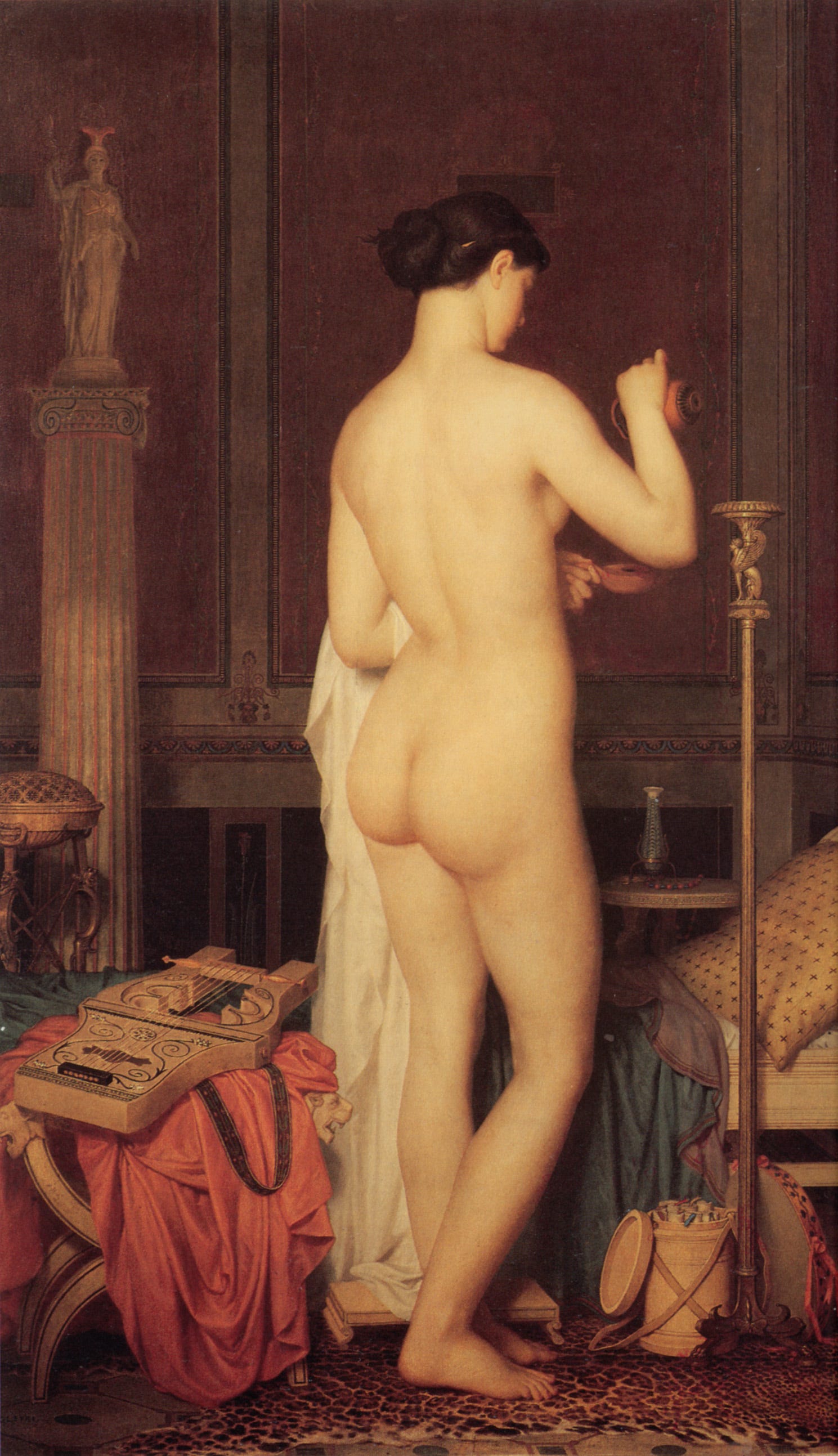
This page contains modern English translations of ancient Greek and Latin poems about Eros/Cupid by poets like Sappho of Lesbos, Antipater of Sidon, Archais, Marcus Argentarius, Asclepiades, Capito, Claudianus, Ibykos, Meleager and Rufinus.
Eros was the ancient Greek god of erotic love (or, in biblical terms, "lust") and Cupid was his Roman equivalent. While we tend to think of Cupid as an angelic cherub shooting arrows and making people fall in love, ancient Greek and Roman poets often portrayed Eros/Cupid as a troublemaker who toyed with their affections, then drove them mad with uncontrollable desires! Modern poets have been known to feel the same way...
Preposterous Eros
by Michael R. Burch
“Preposterous Eros” – Patricia Falanga
Preposterous Eros shot me in
the buttocks, with a Devilish grin,
spent all my money in a rush
then left my heart effete pink mush.
Preposterous Eros (II)
by Michael R. Burch
Preposterous Eros,
mischievous elf!
Please aim your missiles
at yourself!
Feel the tingle,
then (take it from me),
you’ll fall in love
with the next hussy you see!
She’ll spend your money,
she’ll take your car...
soon you’ll end up alone
in a sad little bar.
Preposterous Eros,
mischievous elf!
Please aim your missiles
at yourself!
Erotic Errata
by Michael R. Burch
I didn’t mean to love you; if I did,
it came unbid-
en,
and should’ve remained hid-
den!
Cupid, the cuddly baby
safe in his mother's lap,
chucking the dice one day,
gambled my heart away.
—Meleager, loose translation by Michael R. Burch
Cupid/Eros, the god of love, was the son of the love goddess Venus/Aphrodite, so Meleager is humorously complaining, “Like mother, like not-so-cherubic son!”
Cupid, I swear,
your quiver holds only empty air:
for all your winged arrows, set free,
are now lodged in me.
—Meleager, loose translation by Michael R. Burch
Cupid, if you incinerate my soul, touché!
For she too has wings and can fly away!
—Meleager, loose translation by Michael R. Burch
I lie defeated. Set your foot on my neck. Checkmate.
I recognize you by your weight;
yes, and by the gods, you’re a load to bear.
I am also well aware
of your fiery darts.
But if you seek to ignite human hearts,
fuck off with your tinders;
mine’s already in cinders.
—Meleager, loose translation by Michael R. Burch
Love, how can I call on you:
does Desire dwell with the dead?
Cupid, that bold boy, never bowed his head
to wail.
—Meleager, loose translation by Michael R. Burch
Mnemosyne was stunned into astonishment when she heard honey-tongued Sappho,
wondering how mortal men merited a tenth Muse.
—Antipater of Sidon (circa 200 BC), loose translation/interpretation by Michael R. Burch
Sappho, fragment 42
loose translation/interpretation by Michael R. Burch
Eros harrows my heart:
wilds winds whipping desolate mountains,
uprooting oaks.
Sappho, fragment 130
loose translation/interpretation by Michael R. Burch
Eros, the limb-shatterer,
rattles me,
an irresistible
constrictor.
Sappho, fragment 54
loose translation/interpretation by Michael R. Burch
Eros
descends from heaven,
discarding his imperial purple mantle.
Sappho, fragment 22
loose translation/interpretation by Michael R. Burch
That enticing girl's clinging dresses
leave me trembling, overcome by happiness,
as once, when I saw the Goddess in my prayers
eclipsing Cyprus.
Sappho, fragment 102
loose translation/interpretation by Michael R. Burch
Mother, how can I weave,
so overwhelmed by love?
Sappho, fragment 10
loose translation/interpretation by Michael R. Burch
I lust!
I crave!
Fuck me!
Around the same time Sappho was writing her poems on the island of Lesbos, in nearby Greece, circa 564 B.C., we find another poem about the power of Eros:
Ibykos Fragment 286
translation by Michael R. Burch
Come spring, the grand
apple trees stand
watered by a gushing river
where the maidens’ uncut flowers shiver
and the blossoming grape vine swells
in the gathering shadows.
Unfortunately
for me
Eros never rests
but like a Thracian tempest
ablaze with lightning
emanates from Aphrodite;
the results are frightening―
black,
bleak,
astonishing,
violently jolting me from my soles
to my soul.
I hate Eros! Why does that gargantuan God dart my heart, rather than wild beasts? What can a God think to gain by inflaming a man? What trophies can he hope to win with my head?
―Alcaeus of Messene, loose translation/interpretation by Michael R. Burch
Have mercy, dear Phoebus, drawer of the bow, for were you not also wounded by love’s streaking arrows?
―Claudianus, loose translation/interpretation by Michael R. Burch
In Greek mythology, Cupid shoots Phoebus Apollo to make him fall in love with Daphne, then shoots Daphne with an arrow that prevents her from falling in love with her suitor.
Matchmaker Love, if you can’t set a couple equally aflame, why not snuff out your torch?
―Rufinus, loose translation/interpretation by Michael R. Burch
I have armed myself with wisdom against Love;
he cannot defeat me in single combat.
I, a mere mortal, have withstood a God!
But if he enlists the aid of Bacchus,
what odds do I have against the two of them?
―Rufinus, loose translation/interpretation by Michael R. Burch
Love, if you aim your arrows at both of us impartially, you’re a God, but if you favor one over the other, you’re the Devil!
―Rufinus, loose translation/interpretation by Michael R. Burch
Either put an end to lust, Eros, or else insist on reciprocity: abolish desire or heighten it.
―Lucilius or Polemo of Pontus, loose translation by Michael R. Burch
Steady your bow, Cypris, and at your leisure select a likelier target ... for I am too full of arrows to take another wound.
―Archias, loose translation/interpretation by Michael R. Burch
Cypris was another name for Aphrodite, the Greek goddess of love. Here the poet may be suggesting, “Like mother, like son.”
Little Love, lay my heart waste;
empty your quiver into me;
leave not an arrow unshot!
Slay me with your cruel shafts,
but when you’d shoot someone else,
you’ll find yourself out of ammo!
―Archias, loose translation/interpretation by Michael R. Burch
You say I should flee from Love, but it’s hopeless!
How can a man on foot escape from a winged creature with unerring accuracy?
―Archias, loose translation/interpretation by Michael R. Burch
While these poems by ancient Greek and Roman poets are not about Eros/Cupid, per se, they seem to be cut from the same general cloth ...
Warmthless beauty attracts but does not hold us; it floats like hookless bait.
—Capito, loose translation/interpretation by Michael R. Burch
Accept this garland, Rhodoelea, that I wove with my own hands out of beautiful flowers. There are lilies, roses, dewy anemones, radiant violets and a delicate narcissus. Wear it and relinquish vanity, for like these flowers you too will fade.
—Rufinus, loose translation/interpretation by Michael R. Burch
Let’s bathe, Prodike, then towel our hair
as we drain new wine from the bright cups’ depths,
because the season of celebration is short:
old age forbids joy and soon surrenders to death.
—Rufinus, loose translation/interpretation by Michael R. Burch
Behold Anacreon's tomb; here the Teian swan sleeps with the unmitigated madness of his love for lads. Still he sings songs of longing on the lyre of Bathyllus and the albescent marble is perfumed with ivy. Death has not quenched his desire and the house of Acheron still burns with the fevers of Cypris.
—Antipater of Sidon (circa 200 BC), loose translation/interpretation by Michael R. Burch
Erinna's verses were few, nor were her songs overlong, but her smallest works were inspired. Therefore she cannot fail to be remembered and is never lost beneath the shadowy wings of bleak night. While we, the estranged, the innumerable throngs of tardy singers, lie in pale corpse-heaps wasting into oblivion. The moaned song of the lone swan outdoes the cawings of countless jackdaws echoing far and wide through darkening clouds.
—Antipater of Sidon (circa 200 BC), loose translation/interpretation by Michael R. Burch
You begrudge men your virginity?
Why? To what purpose?
You will find no one to embrace you in the grave.
The joys of love are for the living.
But in Acheron, dear virgin,
we shall all lie dust and ashes.
—Asclepiades of Samos (circa 320-260 BC), loose translation/interpretation by Michael R. Burch
Cypris, if you save those at sea,
beloved goddess, save me,
ship-wrecked on land and dying!
—Anonymous, loose translation/interpretation by Michael R. Burch
My heart warns me to flee
Heliodora,
for well it knows the tears and fiery jealousy
she has caused me.
My heart commands, but alas!, I have no strength to flee
because the shameless hussy warns me
to leave her, even as she kisses me!
—Philodemus or Meleager, loose translation/interpretation by Michael R. Burch
Antigone, you once were a rich whore, but now you’ve become a beggar, while I’ve become a miser.
—MARCUS ARGENTARIUS, loose translation/interpretation by Michael R. Burch
Dioclea is a slender little Venus blessed with a sweet disposition. Nor will there be much distance between us, when resting on her flat chest I lie all the closer to her heart!
—MARCUS ARGENTARIUS, loose translation/interpretation by Michael R. Burch
Take off those fishnets, Lysidice, you cock-tease, and don't roll your hips when you walk! The folds of your thin dress cling tightly to your voluptuous body, and all your enticements are visible, as if you were naked, and yet remain concealed. If this amuses you, I will dress my erection in gauze!
—MARCUS ARGENTARIUS, loose translation/interpretation by Michael R. Burch
I sent thee sweet perfume,
not so much honouring thee
as it; for the musk you exude
improved the perfume.
—Anonymous, loose translation/interpretation by Michael R. Burch
I suspect this epigram may have influenced Ben Jonson’s lovely song to Celia.
I should have previously posted Patricia's original poem. But here it is -- late but still worthy:
PREPOSTEROUS EROS
Beware! for love is captious and unkind
And knows no order to his mighty sway.
Refuse him and no refuge will you find;
Desire him and he soon will turn away.
Take care! For love can turn you upside-down,
Can turn you wrongside-round and inside-out.
He turns the wisest man into a clown
And clown to wise man, there is little doubt.
I dare to claim that love is an ingrate
So love and I do not see eye to eye.
You give love everything you have — and wait!
Your darling laughs but you, my friend, will cry.
My honesty will pain romantic youth
Yet love is ever careless with the truth.
-------
Her poem has a playfulness and graceful good humor that places it solidly among the lighter elements of Greek and Latin erotic elegy and epigram. I only regret i didn't post the entire poem with my original comment. What a dullard I can be!
Sappho's 54 is just brilliant, suggesting so much sexually while saying so little. I'm tempted to say that this is an erotic little masterpiece because it's certainly the right way to write the erotic very well. Excellent translation by one who knows the true power of Sappho's smallest fragments.