
SPEAK!
These are poems about commitment, about speaking one's mind and taking a stand, while we still can and before it's too late...

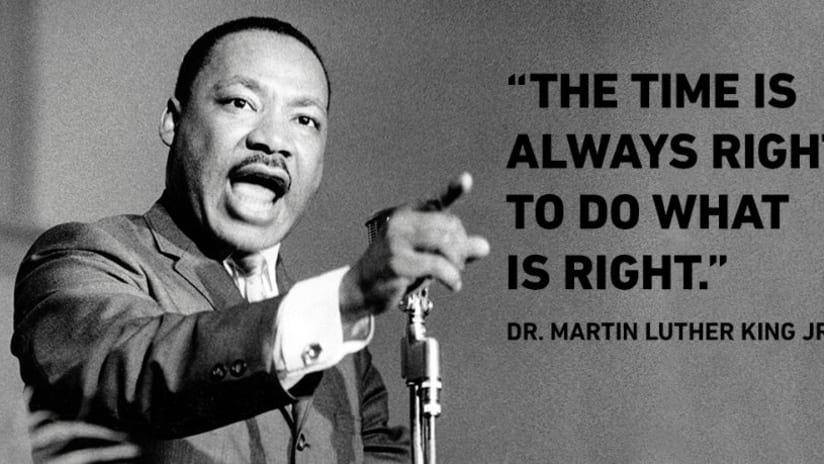
SPEAK!
by Faiz Ahmad Faiz
loose translation/interpretation by Michael R. Burch
Speak, while your lips are still free.
Speak, while your tongue remains yours.
Speak, while you’re still standing upright.
Speak, while your spirit has force.
See how, in the bright-sparking forge,
cunning flames set dull ingots aglow
as the padlocks release their clenched grip
on the severed chains hissing below.
Speak, in this last brief hour,
before the bold tongue lies dead.
Speak, while the truth can be spoken.
Say what must yet be said.
W. H. Auden famously said “poetry makes nothing happen” but I disagree, thinking of poets who helped change the world for the better, such as William Blake, the first major anti-establishment poet/artist, Robert Burns, who said the common man was as good as any lord and undoubtedly better than most, Langston Hughes, who wrote so eloquently and poignantly about racism and the lack of social justice in the United States, Wilfred Owen, in my opinion the greatest of the anti-war poets, Sappho, a woman so far ahead of her time that she wrote the first “make love, not war” poem over 2,500 years ago, Percy Bysshe Shelley, the first major writer to suggest nonviolent resistance as a way to oppose unjust rulers, Voltaire, who probably did more to upset the powers-that-be than anyone before or since, Walt Whitman, who did his best to persuade Americans to exchange prudery and prejudice for tolerance, and singer-songwriters like Joan Baez, Bob Dylan, Sam Cooke, Woody Guthrie, John Lennon, Joni Mitchell and Pete Seeger. And last but most certainly not least, I would include Dr. Martin Luther King Jr. for his “I Have a Dream” speech-sermon-poem.
Snapshot
by Mehmet Akif Ersoy
loose translation/interpretation by Michael R. Burch
Earth’s least trace of life cannot be erased;
even when you lie underground, it encompasses you.
So, those of you who anticipate the shadows,
how long will the darkness remember you?
How will the darkness remember us? While I hope to be remembered by one or more of my poems for their beauty, to my knowledge none of my peers wrote more about the Holocaust, the Nakba, the Trail of Tears, Hiroshima, school shootings, the plight of the homeless, the errors of religion, and Trumpism. I can go to my grave knowing whatever powers I had were not wasted entirely on poems about flowers and tea parties. I invite other poets to join me. Let’s follow the advice of Faiz Ahmad Faiz and SPEAK while we are able. Unfortunately, freedom of speech is not guaranteed in the future. Where I live in the United States, the twin-headed hydra of Tyrannical Religion and Trump will do its damnedest to make the rest of us shut up and obey.
Listen
by Michael R. Burch
Listen to me now and heed my voice;
I am a madman, alone, screaming in the wilderness,
but listen now.
Listen to me now, and if I say
that black is black, and white is white, and in between lies gray,
I have no choice.
Does a madman choose his words? They come to him,
the moon’s illuminations, intimations of the wind,
and he must speak.
But listen to me now, and if you hear
the tolling of the judgment bell, and if its tone is clear,
then do not tarry,
but listen, or cut off your ears, for I Am weary.
I wrote “Listen” as a high-schooler, circa age 17 or 18. I had John the Baptist in mind when I wrote the original version of the poem. Around 20 years later I met the poet-philosopher Richard Moore, who struck me as a modern-day prophet, and he reminded me of my long-dormant teenage poem, which I shortened and have come to like in my old age.
My boyhood introduction to the Prophet Laureate and how I became his Mini-Me
by Michael R. Burch
for Martin Mc Carthy, author of “The Perfect Voice”
Atop a London rooftop
on a rare sunny, smogless day,
between the potted geraniums,
I hear the strange music play ...
Not quite a vintage Victrola,
but maybe a half step up:
late ’69 technology.
I sat up, abrupt.
What the hell was I hearing,
a prophet from days of yore?
Whatever it was, I felt it —
and felt it to the core.
For the times, they are a-changin’ ...
The unspoken answer meandered
on the wings of a light summer breeze,
unfiltered by the geraniums
and the dove in me felt ill at ease.
For the times, they are a-changin’ ...
I was only eleven and far from heaven,
intent on rock music (and lust),
far from God and his holy rod
(seduced by each small budding bust).
For the times, they are a-changin’ ...
Who was this unknown prophet
calling me back to the path
of righteousness through peace?
I felt like I needed a bath!
For the times, they are a-changin’ ...
Needless to say, I was altered.
Perhaps I was altared too.
I became a poet, peace activist,
and now I Am preaching to you!
For the times, they are a-changin’ ...
Get off your duffs, do what you can,
follow the Prophet’s declaiming:
no need to kneel, just even the keel,
For the times, they are a-changin’!
Destiny
by Allama Iqbal
loose translation/interpretation by Michael R. Burch
Isn't it futile to complain about God's will,
When you indeed are your own destiny?
What is our Destiny as poets, as human beings? Sir Muhammad Iqbal has been called one of the 20th century’s greatest poets, and as one of his translators, I agree, but he earned the honorific Allama (“learned”) because he was also one of the most influential Muslim thinkers and and religious philosophers of his era. For instance his poem Parinde ki Faryad ("A Bird's Prayer") was an early contemplation of animal rights.
Gitanjali 35
by Rabindranath Tagore
loose translation/interpretation/modernization by Michael R. Burch
Where the mind is without fear and the head is held high;
Where knowledge is free;
Where the world has not been divided by narrow domestic walls;
Where words emerge from the depths of truth;
Where tireless striving stretches its arms towards perfection;
Where the clear stream of reason has not been lost amid the dreary desert sands of dead habit;
Where the mind is led forward into ever-widening thought and action;
Into that heaven of freedom, my Father, let my country awake.
Martin Luther King Jr. was a poet in his famous "I Have A Dream" poem-sermon-speech. I recognized this as a boy in this poem in which an older Poet (with a capital "P") speaks to a younger poet (with a lower-case "p") who echoes his thoughts. I believe I was around 16 or 17 when I wrote the first version of the poem and it hasn’t changed all that much since. In the original poem the younger poet speaks in italics but that doesn't always work with Internet cut-and-pasting, so I have also used ellipses in case the italics disappear…
Poet to poet
by Michael R. Burch
I have a dream
...pebbles in a sparkling sand...
of wondrous things.
I see children
...variations of the same man...
playing together.
Black and yellow, red and white,
...stone and flesh, a host of colors...
together at last.
I see a time
...each small child another's cousin...
when freedom shall ring.
I hear a song
...sweeter than the sea sings...
of many voices.
I hear a jubilation
...respect and love are the gifts we must bring...
shaking the land.
I have a message,
...sea shells echo, the melody rings...
the message of God.
I have a dream
...all pebbles are merely smooth fragments of stone...
of many things.
I live in hope
...all children are merely small fragments of One...
that this dream shall come true.
I have a dream!
...but when you're gone, won't the dream have to end?...
Oh, no, not as long as you dream my dream too!
Here, hold out your hand, let's make it come true.
...i can feel it begin...
Lovers and dreamers are poets too.
...poets are lovers and dreamers too...
Gitanjali 11
by Rabindranath Tagore
loose translation/interpretation/modernization by Michael R. Burch
Leave this vain chanting and singing and counting of beads:
what Entity do you seek in this lonely dark temple with all the doors shut?
Open your eyes and see: God is not here!
He is out there where the tiller tills the hard ground and the paver breaks stones.
He is with them in sun and shower; his garments are filthy with dust.
Shed your immaculate mantle and like him embrace the dust!
Deliverance? Where is this "deliverance" to be found
when our Master himself has joyfully embraced the bonds of creation; he is bound with us all forever!
Cease your meditations, abandon your petals and incense!
What is the harm if your clothes become stained rags?
Meet him in the toil and the sweat of his brow!
Last Curtain
by Rabindranath Tagore
loose translation/interpretation/modernization by Michael R. Burch
I know the day comes when my eyes close,
when my sight fails,
when life takes its leave in silence
and the last curtain veils my vision.
Yet the stars will still watch by night;
the sun will still rise like before;
the hours will still heave like sea waves
casting up pleasures and pains.
When I consider this end of my earth-life,
the barrier of the moments breaks
and I see by the illumination of death
this world with its careless treasures.
Rare is its lowliest seat,
rare its meanest of lives.
Things I longed for in vain and those I received, let them pass.
Let me but truly possess the things I rejected and overlooked.
Mehmet Akif Ersoy (1873-1936) was a Turkish poet, author, writer, academic, member of parliament, and the composer of the Turkish National Anthem.
Zulmü Alkislayamam
"I Can’t Applaud Tyranny"
by Mehmet Akif Ersoy
loose translation/interpretation by Michael R. Burch
I can't condone cruelty; I will never applaud the oppressor;
Yet I can't renounce the past for the sake of deluded newcomers.
When someone curses my ancestors, I want to strangle them,
Even if you don’t.
But while I harbor my elders,
I refuse to praise their injustices.
Above all, I will never glorify evil, by calling injustice “justice.”
From the day of my birth, I've loved freedom;
The golden tulip never deceived me.
If I am nonviolent, does that make me a docile sheep?
The blade may slice, but my neck resists!
When I see someone else's wound, I suffer a great hardship;
To end it, I'll be whipped, I'll be beaten.
I can't say, “Never mind, just forget it!” I'll mind,
I'll crush, I'll be crushed, I'll uphold justice.
I'm the foe of the oppressor, the friend of the oppressed.
What the hell do you mean, with your backwardness?
Çanakkale Sehitlerine
"For the Çanakkale Martyrs"
by Mehmet Akif Ersoy
loose translation/interpretation by Michael R. Burch
Was there ever anything like the Bosphorus war?—
The earth’s mightiest armies pressing Marmara,
Forcing entry between her mountain passes
To a triangle of land besieged by countless vessels.
Oh, what dishonorable assemblages!
Who are these Europeans, come as rapists?
Who, these braying hyenas, released from their reeking cages?
Why do the Old World, the New World, and all the nations of men
now storm her beaches? Is it Armageddon? Truly, the whole world rages!
Seven nations marching in unison!
Australia goose-stepping with Canada!
Different faces, languages, skin tones!
Everything so different, but the mindless bludgeons!
Some warriors Hindu, some African, some nameless, unknown!
This disgraceful invasion, baser than the Black Death!
Ah, the 20th century, so noble in its own estimation,
But all its favored ones nothing but a parade of worthless wretches!
For months now Turkish soldiers have been vomited up
Like stomachs’ retched contents regarded with shame.
If the masks had not been torn away, the faces would still be admired,
But the whore called civilization is far from blameless.
Now the damned demand the destruction of the doomed
And thus bring destruction down on their own heads.
Lightning severs horizons!
Earthquakes regurgitate the bodies of the dead!
Bombs’ thunderbolts explode brains,
rupture the breasts of brave soldiers.
Underground tunnels writhe like hell
Full of the bodies of burn victims.
The sky rains down death, the earth swallows the living.
A terrible blizzard heaves men violently into the air.
Heads, eyes, torsos, legs, arms, chins, fingers, hands, feet ...
Body parts rain down everywhere.
Coward hands encased in armor callously scatter
Floods of thunderbolts, torrents of fire.
Men’s chests gape open,
Beneath the high, circling vulture-like packs of the air.
Cannonballs fly as frequently as bullets
Yet the heroic army laughs at the hail.
Who needs steel fortresses? Who fears the enemy?
How can the shield of faith not prevail?
What power can make religious men bow down to their oppressors
When their stronghold is established by God?
The mountains and the rocks are the bodies of martyrs! ...
For the sake of a crescent, oh God, many suns set, undone!
Dear soldier, who fell for the sake of this land,
How great you are, your blood saves the Muslims!
Only the lions of Bedr rival your glory!
Who then can dig the grave wide enough to hold you. and your story?
If we try to consign you to history, you will not fit!
No book can contain the eras you shook!
Only eternities can encompass you! ...
Oh martyr, son of the martyr, do not ask me about the grave:
The prophet awaits you now, his arms flung wide open, to save!
Songs and Poems that Changed the World
Are there songs and poems that helped change the world for the better? Yes, I am convinced. Singers, songwriters and poets who helped change the world for the better include the following...
Pete Seeger: "We Shall Overcome," "We Shall Not Be Moved," "Where Have All the Flowers Gone" and "If I Had a Hammer"
Woody Guthrie: "This Land Is Your Land," "Tear The Fascists Down," "Deportee" and "Ain't Got No Home: The Ballad of Old Man Trump" (a song Guthrie wrote about Donald Trump's father when he rented a New York apartment from Fred Trump)
Billie Holiday: "Strange Fruit" a song about lynchings
Nina Simone: Mississippi Goddam"
Bob Dylan: "Blowin' in the Wind," "The Times They Are A-Changin'," "Hurricane" and "Masters of War"
Paul Robeson: "Go Down, Moses" ("Let My People Go") and "The Ballad of Joe Hill"
Tennessee Ernie Ford: "Sixteen Tons" (written by Merle Travis)
John Farnham: "You're the Voice" may be the most crowd-stirring and infectious protest song ever performed
Sam Cooke: "A Change Is Gonna Come"
James Brown: "Say It Loud: I'm Black and I'm Proud"
Otis Redding and Aretha Franklin: "Respect"
Crosby, Stills, Nash and Young: "Ohio" ("Four Dead in Ohio")
Marvin Gaye: "Mercy Mercy Me" and "What's Goin' On? (The Ecology)"
Joni Mitchell: "Big Yellow Taxi" ("They paved paradise and put up a parking lot.")
U2: "Sunday Bloody Sunday" and "Pride: In the Name of Love"
Janis Ian: "Society's Child" and "At Seventeen"
Billy Joel: "Goodnight Saigon" and "Allentown"
Bob Marley of the Wailers: "Get Up, Stand Up (for Your Rights)" and "I Shot the Sheriff"
Stephen Stills of Buffalo Springfield: "For What It's Worth"
John Fogerty of Creedence Clearwater Revival: "Fortunate Son" and "Run Through the Jungle"
Edwin Starr: "War" (What is it good for? Absolutely nothing. Say it again.)
Barry McGuire: "Eve Of Destruction"
Rage Against The Machine: “Killing in the Name” (the group's name sounds like a protest)
Elvis Presley: "In the Ghetto," "If I Can Dream," and "American Trilogy"
Paul McCartney and John Lennon: "Revolution," "A Day in the Life" and "Get Back"
Paul McCartney: "Blackbird" (written about the Little Rock Nine), "Ebony and Ivory" and “Give Ireland Back to the Irish” (the debut single of Wings)
John Lennon: "Imagine," "Give Peace a Chance," "Power to the People" and "Happy Xmas/War is Over"
George Harrison: "Give Me Love, Give Me Peace on Earth" and "Taxman"
HIGH HONORABLE MENTION: Melanie Safka ("Lay Down"), Jimi Hendrix ("Machine Gun"), Bruce Springsteen ("Born in the USA"), The Who ("Won’t Get Fooled Again"), Michael Jackson ("Man in the Mirror"), Cat Stevens ("Peace Train"), Helen Reddy ("I Am Woman"), Lady Gaga ("Born this Way"), Chuck D of Public Enemy ("Fight the Power"), Bob Geldof and Midge Ure ("Do They Know It's Christmas"), Midnight Oil ("Beds are Burning"), Cranberries ("Zombie"), Gil Scott-Heron ("The Revolution Will Not Be Televised"), Green Day ("American Idiot"), Nirvana ("Smells Like Teen Spirit") and Adam Lambert ("Mad World" originally by Tears for Fears). Of course there are many others, but this is a representative list.
Michael, your curation is a drumline for the throat. Poems as voltage, speech as duty before the censors arrive with velvet gloves. I hear the old prophets in your pages and the new ones breaking open the room; when language carries risk, saying the truth becomes a form of shelter. From exile I’ve learned this: a voice that trembles still moves the world an inch, and in dark seasons an inch is a revolution.
Not to mention Netanyahu.
This is the age of fascist dictators and it could get a lot worse if people are too compliant now and don't speak out regarding all the crimes against humanity that are now being committed on a daily basis.