

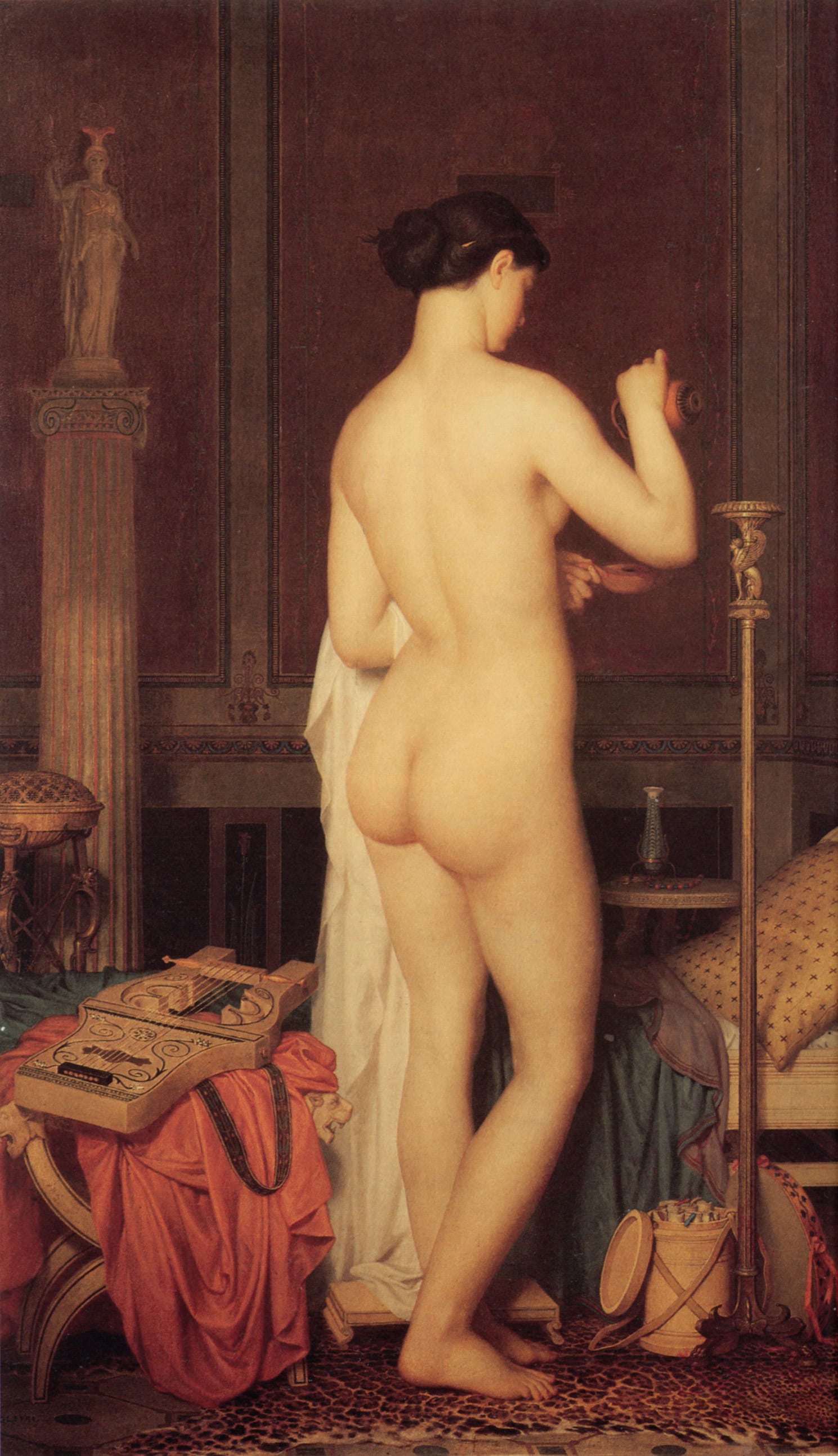
Before I begin my countdown of the ten most beautiful poems in the English language, I will invoke Sappho as this collection’s Muse…
Sappho was called the "Tenth Muse" by her ancient peers. The other nine Muses were goddesses, so she was obviously held in very high regard!
And now, in one person's opinion, for whatever it's worth, these are the ten most beautiful poems in the English language ...
A thing of beauty is a joy forever.
Its loveliness increases; it will never
pass into nothingness ...
―John Keats
... but before I reveal my personal choices for the top ten English poems of all time, please allow me to cite a more democratic source. These are Google's top ten results for the "best poems of all time" (compiled over time, resulting in more than ten poems). I will mention poems that finished in William Harmon The Classic Hundred Poems and/or The Top 500 Poems, which were also compiled democratically, by determining the most anthologized poems per The Columbia Granger’s Index to Poetry. And I have considered a third democratic source, LitHub’s most anthologized poems of the past 25 years. In this democratic ranking I have used the letters G, H and L. When I concur, I have added an M for myself. Thus, the highest ranking is GHLM.
“The Tyger” by William Blake (GHLM) — This is the #1 most anthologized poem of all time, per Harmon and Granger’s, circa 1992. From what I have been able to gather “To a Nightingale” and “To Autumn” by John Keats have slightly passed it in current anthologizations, along with “Kubla Khan” by Samuel Taylor Coleridge, but I suspect “The Tyger” maintains a solid overall lead due to its long head start. In any case, “The Tyger” remains firmly in the top five. But I would rank Blake’s lovely, touching “Cradle Song” just as high, or higher.
“Stopping by Woods on a Snowy Evening” (GHLM) and “The Road Not Taken” by Robert Frost (GHLM) — Curiously, Frost’s most popular poem, “The Road Not Taken,” was not in Harmon’s top 100 poems and only 149th in his top 500 poems, suggesting that anthologists were slow to recognize its value, even ranking it below “Mending Wall” and “Fire and Ice.” Frost is the most-represented poet according to LitHub, with 25 poems in their ranking. I would rank the following Frost poems even higher: “Directive,” “To Earthward,” “Acquainted with the Night” and “The Most of It,” demonstrating what a remarkable poet Frost was.
“Do Not Go Gentle Into That Good Night” by Dylan Thomas (GHLM) — I have seen this marvelous poem turn up first with Google more than once, in searches for the “best” or “greatest” poems. As good as it is, Dylan Thomas had other poems that were just as good or better, including “Fern Hill,” “Poem in October” and “A Refusal to Mourn the Death, by Fire, of a Child in London.”
“Dulce Et Decorum Est” by Wilfred Owen (GHLM) — An unquestionable masterpiece and arguably the greatest war poem and anti-war poem ever written. Other magnificent Wilfred Owen poems include “Anthem for Doomed Youth,” “The Unreturning” and “The Kind Ghosts.”
“Dover Beach” by Matthew Arnold (GHLM) — An absolute masterpiece and in my opinion the first great poem of Modernism.
“Because I Could Not Stop for Death” by Emily Dickinson (GHL) — I admire the poem, but it’s not top 50 for me, and there are a number of Dickinson poems that I consider better. However, I will defer to the consensus here. Dickinson is second only to Frost, per LitHub, in the number of poems anthologized. My favorite Emily Dickinson poems include “Wild Nights” and “Come Slowly, Eden.”
“Ozymandias” by Percy Bysshe Shelley (GHLM) — This is one of my favorite sonnets, although there are several Shelley poems that I consider even better, including the lovely, touching “Music When Soft Voices Die (To —)” and “Ode to the West Wind.”
“The Love Song of J. Alfred Prufrock” (GHLM) and “The Waste Land” by T. S. Eliot (GHL) — I consider “Prufrock” a masterpiece but think “The Waste Land” is overrated, a poem no one can recite aloud because it’s written in so many languages. And I believe Eliot admitted that he didn’t understand the poem himself. My favorite Eliot poems are “Prufrock” and “La Figlia Che Piange (The Weeping Girl).”
“The Rime of the Ancient Mariner” by Samuel Taylor Coleridge (GHLM) — One of the better long narrative poems in the English language.
“A Red, Red Rose” by Robert Burns (GHLM) — This is one of the English language’s best love poems, although Burns had even better poems such as “Afton Water,” “To a Mouse” and “To a Louse.” Bob Dylan called “A Red, Red Rose” his greatest inspiration to be an artist, if I remember things correctly.
“Howl” by Allen Ginsberg (GLM) — “Howl” is a great poem in my opinion, but probably too radical for many 20th century anthology editors, hurting it with Harmon and Granger’s.
Sonnet 18 (”Shall I compare thee to a summer’s day?”) by William Shakespeare (GHL) — I admire this poem but don’t consider it a top 50 lyric poem. I think Shakespeare was a greater poet in his plays than in his sonnets and tends to get overrated due to “bardolatry.” My favorite works of Shakespeare include Hamlet, King Lear, Macbeth and Othello, and for lyric poetry, “Full Fathom Five” and “The Seven Stages of Man.”
“The Raven” by Edgar Allan Poe (GHL) — While I like “The Raven” as a dark comedy, I don’t consider it a top 50 poem. Poe’s best poem, in my opinion, was “Annabelle Lee.”
“The Highwayman” by Alfred Noyes (GM) — This is a masterpiece for me: the most musical poem and the best ghost story in the English language.
“O Captain! My Captain!” by Walt Whitman (GHL) — I love Whitman’s best free verse, but this is not a top 50 poem for me. And it’s not even Whitman’s best elegy for Abraham Lincoln. Far better is “When Lilacs Last in the Door Yard Bloom’d.”
“She Walks in Beauty (Like the Night)” by Lord Byron (GHL) — Again, not a top 50 poem and Don Juan is much better.
“And Still I Rise” by Maya Angelou (G) — A good poem and an inspirational poem, but not top 50 for me.
“I Wandered Lonely as a Cloud” by William Wordsworth (GH) — I agree with LitHub that this is not one of Wordsworth’s very best poems and rank several others higher, especially his magnificent “Ode: Intimations of Immortality.”
“If” by Rudyard Kipling (G) — This is a poem written by a modern Polonius that wouldn’t make my top 1,000.
I believe all Google's choices are worthy, with the exception of “If,” which in my opinion is more popular than good. Of course Google's "taste" in poetry is merely a reflection of its users' preferences, so I will venture that readers have better taste in poetry than the "experts" sometimes give them credit for. And while some "experts" might object to "The Raven" being included in any top ten, I think Poe's most famous poem is justly popular with readers as long as we take it for what it is—a sort of madcap waking nightmare with considerable doses of black humor and irony. I will also defend the inclusion of "The Highwayman" because I consider it to be one of the most musical poems in the English language, the best ghost story, and one of the best story poems of any genre.
Where I will quibble with Google is its failure to include "The Wild Swans at Coole" by W. B. Yeats, "Requiescat" by Oscar Wilde, "The Snow Man" by Wallace Stevens, and other marvelous poems that can be found herein.
Also, I believe some poets are not represented by their best poems. In my opinion Robert Frost’s best poems are “To Earthward” and “Directive.” For Shakespeare, I would choose “The Seven Stages of Man.” For Lord Byron, Don Juan. For Walt Whitman, “A Noiseless Patient Spider” or “Song of Myself.” For Emily Dickinson, “Come Slowly, Eden.” For Edgar Allan Poe, “Annabelle Lee.” For William Wordsworth, “Ode: Intimations of Immortality.” For Percy Bysshe Shelley, the exquisitely lovely “Music When Soft Voices Die (To —).”
After my top ten poems, I have given Google’s top 50 greatest poems of all time.
compiled by Michael R. Burch
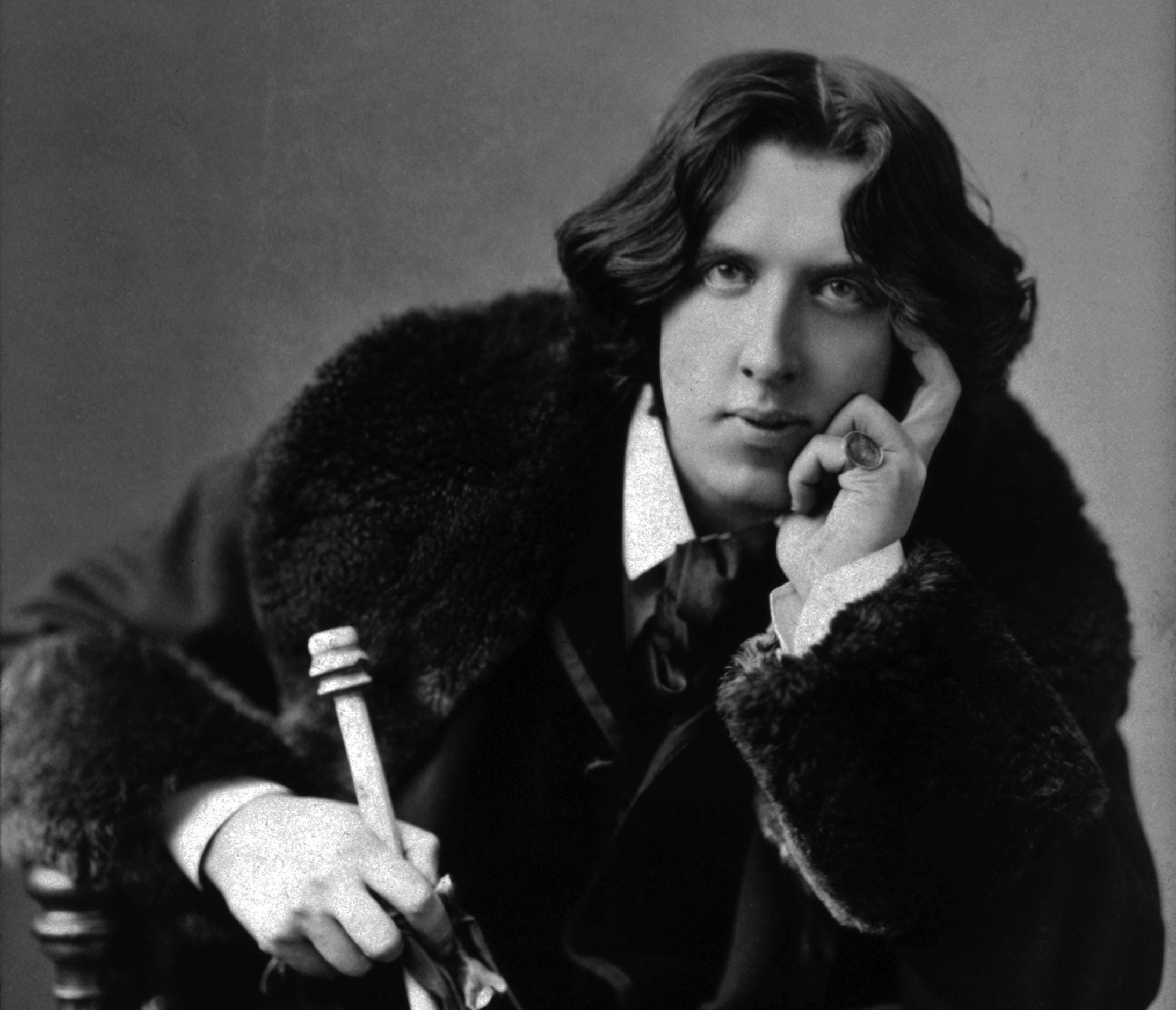
Oscar Wilde may be the most notorious "bad boy" in the annals of poetry and literature. He was flamboyantly gay at a time when polite society was prim, proper and sometimes violently homophobic. As a result, Wilde was sentenced to hard labor at Reading Gaol and died soon after his release. Wilde is justly famous for his disdain for dull and dulling conformity, as a number of his witty epigrams attest. But the lovely, wonderfully moving poem below proves that Wilde was also a true poet capable of creating timeless art. He wrote the poem for his sister Isola, who died tragically at age ten. For me, this is the most touching poem in the English language.
(#1) Requiescat
by Oscar Wilde
Tread lightly, she is near
Under the snow,
Speak gently, she can hear
The daisies grow.
All her bright golden hair
Tarnished with rust,
She that was young and fair
Fallen to dust.
Lily-like, white as snow,
She hardly knew
She was a woman, so
Sweetly she grew.
Coffin-board, heavy stone,
Lie on her breast,
I vex my heart alone,
She is at rest.
Peace, Peace, she cannot hear
Lyre or sonnet,
All my life's buried here,
Heap earth upon it.
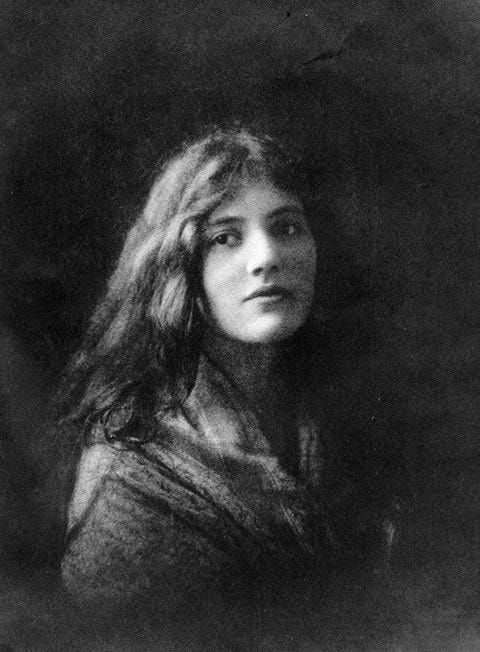
William Butler Yeats was the most famous Irish poet of all time, and his poems of unrequited love for the beautiful revolutionary Maud Gonne have left her almost as famous. Yeats's poem "The Wild Swans at Coole" is surely one of the most beautiful poems ever written, in any language.
(#2) The Wild Swans at Coole
by William Butler Yeats
The trees are in their autumn beauty,
The woodland paths are dry,
Under the October twilight the water
Mirrors a still sky;
Upon the brimming water among the stones
Are nine and fifty swans.
The nineteenth Autumn has come upon me
Since I first made my count;
I saw, before I had well finished,
All suddenly mount
And scatter wheeling in great broken rings
Upon their clamorous wings.
I have looked upon those brilliant creatures,
And now my heart is sore.
All’s changed since I, hearing at twilight,
The first time on this shore,
The bell-beat of their wings above my head,
Trod with a lighter tread.
Unwearied still, lover by lover,
They paddle in the cold,
Companionable streams or climb the air;
Their hearts have not grown old;
Passion or conquest, wander where they will,
Attend upon them still.
But now they drift on the still water
Mysterious, beautiful;
Among what rushes will they build,
By what lake’s edge or pool
Delight men’s eyes, when I awake some day
To find they have flown away?
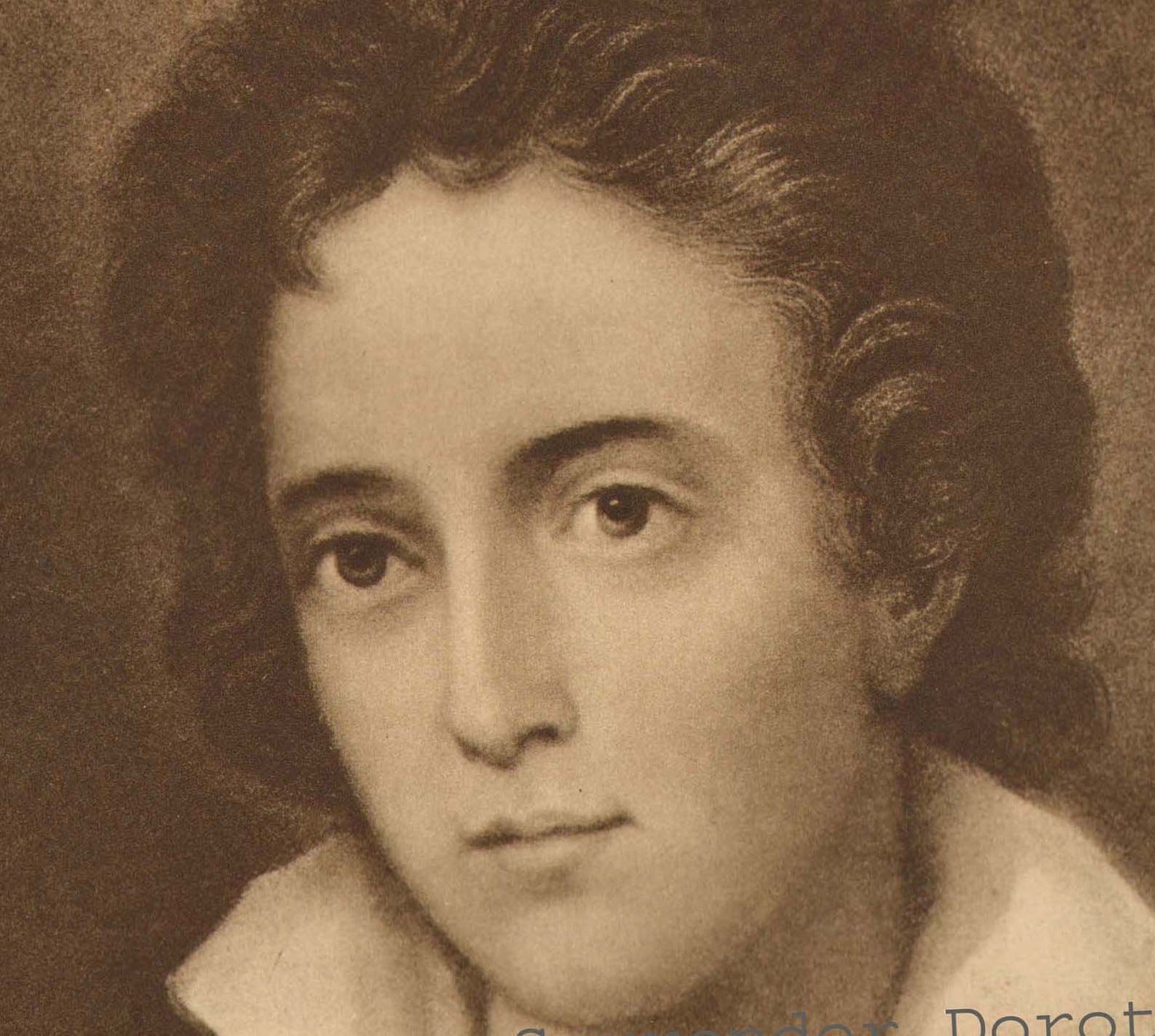
Percy Bysshe Shelley and Mary Wollstonecraft Shelley may have been the most notorious married couple in the annals of English poetry and literature. He was a dashing romantic poet and heretic who wrote a tract, "The Necessity of Atheism," that got him expelled from Oxford. She was the daughter of one of the earliest feminist writers of note, Mary Wollstonecraft, and the liberal philosopher William Godwin. Percy and Mary Shelley spent the summer of 1816 with Lord Byron at his mansion in Geneva. It was at this time that Mary Shelley conceived the story that became her famous gothic novel Frankenstein. Six years later, her husband drowned at age thirty. Who knows what he would have accomplished if he had lived longer? And yet despite his short time on earth, Percy Shelley is still considered to be one of the greatest English poets. Here is one especially lovely example of his wonderful touch with rhythm and rhyme:
(#3) Music When Soft Voices Die (To —)
by Percy Bysshe Shelley
Music, when soft voices die,
Vibrates in the memory—
Odours, when sweet violets sicken,
Live within the sense they quicken.
Rose leaves, when the rose is dead,
Are heaped for the belovèd's bed;
And so thy thoughts, when thou art gone,
Love itself shall slumber on.
Dylan Thomas's elegy to his dying father is one of the best villanelles in the English language, and it remains one of the most powerful, haunting poems ever written in any language.
(#4) Do Not Go Gentle Into That Good Night
by Dylan Thomas
Do not go gentle into that good night,
Old age should burn and rave at close of day;
Rage, rage against the dying of the light.
Though wise men at their end know dark is right,
Because their words had forked no lightning they
Do not go gentle into that good night.
Good men, the last wave by, crying how bright
Their frail deeds might have danced in a green bay,
Rage, rage against the dying of the light.
Wild men who caught and sang the sun in flight,
And learn, too late, they grieved it on its way,
Do not go gentle into that good night.
Grave men, near death, who see with blinding sight
Blind eyes could blaze like meteors and be gay,
Rage, rage against the dying of the light.
And you, my father, there on the sad height,
Curse, bless, me now with your fierce tears, I pray.
Do not go gentle into that good night.
Rage, rage against the dying of the light.
William Dunbar (1460-1525) was one of the first great Scottish poets, and is also known for his longer poem "Lament for the Makiris" (Lament for the Makers, or Poets).
(#5) Sweet Rose of Virtue
by William Dunbar
translation/interpretation by Michael R. Burch
Sweet rose of virtue and of gentleness,
delightful lily of youthful wantonness,
richest in bounty and in beauty clear
and in every virtue that is held most dear―
except only that you are merciless.
Into your garden, today, I followed you;
there I saw flowers of freshest hue,
both white and red, delightful to see,
and wholesome herbs, waving resplendently―
yet nowhere, one leaf nor petal of rue.
I fear that March with his last arctic blast
has slain my fair rose and left her downcast,
whose piteous death does my heart such pain
that I long to replant love’s root again―
so comforting her bowering leaves have been.
If the tenth line seems confusing, it helps to know that rue symbolizes pity and also has medicinal uses; thus I believe the unrequiting lover is being accused of a lack of compassion and perhaps of withholding her healing attentions. The penultimate line can be taken as a rather naughty double entendre, but I will leave that interpretation up to the reader!
Conrad Aiken was one of the sweetest singers among American poets.
(#6) Bread and Music
by Conrad Aiken
Music I heard with you was more than music,
And bread I broke with you was more than bread;
Now that I am without you, all is desolate;
All that was once so beautiful is dead.
Your hands once touched this table and this silver,
And I have seen your fingers hold this glass.
These things do not remember you, belovèd,
And yet your touch upon them will not pass.
For it was in my heart you moved among them,
And blessed them with your hands and with your eyes;
And in my heart they will remember always,—
They knew you once, O beautiful and wise.
D. H. Lawrence is better known today for his novels, which include the then-infamous Lady Chatterley's Lover, but he was also one of the better early modernist poets.
(#7) Piano
by D. H. Lawrence
Softly, in the dusk, a woman is singing to me;
Taking me back down the vista of years, till I see
A child sitting under the piano, in the boom of the tingling strings
And pressing the small, poised feet of a mother who smiles as she sings.
In spite of myself, the insidious mastery of song
Betrays me back, till the heart of me weeps to belong
To the old Sunday evenings at home, with winter outside
And hymns in the cozy parlor, the tinkling piano our guide.
So now it is vain for the singer to burst into clamor
With the great black piano appassionato. The glamour
Of childish days is upon me, my manhood is cast
Down in the flood of remembrance, I weep like a child for the past.
Edmund Waller is not as well-known today as he should be, but he wrote one of the most beautiful poems imaginable ...
(#8) Go, Lovely Rose
by Edmund Waller
Go, lovely Rose,—
Tell her that wastes her time and me,
That now she knows,
When I resemble her to thee,
How sweet and fair she seems to be.
Tell her that's young,
And shuns to have her graces spied,
That hadst thou sprung
In deserts where no men abide,
Thou must have uncommended died.
Small is the worth
Of beauty from the light retir'd:
Bid her come forth,
Suffer herself to be desir'd,
And not blush so to be admir'd.
Then die, that she
The common fate of all things rare
May read in thee;
How small a part of time they share,
That are so wondrous sweet and fair.
Wallace Stevens was such a superb poet that it's hard to pick between "The Snow Man," "Sunday Morning," "The Idea of Order at Key West," and several other of his major poems.
(#9) The Snow Man
by Wallace Stevens
One must have a mind of winter
To regard the frost and the boughs
Of the pine-trees crusted with snow;
And have been cold a long time
To behold the junipers shagged with ice,
The spruces rough in the distant glitter
Of the January sun; and not to think
Of any misery in the sound of the wind,
In the sound of a few leaves,
Which is the sound of the land
Full of the same wind
That is blowing in the same bare place
For the listener, who listens in the snow,
And, nothing himself, beholds
Nothing that is not there and the nothing that is.
VIII — Excerpt from "Sunday Morning"
by Wallace Stevens
She hears, upon that water without sound,
A voice that cries, "The tomb in Palestine
Is not the porch of spirits lingering.
It is the grave of Jesus, where he lay."
We live in an old chaos of the sun,
Or old despondency of day and night,
Or island solitude, unsponsored, free,
Of that wide water, inescapable.
Deer walk upon our mountains, and the quail
Whistle about us their spontaneous cries;
Sweet berries ripen in the wilderness;
And, in the isolation of the sky,
At evening, casual flocks of pigeons make
Ambiguous undulations as they sink,
Downward to darkness, on extended wings.
I have several ties for my number ten poem ...
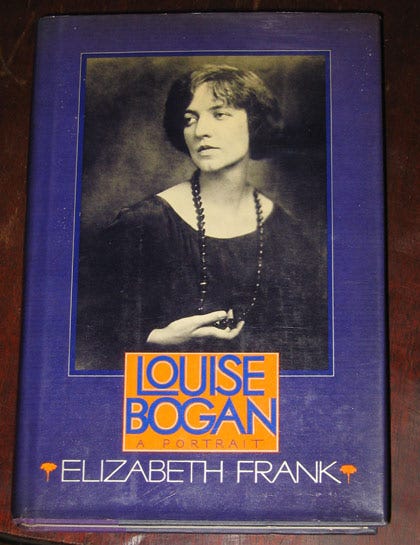
(#10) Song for the Last Act
by Louise Bogan
Now that I have your face by heart, I look
Less at its features than its darkening frame
Where quince and melon, yellow as young flame,
Lie with quilled dahlias and the shepherd's crook.
Beyond, a garden. There, in insolent ease
The lead and marble figures watch the show
Of yet another summer loath to go
Although the scythes hang in the apple trees.
Now that I have your face by heart, I look.
Now that I have your voice by heart, I read
In the black chords upon a dulling page
Music that is not meant for music's cage,
Whose emblems mix with words that shake and bleed.
The staves are shuttled over with a stark
Unprinted silence. In a double dream
I must spell out the storm, the running stream.
The beat's too swift. The notes shift in the dark.
Now that I have your voice by heart, I read.
Now that I have your heart by heart, I see
The wharves with their great ships and architraves;
The rigging and the cargo and the slaves
On a strange beach under a broken sky.
O not departure, but a voyage done!
The bales stand on the stone; the anchor weeps
Its red rust downward, and the long vine creeps
Beside the salt herb, in the lengthening sun.
Now that I have your heart by heart, I see.
(#10) How Long the Night
anonymous Middle English lyric, circa early 13th century AD
translation/interpretation by Michael R. Burch
It is pleasant, indeed, while the summer lasts
with the mild pheasants' song …
but now I feel the northern wind's blast—
its severe weather strong.
Alas! Alas! This night seems so long!
And I, because of my momentous wrong
now grieve, mourn and fast.
(#10) Non sum qualis eram bonae sub regno Cynarae
by Ernest Dowson
"I am not as I was under the reign of the good Cynara"—Horace
Last night, ah, yesternight, betwixt her lips and mine
There fell thy shadow, Cynara! thy breath was shed
Upon my soul between the kisses and the wine;
And I was desolate and sick of an old passion,
Yea, I was desolate and bowed my head:
I have been faithful to thee, Cynara! in my fashion.
All night upon mine heart I felt her warm heart beat,
Night-long within mine arms in love and sleep she lay;
Surely the kisses of her bought red mouth were sweet;
But I was desolate and sick of an old passion,
When I awoke and found the dawn was gray:
I have been faithful to you, Cynara! in my fashion.
I have forgot much, Cynara! gone with the wind,
Flung roses, roses riotously with the throng,
Dancing, to put thy pale, lost lilies out of mind;
But I was desolate and sick of an old passion,
Yea, all the time, because the dance was long;
I have been faithful to thee, Cynara! in my fashion.
I cried for madder music and for stronger wine,
But when the feast is finished and the lamps expire,
Then falls thy shadow, Cynara! the night is thine;
And I am desolate and sick of an old passion,
Yea, hungry for the lips of my desire:
I have been faithful to thee, Cynara! in my fashion.
(#10) La Figlia Che Piange (The Weeping Girl)
by T. S. Eliot
Stand on the highest pavement of the stair —
Lean on a garden urn —
Weave, weave the sunlight in your hair —
Clasp your flowers to you with a pained surprise —
Fling them to the ground and turn
With a fugitive resentment in your eyes:
But weave, weave the sunlight in your hair.
So I would have had him leave,
So I would have had her stand and grieve,
So he would have left
As the soul leaves the body torn and bruised,
As the mind deserts the body it has used.
I should find
Some way incomparably light and deft,
Some way we both should understand,
Simple and faithless as a smile and a shake of the hand.
She turned away, but with the autumn weather
Compelled my imagination many days,
Many days and many hours:
Her hair over her arms and her arms full of flowers.
And I wonder how they should have been together!
I should have lost a gesture and a pose.
Sometimes these cogitations still amaze
The troubled midnight, and the noon's repose.
(#10) The Garden
by Ezra Pound
Like a skein of loose silk blown against a wall
She walks by the railing of a path in Kensington Gardens,
And she is dying piece-meal
of a sort of emotional anemia.
And round about there is a rabble
Of the filthy, sturdy, unkillable infants of the very poor.
They shall inherit the earth.
In her is the end of breeding.
Her boredom is exquisite and excessive.
She would like some one to speak to her,
And is almost afraid that I
will commit that indiscretion.
(#10) Lullaby
by W. H. Auden
Lay your sleeping head, my love,
Human on my faithless arm:
Time and fevers burn away
Individual beauty from
Thoughtful children, and the grave
Proves the child ephemeral:
But in my arms till break of day
Let the living creature lie,
Mortal, guilty, but to me
The entirely beautiful.
Soul and body have no bounds:
To lovers as they lie upon
Her tolerant enchanted slope
In their ordinary swoon,
Grave the vision Venus sends
Of supernatural sympathy,
Universal love and hope;
While an abstract insight wakes
Among the glaciers and the rocks
The hermit's carnal ecstacy.
Certainty, fidelity
On the stroke of midnight pass
Like vibrations of a bell
And fashionable madmen raise
Their pedantic boring cry:
Every farthing of the cost.
All the dreaded cards foretell.
Shall be paid, but from this night
Not a whisper, not a thought.
Not a kiss nor look be lost.
Beauty, midnight, vision dies:
Let the winds of dawn that blow
Softly round your dreaming head
Such a day of welcome show
Eye and knocking heart may bless,
Find our mortal world enough;
Noons of dryness find you fed
By the involuntary powers,
Nights of insult let you pass
Watched by every human love.
(#10) The Death of a Toad
by Richard Wilbur
A toad the power mower caught,
Chewed and clipped of a leg, with a hobbling hop has got
To the garden verge, and sanctuaried him
Under the cineraria leaves, in the shade
Of the ashen and heartshaped leaves, in a dim,
Low, and a final glade.
The rare original heartsblood goes,
Spends in the earthen hide, in the folds and wizenings, flows
In the gutters of the banked and staring eyes. He lies
As still as if he would return to stone,
And soundlessly attending, dies
Toward some deep monotone,
Toward misted and ebullient seas
And cooling shores, toward lost Amphibia's emperies.
Day dwindles, drowning and at length is gone
In the wide and antique eyes, which still appear
To watch, across the castrate lawn,
The haggard daylight steer.
(#10) To Earthward
by Robert Frost
Love at the lips was touch
As sweet as I could bear;
And once that seemed too much;
I lived on air
That crossed me from sweet things,
The flow of — was it musk
From hidden grapevine springs
Downhill at dusk?
I had the swirl and ache
From sprays of honeysuckle
That when they’re gathered shake
Dew on the knuckle.
I craved strong sweets, but those
Seemed strong when I was young:
The petal of the rose
It was that stung.
Now no joy but lacks salt,
That is not dashed with pain
And weariness and fault;
I crave the stain
Of tears, the aftermark
Of almost too much love,
The sweet of bitter bark
And burning clove.
When stiff and sore and scarred
I take away my hand
From leaning on it hard
In grass or sand,
The hurt is not enough:
I long for weight and strength
To feel the earth as rough
To all my length.
(#10) Those Winter Sundays
by Robert Hayden
Sundays too my father got up early
and put his clothes on in the blueblack cold,
then with cracked hands that ached
from labor in the weekday weather made
banked fires blaze. No one ever thanked him.
I'd wake and hear the cold splintering, breaking.
When the rooms were warm, he'd call,
and slowly I would rise and dress,
fearing the chronic angers of that house,
Speaking indifferently to him,
who had driven out the cold
and polished my good shoes as well.
What did I know, what did I know
of love's austere and lonely offices?
(#10) A Noiseless Patient Spider
by Walt Whitman
A noiseless patient spider,
I mark'd where on a little promontory it stood isolated,
Mark'd how to explore the vacant vast surrounding,
It launch'd forth filament, filament, filament, out of itself,
Ever unreeling them, ever tirelessly speeding them.
And you O my soul where you stand,
Surrounded, detached, in measureless oceans of space,
Ceaselessly musing, venturing, throwing, seeking the spheres to connect them,
Till the bridge you will need be form'd, till the ductile anchor hold,
Till the gossamer thread you fling catch somewhere, O my soul.
(#10) Come Slowly, Eden
by Emily Dickinson
Come slowly—Eden
Lips unused to thee—
Bashful—sip thy jasmines—
As the fainting bee—
Reaching late his flower,
Round her chamber hums—
Counts his nectars—alights—
And is lost in balms!
(#10) Adlestrop
by Edward Thomas
Yes. I remember Adlestrop—
The name, because one afternoon
Of heat the express-train drew up there
Unwontedly. It was late June.
The steam hissed. Someone cleared his throat.
No one left and no one came
On the bare platform. What I saw
Was Adlestrop—only the name
And willows, willow-herb, and grass,
And meadowsweet, and haycocks dry,
No whit less still and lonely fair
Than the high cloudlets in the sky.
And for that minute a blackbird sang
Close by, and round him, mistier,
Farther and farther, all the birds
Of Oxfordshire and Gloucestershire.
(#10) A Red, Red Rose
by Robert Burns
Oh my luve is like a red, red rose,
That's newly sprung in June:
Oh my luve is like the melodie,
That's sweetly play'd in tune.
As fair art thou, my bonie lass,
So deep in luve am I;
And I will luve thee still, my dear,
Till a' the seas gang dry.
Till a' the seas gang dry, my dear,
And the rocks melt wi' the sun;
And I will luve thee still, my dear,
While the sands o' life shall run.
And fare thee weel, my only luve!
And fare thee weel a while!
And I will come again, my luve,
Tho' it were ten thousand mile!
(#10) Merciles Beaute (”Merciless Beauty”)
by Geoffrey Chaucer
translation/interpretation by Michael R. Burch
Your eyes slay me suddenly;
their beauty I cannot sustain,
they wound me so, through my heart keen.
Unless your words heal me hastily,
my heart’s wound will remain green;
for your eyes slay me suddenly;
their beauty I cannot sustain.
By all truth, I tell you faithfully
that you are of life and death my queen;
for at my death this truth shall be seen:
your eyes slay me suddenly;
their beauty I cannot sustain,
they wound me so, through my heart keen.
The Canterbury Tales: General Prologue
by Geoffrey Chaucer
translation/interpretation by Michael R. Burch
When April with her sweet showers
has pierced the drought of March to the root,
bathing the vines’ veins in such nectar
that even sweeter flowers are engendered;
and when the West Wind with his fragrant breath
has inspired life in every grove’s and glade’s
greenling leaves; and when the young Sun
has run half his course in Aries the Ram;
and while small birds make melodies
after sleeping all night with open eyes
because Nature pierces them so, to their hearts―
then people long to go on pilgrimages
and palmers to seek strange lands ...
You can read all my Chaucer translations here: Geoffrey Chaucer.
Longer Poems
(#10) After the Persian by Louise Bogan
(#10) Voyages by Hart Crane
(#10) Ode: Intimations of Immortality by William Wordsworth
(#10) The Highwayman by Alfred Noyes
(#10) Dulce et Decorum Est by Wilfred Owen
(#10) Dover Beach by Matthew Arnold
(#10) Elegy Written in a Country Churchyard by Thomas Gray
(#10) Paradise Lost by John Milton
(#10) Hamlet, King Lear, Macbeth and Othello by William Shakespeare
(#10) Tom O' Bedlam's Song by Anonymous
(#10) Don Juan by Lord Byron
In the comments, Bob Zisk, one of our better living poets and a helluva linguist and scholar, recommended The Sensitive Plant by Percy Bysshe Shelley.
Dave Garbutt recommended “more Auden” and my three favorite Auden poems are the already included Lullaby, his wonderful elegy In Memory of W.B. Yeats and Funeral Blues.
Little Gray recommended The Second Coming by Yeats, a poem I have long admired.
Scamperkitty mentioned Philip Larkin, who I had unintentionally omitted, so I am adding my four favorite Larkin poems: The Whitsun Weddings, Aubade, Church Going and This Be The Verse.
BTW, I wrote a humorous response to Larkin’s Aubade:
Abide
by Michael R. Burch
after Philip Larkin’s “Aubade”
It is hard to understand or accept mortality—
such an alien concept: not to be.
Perhaps unsettling enough to spawn religion,
or to scare mutant fish out of a primordial sea
boiling like goopy green tea in a kettle.
Perhaps a man should exhibit more mettle
than to admit such fear, denying Nirvana exists
simply because we are stuck here in such a fine fettle.
And so we abide …
even in life, staring out across that dark brink.
And if the thought of death makes your questioning heart sink,
it is best not to drink
(or, drinking, certainly not to think).
Originally published by Light Quarterly
Lucy Hearne Keane nominated Digging by Seamus Heaney and I will also nominate Punishment (an utter masterpiece) and The Forge.
William Walker recommended The Prelude by William Wordsworth.
Mary Landolfi recommended The New Colossus by Emma Lazarus.
What Me Worry recommended Home They Brought Her Warrior Dead by Lord Alfred Tennyson.
Jenean McBrearty recommended High Flight by John Gillespie Magee and For the Fallen by Laurence Binyon.
Fred Nietzsche nominated “The Song of Wandering Aengus,” “The Lake Isle of Innisfree” and “When You Are Old” by W.B. Yeats; “One Art” by Elizabeth Bishop; “To Christ Our Lord” by Galway Kinnell; “Spring and Fall” by G.M. Hopkins; “The Day Lady Died” by Frank O’Hara; and “Mr. Flood’s Party” by E.A. Robinson.
Nicolette suggested Midsummer Evening’s Meditations by Anna Laetitia Barbauld.
Pater Geraldo nominated Ezra Pound’s loose translation of “The Seafarer,” an Old English poem.
GOOGLE’S TOP 50 GREATEST POEMS OF ALL TIME
There are a few more than 50 poems here because Google’s ratings change slightly over time and I have consulted the list periodically.
“The Road Not Taken” by Robert Frost
“Do Not Go Gentle Into That Good Night” by Dylan Thomas
“Ozymandias” by Percy Bysshe Shelley
Sonnet 18 (”Shall I compare thee to a summer’s day?”) by William Shakespeare
“The Raven” by Edgar Allan Poe
“And Still I Rise” by Maya Angelou
“If” by Rudyard Kipling
“I Wandered Lonely as a Cloud” by William Wordsworth
“The Waste Land” by T. S. Eliot
“Howl” by Allen Ginsberg
“Stopping by Woods on a Snowy Evening” by Robert Frost
“The Charge of the Light Brigade” by Alfred Tennyson
“The Tyger” by William Blake
“The Love Song of J. Alfred Prufrock” by T. S. Eliot
“She Walks in Beauty (Like the Night)” by Lord Byron
“The Second Coming” by William Butler Yeats
“Invictus” by William Ernest Henley
“Because I Could Not Stop for Death” by Emily Dickinson
“O Captain! My Captain!” by Walt Whitman
“The New Colossus” by Emma Lazarus
“Jabberwocky” by Lewis Carroll
“Kubla Khan” by Samuel Taylor Coleridge
“Song of Myself” by Walt Whitman
“A Poison Tree” by William Blake
“The Highwayman” by Alfred Noyes
“Do Not Stand at My Grave and Weep” by Clare Harner
“A Red, Red Rose” by Robert Burns
“One Art” by Elizabeth Bishop
Paradise Lost by John Milton
“Harlem” (“A Dream Deferred”) by Langston Hughes
“The Lady of Shalott” by Alfred Tennyson
“We Wear the Mask” by Paul Laurence Dunbar
“Dulce Et Decorum Est” by Wilfred Owen
“This Is Just to Say” by William Carlos Williams
“We Real Cool” by Gwendolyn Brooks
“The Red Wheelbarrow” by William Carlos Williams
“The Negro Speaks of Rivers” by Langston Hughes
Leaves of Grass by Walt Whitman
“In Flanders Fields” by John McCrae
“Casey at the Bat” by Ernest Thayer
“Lady Lazarus” by Sylvia Plath
“When I Consider How My Life Is Spent” by John Milton
“A Psalm of Life” by Henry Wadsworth Longfellow
“Hope is the thing with feathers” by Emily Dickinson
“Lycidas” by John Milton
“Fire and Ice” by Robert Frost
“Dover Beach” by Matthew Arnold
“The Rime of the Ancient Mariner” by Samuel Taylor Coleridge
High Honorable Mentions
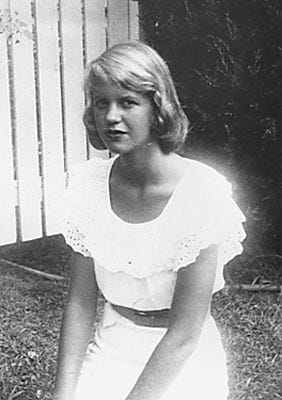
Sylvia Plath was one of the first and best of the modern confessional poets. She won a Pulitzer Prize posthumously for her Collected Poems after committing suicide at the age of 31, something she seemed to have been predicting in her writing and practicing for in real life.
Winter landscape, with rocks
by Sylvia Plath
Water in the millrace, through a sluice of stone,
plunges headlong into that black pond
where, absurd and out-of-season, a single swan
floats chaste as snow, taunting the clouded mind
which hungers to haul the white reflection down.
The austere sun descends above the fen,
an orange cyclops-eye, scorning to look
longer on this landscape of chagrin;
feathered dark in thought, I stalk like a rook,
brooding as the winter night comes on.
Last summer's reeds are all engraved in ice
as is your image in my eye; dry frost
glazes the window of my hurt; what solace
can be struck from rock to make heart's waste
grow green again? Who'd walk in this bleak place?

Anne Sexton was a model who became a confessional poet, writing about intimate aspects of her life, after her doctor suggested that she take up poetry as a form of therapy. She studied under Robert Lowell at Boston University, where Sylvia Plath was one of her classmates. Sexton won the Pulitzer Prize for Poetry in 1967, but later committed suicide via carbon monoxide poisoning. Topics she covered in her poems included adultery, masturbation, menstruation, abortion, despair and suicide.
The Truth the Dead Know
by Anne Sexton
For my Mother, born March 1902, died March 1959
and my Father, born February 1900, died June 1959
Gone, I say and walk from church,
refusing the stiff procession to the grave,
letting the dead ride alone in the hearse.
It is June. I am tired of being brave.
We drive to the Cape. I cultivate
myself where the sun gutters from the sky,
where the sea swings in like an iron gate
and we touch. In another country people die.
My darling, the wind falls in like stones
from the whitehearted water and when we touch
we enter touch entirely. No one's alone.
Men kill for this, or for as much.
And what of the dead? They lie without shoes
in the stone boats. They are more like stone
than the sea would be if it stopped. They refuse
to be blessed, throat, eye and knucklebone.
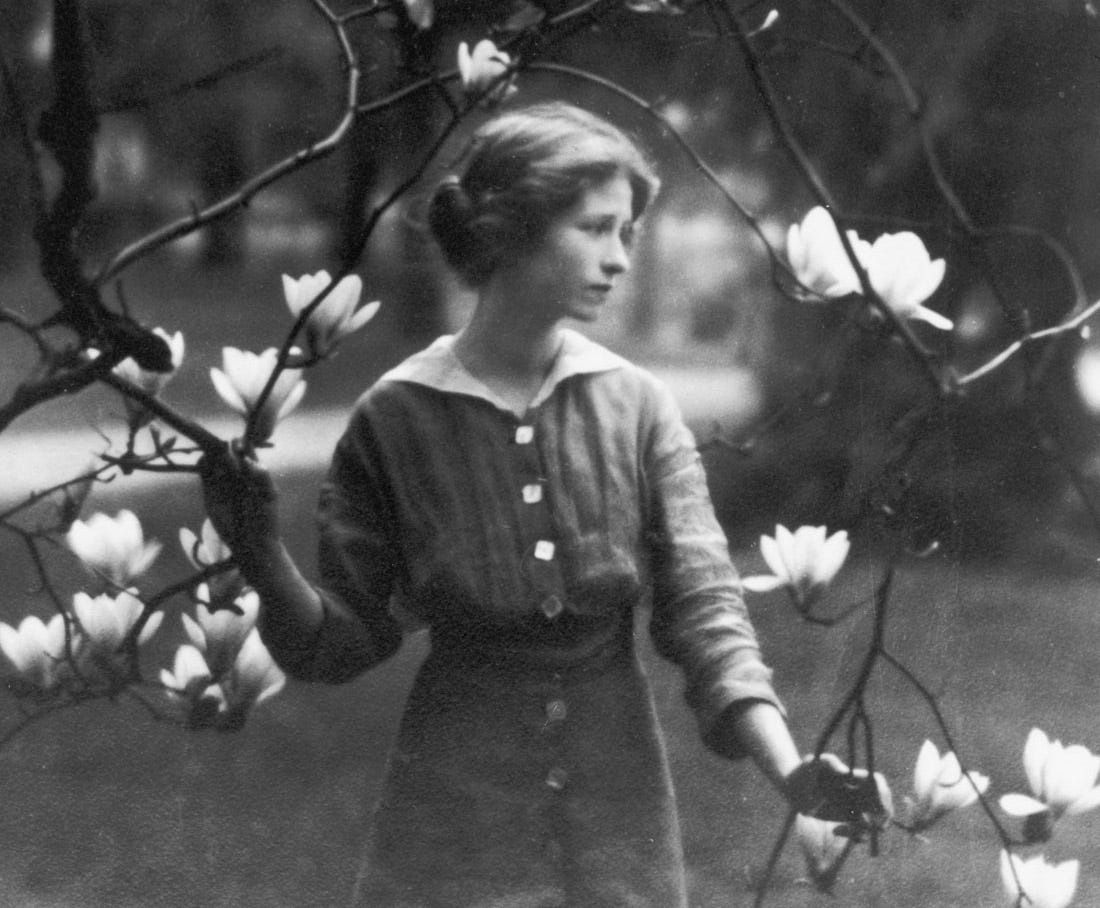
Edna St. Vincent Millay was the first woman to win a Pulitzer Prize for poetry. She was openly bisexual and had affairs with other women and married men. When she finally married, hers was an open marriage. Her 1920 poetry collection A Few Figs From Thistles drew controversy for its novel exploration of female sexuality. She was one of the earliest and strongest voices for what became known as feminism. One of the recurring themes of her poetry was that men might use her body, but not possess her or have any claim over her. (And perhaps that their desire for her body gave her the upper hand in relationships.)
I, Being Born a Woman, and Distressed
by Edna St. Vincent Millay
I, being born a woman, and distressed
By all the needs and notions of my kind,
Am urged by your propinquity to find
Your person fair, and feel a certain zest
To bear your body's weight upon my breast:
So subtly is the fume of life designed,
To clarify the pulse and cloud the mind,
And leave me once again undone, possessed.
Think not for this, however, this poor treason
Of my stout blood against my staggering brain,
I shall remember you with love, or season
My scorn with pity — let me make it plain:
I find this frenzy insufficient reason
For conversation when we meet again.
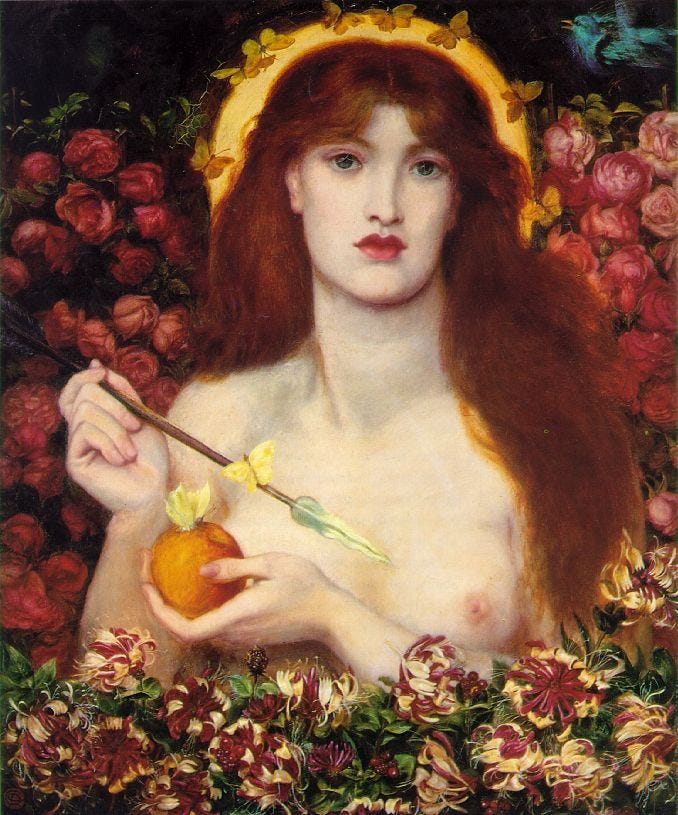
Dante Gabriel Rossetti was an English romantic poet, painter, illustrator and translator. He was also one of the founders of the Pre-Raphaelite Brotherhood. His art was characterized by sensuality and medieval revivalism. In 1850 he met Elizabeth Siddal (pictured above), who became his model, his passion, and eventually in 1860, his wife.
Sudden Light
by Dante Gabriel Rossetti
I have been here before,
But when or how I cannot tell:
I know the grass beyond the door,
The sweet keen smell,
The sighing sound, the lights around the shore.
You have been mine before,—
How long ago I may not know:
But just when at that swallow's soar
Your neck turned so,
Some veil did fall,—I knew it all of yore.
Has this been thus before?
And shall not thus time's eddying flight
Still with our lives our love restore
In death's despite,
And day and night yield one delight once more?
Dante Gabriel Rossetti's sister Christina was also a poet, and perhaps the better of the two.
Song
by Christina Rossetti
When I am dead, my dearest,
Sing no sad songs for me;
Plant thou no roses at my head,
Nor shady cypress tree:
Be the green grass above me
With showers and dewdrops wet;
And if thou wilt, remember,
And if thou wilt, forget.
I shall not see the shadows,
I shall not feel the rain;
I shall not hear the nightingale
Sing on, as if in pain:
And dreaming through the twilight
That doth not rise nor set,
Haply I may remember,
And haply may forget.
Would it surprise you to know that one of the most beautiful (and saddest) poems in the English language was written by a child prodigy, Thomas Chatterton? Although his mother and family considered him to be "slow," around age seven the young Chatterton discovered an ancient book with illuminated capital letters, and he suddenly became intensely interested, quickly learned to read, and then began writing poems! By age ten he was a published poet. But many of the poems he wrote were in a medieval version of English, and no one would believe that a child was capable of writing such poems. So he pretended to have "found" the poems of an ancient monk named Thomas Rowley. One thing led to another, and Chatterton was accused of being a "forger" even though the poems were his original compositions! Spurned by stuffy literary types and unable to support himself, but too proud to accept handouts, Chatterton committed suicide at age 17. You can click on his hyperlinked name above to read the sad, lovely ballad below, and other poems that he wrote during his short, tortured life.
Song from Ælla: Under the Willow Tree, or, Minstrel's Roundelay
by Thomas Chatterton
...
See! the white moon shines on high;
Whiter is my true-love's shroud:
Whiter than the morning sky,
Whiter than the evening cloud:
My love is dead,
Gone to his death-bed
All under the willow-tree.
...
Sir Thomas Wyatt has been credited with introducing the Petrarchan sonnet into the English language. Wyatt's father had been one of Henry VII's Privy Councilors and remained a trusted adviser when Henry VIII came to the throne in 1509. Wyatt followed his father to court, but it seems the young poet may have fallen in love with the king’s mistress, Anne Boleyn. Their acquaintance is certain, although whether or not the two actually shared a romantic relationship remains unknown. But in his poetry, Wyatt called his mistress Anna and there do seem to be correspondences. For instance, this poem might well have been written about the King’s claim on Anne Boleyn:
Whoso List to Hunt
by Sir Thomas Wyatt
Whoso list to hunt, I know where is an hind,
But as for me, alas, I may no more.
The vain travail hath wearied me so sore,
I am of them that farthest cometh behind.
Yet may I by no means my wearied mind
Draw from the deer, but as she fleeth afore
Fainting I follow. I leave off therefore,
Since in a net I seek to hold the wind.
Who list her hunt, I put him out of doubt,
As well as I may spend his time in vain.
And graven with diamonds in letters plain
There is written, her fair neck round about:
Noli me tangere, for Caesar's I am,
And wild for to hold, though I seem tame.
Noli me tangere means "Touch me not." According to the Bible, this is what Jesus said to Mary Magdalene when she tried to embrace him after the resurrection. So perhaps after her betrothal to Henry, religious vows entered into the picture, and left Wyatt out.
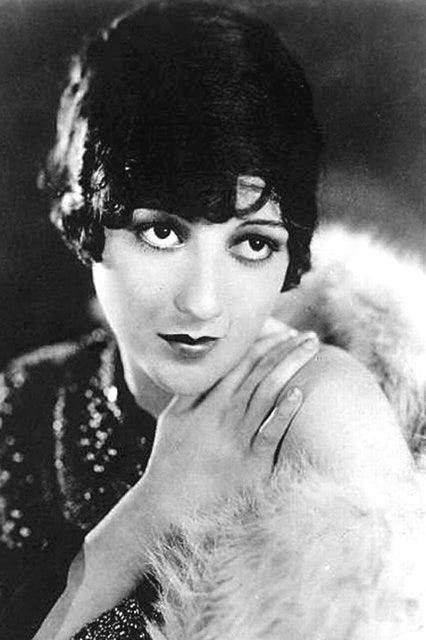
Elinor Wylie "was famous during her life almost as much for her ethereal beauty and personality as for her melodious, sensuous poetry."
Cold-Blooded Creatures
by Elinor Wylie
Man, the egregious egoist
(In mystery the twig is bent)
Imagines, by some mental twist,
That he alone is sentient
Of the intolerable load
That on all living creatures lies,
Nor stoops to pity in the toad
The speechless sorrow of his eyes.
He asks no questions of the snake,
Nor plumbs the phosphorescent gloom
Where lidless fishes, broad awake,
Swim staring at a nightmare doom.
The Maiden’s Song aka The Bridal Morn
anonymous Medieval lyric
translation/interpretation by Michael R. Burch
The maidens came to my mother’s bower.
I had all I would, that hour.
The bailey beareth the bell away;
The lily, the rose, the rose I lay.
Now silver is white, red is the gold;
The robes they lay in fold.
The bailey beareth the bell away;
The lily, the rose, the rose I lay.
Still through the window shines the sun.
How should I love, yet be so young?
The bailey beareth the bell away;
The lily, the rose, the rose I lay.
I take this to be a naughty, suggestive poem, but one that makes us feel sympathy for a young bride, quite possibly a child bride. Once upon a time there was a custom of people witnessing a marriage's consummation, called a “bedding ceremony,” which in this case might have taken place in the mother's "bower" (bedroom). If the witnesses didn't watch the act, they might have been just outside the door, drinking and telling coarse jokes at the bride’s expense. The "bailey" may be the bailiff, spreading the marriage bans that result in the "bell" (hymen/virginity) being borne away. The bride's attire has changed color from white and gold (both symbols of purity) to silver (not as pure) and red (hymeneal blood). The pure white lily has been replaced by a rose. "The rose I lay" and "they lay in fold" seem like suggestive wordplay to me. I take the sun shining through the window to be the following morning, with the young bride a bit nonplussed about the (probably) arranged and (possibly) premature affair. In any case, it's a fetching and thought-provoking little poem.
Now skruketh rose and lylie flour
anonymous Middle English lyric, circa 11th century AD
translation/interpretation by Michael R. Burch
Now the rose and the lily skyward flower,
That will bear for awhile that sweet savor:
In summer, that sweet tide;
There is no queen so stark in her power
Nor any lady so bright in her bower
That Death shall not summon and guide;
But whoever forgoes lust, in heavenly bliss will abide
With his thoughts on Jesus anon, thralled at his side.
For Her Surgery
by Jack Butler
I
Over the city the moon rides in mist,
scrim scarred with faint rainbow.
Two days till Easter. The thin clouds run slow, slow,
the wind bells bleed the quietest
of possible musics to the dark lawn.
All possibility we will have children is gone.
II
I raise a glass half water, half alcohol,
to that light come full again.
Inside, you sleep, somewhere below the pain.
Down at the river, there is a tall
ghost tossing flowers to dark water—
jessamine, rose, and daisy, salvia lyrata . . .
III
Oh goodbye, goodbye to bloom in the white blaze
of moon on the river, goodbye
to creek joining the creek joining the river, the axil, the Y,
goodbye to the Yes of two Ifs in one phrase . . .
Children bear children. We are grown,
and time has thrown us free under the timeless moon.
Come Lord and Lift
by T. Merrill
Come Lord, and lift the fallen bird
Abandoned on the ground;
The soul bereft and longing so
To have the lost be found.
The heart that cries—let it but hear
Its sweet love answering,
Or out of ether one faint note
Of living comfort wring.
Depths
by Richard Moore
Once more home is a strange place: by the ocean a
big house now, and the small houses are memories,
once live images, vacant
thoughts here, sinking and vanishing.
Rough sea now on the shore thundering brokenly
draws back stones with a roar out into quiet and
far depths, darkly to lie there
years, years—there not a sound from them.
New waves out of the night's mist and obscurity
lunge up high on the beach, spending their energy,
each wave angrily dying,
all shapes endlessly altering,
yet out there in the depths nothing is modified.
Earthquakes won't even move—no, nor the hurricane—
one stone there, nor a glance of
sun's light stir its identity.
Song: To Celia
by Ben Jonson
Drink to me, only, with thine eyes,
And I will pledge with mine;
Or leave a kiss but in the cup,
And I'll not look for wine.
The thirst that from the soul doth rise,
Doth ask a drink divine:
But might I of Jove's nectar sup,
I would not change for thine.
I sent thee, late, a rosy wreath,
Not so much honouring thee,
As giving it a hope, that there
It could not withered be.
But thou thereon didst only breathe,
And sent'st back to me:
Since when it grows, and smells, I swear,
Not of itself, but thee.
To Daffodils
by Robert Herrick
Fair daffodils, we weep to see
You haste away so soon.
As yet the early-rising sun
Hath not attained his noon.
Stay, stay,
Until the hasting day
Has run
But to the even-song;
And, having prayed together, we
Will go with you along.
We have short time to stay, as you;
We have as short a spring;
As quick a growth to meet decay,
As you, or any thing.
We die.
As your hours do, and dry
Away
Like to the summer's rain;
Or as the pearls of morning's dew
Ne'er to be found again.
Cradle Song
by William Blake
Sleep, sleep, beauty bright,
Dreaming in the joys of night;
Sleep, sleep; in thy sleep
Little sorrows sit and weep.
Sweet babe, in thy face
Soft desires I can trace,
Secret joys and secret smiles,
Little pretty infant wiles.
As thy softest limbs I feel
Smiles as of the morning steal
O'er thy cheek, and o'er thy breast
Where thy little heart doth rest.
O the cunning wiles that creep
In thy little heart asleep!
When thy little heart doth wake,
Then the dreadful night shall break.
Tears, Idle Tears
by Lord Alfred Tennyson
Tears, idle tears, I know not what they mean,
Tears from the depth of some divine despair
Rise in the heart, and gather to the eyes,
In looking on the happy Autumn fields,
And thinking of the days that are no more.
Fresh as the first beam glittering on a sail,
That brings our friends up from the underworld,
Sad as the last which reddens over one
That sinks with all we love below the verge;
So sad, so fresh, the days that are no more.
Ah, sad and strange as in dark summer dawns
The earliest pipe of half-awakened birds
To dying ears, when unto dying eyes
The casement slowly grows a glimmering square;
So sad, so strange, the days that are no more.
Dear as remembered kisses after death,
And sweet as those by hopeless fancy feigned
On lips that are for others; deep as love,
Deep as first love, and wild with all regret;
O Death in Life, the days that are no more.
Acquainted With The Night
by Robert Frost
I have been one acquainted with the night.
I have walked out in rain—and back in rain.
I have outwalked the furthest city light.
I have looked down the saddest city lane.
I have passed by the watchman on his beat
And dropped my eyes, unwilling to explain.
I have stood still and stopped the sound of feet
When far away an interrupted cry
Came over houses from another street,
But not to call me back or say good-by;
And further still at an unearthly height,
One luminary clock against the sky
Proclaimed the time was neither wrong nor right.
I have been one acquainted with the night.
The Windhover
by Gerard Manley Hopkins
I caught this morning morning's minion, king-
dom of daylight's dauphin, dapple-dawn-drawn Falcon, in his riding
Of the rolling level underneath him steady air, and striding
High there, how he rung upon the rein of a wimpling wing
In his ecstasy! then off, off forth on swing,
As a skate's heel sweeps smooth on a bow-bend: the hurl and gliding
Rebuffed the big wind. My heart in hiding
Stirred for a bird,—the achieve of; the mastery of the thing!
Brute beauty and valour and act, oh, air, pride, plume, here
Buckle! AND the fire that breaks from thee then, a billion
Times told lovelier, more dangerous, O my chevalier!
No wonder of it: shéer plód makes plough down sillion
Shine, and blue-bleak embers, ah my dear,
Fall, gall themselves, and gash gold-vermillion.
Song
by John Donne
Go and catch a falling star,
Get with child a mandrake root,
Tell me where all past years are,
Or who cleft the devils foot;
Teach me to hear mermaids singing,
Or to keep off envy's stinging,
And find
What wind
Serves to advance an honest mind.
If thou be'st born to strange sights,
Things invisible to see,
Ride ten thousand days and nights
Till Age snow white hairs on thee;
Thou, when thou return'st wilt tell me
All strange wonders that befell thee,
And swear
No where
Lives a woman true and fair.
If thou find'st one let me know;
Such a pilgrimage were sweet.
Yet do not; I would not go,
Though at next door we might meet.
Though she were true when you met her,
And last, till you write your letter,
Yet she
Will be
False, ere I come, to two or three.
The Convergence Of The Twain
by Thomas Hardy
Lines on the loss of the "Titanic"
In a solitude of the sea
Deep from human vanity,
And the Pride of Life that planned her, stilly couches she.
Steel chambers, late the pyres
Of her salamandrine fires,
Cold currents thrid, and turn to rhythmic tidal lyres.
Over the mirrors meant
To glass the opulent
The sea-worm crawls—grotesque, slimed, dumb, indifferent.
Jewels in joy designed
To ravish the sensuous mind
Lie lightless, all their sparkles bleared and black and blind.
Dim moon-eyed fishes near
Gaze at the gilded gear
And query: "What does this vaingloriousness down here?"...
Well: while was fashioning
This creature of cleaving wing,
The Immanent Will that stirs and urges everything
Prepared a sinister mate
For her—so gaily great—
A Shape of Ice, for the time far and dissociate.
And as the smart ship grew
In stature, grace, and hue,
In shadowy silent distance grew the Iceberg too.
Alien they seemed to be;
No mortal eye could see
The intimate welding of their later history,
Or sign that they were bent
By paths coincident
On being anon twin halves of one august event,
Till the Spinner of the Years
Said "Now!" And each one hears,
And consummation comes, and jars two hemispheres.
Luke Havergal
by Edward Arlington Robinson
Go to the western gate, Luke Havergal,
There where the vines cling crimson on the wall,
And in the twilight wait for what will come.
The leaves will whisper there of her, and some,
Like flying words, will strike you as they fall;
But go, and if you listen, she will call.
Go to the western gate, Luke Havergal—
Luke Havergal.
No, there is not a dawn in eastern skies
To rift the fiery night that's in your eyes;
But there, where western glooms are gathering
The dark will end the dark, if anything:
God slays Himself with every leaf that flies,
And hell is more than half of paradise.
No, there is not a dawn in eastern skies—
In eastern skies.
Out of a grave I come to tell you this,
Out of a grave I come to quench the kiss
That flames upon your forehead with a glow
That blinds you to the way that you must go.
Yes, there is yet one way to where she is,
Bitter, but one that faith may never miss.
Out of a grave I come to tell you this—
To tell you this.
There is the western gate, Luke Havergal,
There are the crimson leaves upon the wall,
Go, for the winds are tearing them away,—
Nor think to riddle the dead words they say,
Nor any more to feel them as they fall;
But go, and if you trust her she will call.
There is the western gate, Luke Havergal—
Luke Havergal.
Full Fathom Five
by William Shakespeare
Full fathom five thy father lies;
Of his bones are coral made;
Those are pearls that were his eyes:
Nothing of him that doth fade
But doth suffer a sea-change
Into something rich and strange.
Sea-nymphs hourly ring his knell:
Ding-dong.
Hark! now I hear them — ding-dong, bell.
Composed Upon Westminster Bridge, September 3, 1802
by William Wordsworth
Earth has not anything to show more fair:
Dull would he be of soul who could pass by
A sight so touching in its majesty:
This City now doth, like a garment, wear
The beauty of the morning; silent, bare,
Ships, towers, domes, theatres, and temples lie
Open unto the fields, and to the sky;
All bright and glittering in the smokeless air.
Never did sun more beautifully steep
In his first splendour, valley, rock, or hill;
Ne'er saw I, never felt, a calm so deep!
The river glideth at his own sweet will:
Dear God! the very houses seem asleep;
And all that mighty heart is lying still!
Excerpt from the Song of Solomon
attributed to King Solomon
I am the rose of Sharon, and the lily of the valleys.
As the lily among thorns, so is my love among the daughters.
As the apple tree among the trees of the wood, so is my beloved among the sons.
I sat down under his shadow with great delight, and his fruit was sweet to my taste.
He brought me to the banqueting house, and his banner over me was love.
Stay me with flagons, comfort me with apples: for I am sick of love.
His left hand is under my head, and his right hand doth embrace me.
I charge you, O ye daughters of Jerusalem, by the roes,
and by the hinds of the field, that ye stir not up, nor wake my love, till he please.
Ozymandias
by Percy Bysshe Shelley
I met a traveller from an antique land
Who said: Two vast and trunkless legs of stone
Stand in the desert. Near them, on the sand,
Half sunk, a shattered visage lies, whose frown,
And wrinkled lip, and sneer of cold command,
Tell that its sculptor well those passions read
Which yet survive, stamped on these lifeless things,
The hand that mocked them, and the heart that fed;
And on the pedestal these words appear:
"My name is Ozymandias, king of kings:
Look on my works, ye Mighty, and despair!"
Nothing beside remains. Round the decay
Of that colossal wreck, boundless and bare
The lone and level sands stretch far away.
Upon Julia's Clothes
by Robert Herrick
Whenas in silks my Julia goes,
Then, then, methinks, how sweetly flows
The liquefaction of her clothes.
Next, when I cast mine eyes and see
That brave vibration each way free,
Oh, how that glittering taketh me!
How Do I Love Thee?
by Elizabeth Barrett Browning
How do I love thee? Let me count the ways.
I love thee to the depth and breadth and height
My soul can reach, when feeling out of sight
For the ends of Being and ideal Grace.
I love thee to the level of every day's
Most quiet need, by sun and candlelight.
I love thee freely, as men strive for Right;
I love thee purely, as they turn from Praise.
I love with a passion put to use
In my old griefs, and with my childhood's faith.
I love thee with a love I seemed to lose
With my lost saints,—I love thee with the breath,
Smiles, tears, of all my life!—and, if God choose,
I shall but love thee better after death.
In My Craft Or Sullen Art
by Dylan Thomas
In my craft or sullen art
Exercised in the still night
When only the moon rages
And the lovers lie abed
With all their griefs in their arms,
I labour by singing light
Not for ambition or bread
Or the strut and trade of charms
On the ivory stages
But for the common wages
Of their most secret heart.
Not for the proud man apart
From the raging moon I write
On these spindrift pages
Nor for the towering dead
With their nightingales and psalms
But for the lovers, their arms
Round the griefs of the ages,
Who pay no praise or wages
Nor heed my craft or art.
Do not stand at my grave and weep
by Claire Harner or Mary Elizabeth Frye
Do not stand at my grave and weep:
I am not there; I do not sleep.
I am a thousand winds that blow,
I am the diamond glints on snow,
I am the sun on ripened grain,
I am the gentle autumn rain.
When you awaken in the morning’s hush
I am the swift uplifting rush
Of quiet birds in circling flight.
I am the soft starshine at night.
Do not stand at my grave and cry:
I am not there; I did not die.
When You Are Old
by William Butler Yeats
When you are old and grey and full of sleep,
And nodding by the fire, take down this book,
And slowly read, and dream of the soft look
Your eyes had once, and of their shadows deep;
How many loved your moments of glad grace,
And loved your beauty with love false or true,
But one man loved the pilgrim soul in you,
And loved the sorrows of your changing face;
And bending down beside the glowing bars,
Murmur, a little sadly, how Love fled
And paced upon the mountains overhead
And hid his face amid a crowd of stars.
This World's Joy
anonymous Middle English lyric, circa early 14th century AD
translation/interpretation by Michael R. Burch
Winter awakens all my care
as leafless trees grow bare.
For now my sighs are fraught
whenever it enters my thought:
regarding this world's joy,
how everything comes to naught.
Wynter wakeneth al my care,
Nou this leves waxeth bare.
Ofte y sike ant mourne sare
When hit cometh in my thoht
Of this worldes joie, hou hit goth al to noht.
I Have Labored Sore
anonymous medieval lyric circa the fifteenth century
translation/interpretation by Michael R. Burch
I have labored sore and suffered death,
so now I rest and catch my breath.
But I shall come and call right soon
heaven and earth and hell to doom.
Then all shall know both devil and man
just who I was and what I am.
I haue laborede sore and suffered deyeth
and now I Rest and draw my [b]reyght
But I schall com and call Ryght sone
heuen and erthe and hell to dome
and than schall know both devyll and man
what I was and what I am
A Lyke-Wake Dirge
anonymous medieval lyric circa the 16th century AD
translation/interpretation by Michael R. Burch
The Lie-Awake Dirge is “the night watch kept over a corpse.”
This one night, this one night,
every night and all;
fire and sleet and candlelight,
and Christ receive thy soul.
When from this earthly life you pass
every night and all,
to confront your past you must come at last,
and Christ receive thy soul.
If you donated socks and shoes,
every night and all,
sit right down and slip yours on,
and Christ receive thy soul.
But if you never helped your brother,
every night and all,
walk barefoot through the flames of hell,
and Christ receive thy soul.
If you shared your food and drink,
every night and all,
the fire will never make you shrink,
and Christ receive thy soul.
But if you never helped your brother,
every night and all,
walk starving through the black abyss,
and Christ receive thy soul.
This one night, this one night,
every night and all;
fire and sleet and candlelight,
and Christ receive thy soul.
Excerpt from “Ubi Sunt Qui Ante Nos Fuerunt?”
anonymous Middle English poem, circa 1275
translation/interpretation by Michael R. Burch
Where are the men who came before us,
who led hounds and hawks to the hunt,
who commanded fields and woods?
Where are the elegant ladies in their boudoirs
who braided gold through their hair
and had such fair complexions?
Once eating and drinking gladdened their hearts;
they enjoyed their games;
men bowed before them;
they bore themselves loftily …
But then, in an eye’s twinkling,
they were gone.
Where now are their songs and their laughter,
the trains of their dresses,
the arrogance of their entrances and exits,
their hawks and their hounds?
All their joy has vanished;
their “well” has come to “oh, well”
and to many dark days …
Wulf and Eadwacer
Old English poem circa 960-990 AD
translation/interpretation by Michael R. Burch
My people pursue him like crippled prey.
They'll rip him apart if he approaches their pack.
We are so different!
Wulf's on one island; I'm on another.
His island's a fortress, fastened by fens.
Here, bloodthirsty curs howl for carnage.
They'll rip him apart if he approaches their pack.
We are so different!
My thoughts pursued Wulf like panting hounds.
Whenever it rained, as I wept,
the bold warrior came; he took me in his arms:
good feelings, to a point, but the end loathsome!
Wulf, O, my Wulf, my ache for you
has made me sick; your infrequent visits
have left me famished, deprived of real meat!
Do you hear, Eadwacer? Watchdog!
A wolf has borne our wretched whelp to the woods.
One can easily sever what never was one:
our song together.
What an earthy, dirty, brutally honest poem written from a female perspective about what sounds like war, a family being split apart, and perhaps rape, sex slavery and child abduction and/or infanticide. Much remains in doubt: did Wulf abduct the child, perhaps thinking the child was his, or did the mother, the rapist or perhaps the rapist's wife get rid of the child? My personal interpretation is that Wulf was meant to be sacrificed to the gods, but ran away, and his son was sacrificed in his place, except that it turned out that the real father was the rapist Eadwacer, quite possibly a priest (Eadwacer possibly meaning "heaven-watcher"). That interpretation would make a great movie, with my translation set to music heading the soundtrack! ;-)
Cædmon's Hymn
Old English poem circa 658-680 AD
translation/interpretation by Michael R. Burch
Come, let us honour heaven-kingdom's Guardian,
the might of the Architect and his mind-plans,
the work of the Glory-Father. First he, the Everlasting Lord,
established the foundation of wonders.
Then he, the Primeval Poet, created heaven as a roof
for the sons of men, Holy Creator,
Maker of mankind. Then he, the Eternal Entity,
afterwards made men middle-earth: Master Almighty!
"Cædmon's Hymn" was composed sometime between 658 and 680 AD and may be the oldest extant poem in the English language. According to the Venerable Bede (673-735), Cædmon was an illiterate herdsman who was given the gift of poetic composition by an angel. In the original poem, hardly a word is recognizable as English because Cædmon was writing in a somewhat Anglicized form of ancient German. The word "England" harkens back to Angle-land; the Angles were a Germanic tribe. Nevertheless, by Cædmon's time the foundations of English poetry were being laid, particularly in the areas of accentual meter and alliteration. Poets were considered to be "Makers" (as in William Dunbar's "Lament for the Makaris"), and poetry was considered to have a divine origin, so the poem may express a sort of affinity between the poet and his Creator.
Westron Wynde
Western wind, when wilt thou blow,
The small rain down can rain?
Christ! That my love were in my arms
And I in my bed again!
To continue reading more of the most beautiful poems of all time, please click here: Poems by the Masters of English Poetry.
Other notable beautiful poems of the English language include:
Still I Rise by Maya Angelou
I Know Why the Caged Bird Sings by Maya Angelou
Sir Patrick Spens by Anonymous was Harmon’s #2 poem.
Western Wind by Anonymous was Harmon’s #38 poem.
Edward, Edward by Anonymous was Harmon’s #76 poem.
Dover Beach by Matthew Arnold was Harmon’s #8 poem.
Musée des Beaux Arts by W. H. Auden was Harmon’s #67 poem.
In Memory of W.B. Yeats by W. H. Auden
Funeral Blues by W. H. Auden
Night Mail by W. H. Auden
Diamonds and Rust by Joan Baez
The Armadillo by Elizabeth Bishop
The Tyger by William Blake was Harmon’s #1 poem.
The Lamb by William Blake
London by William Blake was Harmon’s #50 poem.
Jerusalem by William Blake was Harmon’s #51 poem.
Piping Down the Valleys Wild by William Blake was Harmon’s #71 poem.
The Sick Rose by William Blake was Harmon’s #94 poem.
After the Persian by Louise Bogan
London Snow by Robert Bridges
My Last Duchess by Robert Browning was Harmon’s #43 poem.
Meeting at Night by Robert Browning
Parting at Morning by Robert Browning
To a Waterfowl by William Cullen Bryant
Thanatopsis by William Cullen Bryant
Afton Water by Robert Burns
So We’ll Go No More A-Roving by Lord Byron was Harmon’s #72 poem.
She Walks in Beauty by Lord Byron
After the Rain by Jared Carter
Jabberwocky by Lewis Carroll was Harmon’s #18 poem.
I Walk the Line by Johnny Cash
I Am by John Clare
Love Lives Beyond the Tomb by John Clare
Kubla Khan by Samuel Taylor Coleridge was Harmon’s #7 poem.
The Rime of the Ancient Mariner by Samuel Taylor Coleridge was Harmon’s #84 poem.
A Change is Gonna Come by Sam Cooke
To Brooklyn Bridge by Hart Crane was Harmon’s #75 poem.
Voyages by Hart Crane
Exile by Hart Crane
Forgetfulness by Hart Crane
in Just- by e. e. cummings
since feeling is first by e. e. cummings
Because I could not stop for Death by Emily Dickinson was Harmon’s #29 poem.
I Heard a Fly Buzz by Emily Dickinson was Harmon’s #73 poem.
A Narrow Fellow in the Grass by Emily Dickinson was Harmon’s #98 poem.
Death, Be Not Proud by John Donne was Harmon’s #13 poem.
Batter My Heart, Three-Personed God by John Donne was Harmon’s #33 poem.
The Good-Morrow by John Donne was Harmon’s #40 poem.
At the Round Earth’s Imagined Corners by John Donne was Harmon’s #80 poem.
Song: Go and Catch a Falling Star by John Donne was Harmon’s #90 poem.
The Sun Rising by John Donne was Harmon’s #91 poem.
Vitae summa brevis spem nos vetat inchohare longam by Ernest Dowson
A Last Word by Ernest Dowson
Since There’s No Help by Michael Drayton was Harmon’s #77 poem.
Mac Flecknoe by John Dryden
Friday by Ann Drysdale
Blowin' in the Wind by Bob Dylan
The Love Song of J. Alfred Prufrock by T. S. Eliot was Harmon’s #27 poem.
Stan by Eminem
Stopping by Woods on a Snowy Evening by Robert Frost was Harmon’s #6 poem.
Mending Wall by Robert Frost was Harmon’s #56 poem.
The Road Not Taken by Robert Frost was Harmon’s #149 poem.
Birches by Robert Frost
Howl by Allen Ginsberg
Elegy Written in a Country Churchyard by Thomas Gray was Harmon’s #20 poem.
The Darkling Thrush by Thomas Hardy was Harmon’s #54 poem.
Channel Firing by Thomas Hardy
In Tenebris by Thomas Hardy
The Ruined Maid by Thomas Hardy
The Oxen by Thomas Hardy
Those Winter Sundays by Robert Hayden
Sarabande On Attaining The Age Of Seventy-Seven by Anthony Hecht
Love by George Herbert was Harmon’s #34 poem.
The Collar by George Herbert was Harmon’s #60 poem.
Virtue by George Herbert
To the Virgins, to Make Much of Time by Robert Herrick was Harmon’s #10 poem.
Upon Julia’s Clothes by Robert Herrick was Harmon’s #14 poem.
Delight in Disorder was Harmon’s #41 poem.
Spring and Fall by Gerard Manley Hopkins was Harmon’s #43 poem.
Pied Beauty by Gerard Manley Hopkins was Harmon’s #5 poem.
The Winhover by Gerard Manley Hopkins was Harmon’s #30 poem.
God’s Grandeur by Gerard Manley Hopkins was Harmon’s #36 poem.
Loveliest of Trees, the Cherry Now by A. E. Housman was Harmon’s #55 poem.
When I Was One-and-Twenty by A. E. Housman
Epitaph on an Army of Mercenaries by A. E. Housman
Easter Hymn (“If in that Syrian garden, ages slain”) by A. E. Housman
XLVII: For My Funeral by A. E. Housman
XXXI: Because I liked you better by A. E. Housman
XXXVI: Here dead lie we because we did not choose by A. E. Housman
XXIII: Crossing alone the nighted ferry by A. E. Housman
XIX: The mill-stream, now that noises cease by A. E. Housman
XXI: The world goes none the lamer by A. E. Housman
The Negro Speaks of Rivers by Langston Hughes
Jenny Kissed Me by Leigh Hunt
Man in the Mirror by Michael Jackson
The Death of the Ball Turret Gunner by Randall Jarrell was Harmon’s #68 poem.
On My First Son by Ben Jonson was Harmon’s #79 poem.
Song: To Celia ("Drink to Me Only with Thine Eyes") by Ben Jonson was Harmon’s #59 poem.
Ode to Autumn by John Keats was Harmon’s #3 poem.
Ode on a Grecian Urn by John Keats was Harmon’s #49 poem.
Ode to a Nightingale by John Keats was Harmon’s #26 poem.
To Autumn by John Keats
Bright Star by John Keats
La Belle Dame sans Merci by John Keats was Harmon’s #9 poem.
On First Looking into Chapman’s Homer by John Keats was Harmon’s #17 poem.
Been to Canaan by Carole King
Rose Aylmer by Walter Savage Landor
Imagine by John Lennon
To Lucasta, Going to the Wars by Richard Lovelace was Harmon’s #15 poem.
Skunk Hour by Robert Lowell
Bagpipe Music by Louis MacNeice
The Listeners by Walter de la Mare
The Passionate Shepherd to His Love by Christopher Marlowe was Harmon’s #12 poem.
To His Coy Mistress by Andrew Marvell was Harmon’s #11 poem.
The Garden by Andrew Marvell was Harmon’s #62 poem.
Let It Be by Paul McCartney
Time in Eternity by T. Merrill
The Lovemaker by Robert Mezey
Paradise Lost by John Milton
Lycidas by John Milton
The Light of Other Days by Tom Moore
A Litany in Time of Plague by Thomas Nashe was Harmon’s #58 poem.
If You Forget Me by Pablo Neruda
The Highwayman by Alfred Noyes
Anthem for Doomed Youth by Wilfred Owen was Harmon’s #30 poem.
I Will Always Love You by Dolly Parton
Daddy by Sylvia Plath
Annabelle Lee by Edgar Allan Poe
To Helen by Edgar Allan Poe was Harmon’s #28 poem.
The Raven by Edgar Allan Poe
The Bells by Edgar Allan Poe
The River-Merchant’s Wife: A Letter by Ezra Pound was Harmon’s #46 poem.
When Doves Cry by Prince
The Lie by Sir Walter Raleigh
Naming of Parts by Henry Reed
Mr. Flood’s Party by Edwin Arlington Robinson was Harmon’s #66 poem.
Miniver Cheevy by Edwin Arlington Robinson was Harmon’s #74 poem.
Tears of a Clown by Smokey Robinson
Part 6 from The Dark Side of the Deity: Interlude by Joe M. Ruggier
Proud Masie by Sir Walter Scott
Sonnet 73: That Time of Year Thou Mayst in Me Behold by William Shakespeare was Harmon’s #4 poem.
Sonnet 18: Shall I Compare Thee to a Summer’s Day? by William Shakespeare was Harmon’s #23 poem.
Sonnet 116: Let Me Not to the Marriage of True Minds by William Shakespeare was Harmon’s #24 poem.
Fear No More the Heat o’ the Sun by William Shakespeare was Harmon’s #25 poem.
When Icicles Hang By the Wall by William Shakespeare was Harmon’s #32 poem.
Full Fathom Five by William Shakespeare was Harmon’s #69 poem.
Sonnet 30: When to the Sessions of Sweet Silent Thought by William Shakespeare was Harmon’s #70 poem.
Oh Mistress Mine by William Shakespeare was Harmon’s #70 poem.
Ozymandias by Percy Bysshe Shelley was Harmon’s #21 poem.
Ode to the West Wind by Percy Bysshe Shelley was Harmon’s #35 poem.
To a Skylark by Percy Bysshe Shelley
With How Sad Steps, O Moon, Thou Climb'st the Skies by Sir Philip Sidney
One Day I Wrote Her Name upon the Strand by Sir Edmund Spenser
Prothalamion by Sir Edmund Spenser
Born to Run by Bruce Springsteen
The Ghost Ship by A. E. Stallings
The Old Lutheran Bells at Home by Wallace Stevens
Why so Pale and Wan, Fond Lover? by Sir John Suckling was Harmon’s #61 poem.
The Eagle by Alfred, Lord Tennyson
The Splendor Falls by Alfred, Lord Tennyson was Harmon’s #53 poem.
Break, Break, Break by Alfred, Lord Tennyson was Harmon’s #64 poem.
Crossing the Bar by Alfred, Lord Tennyson was Harmon’s #65 poem.
Mariana by Alfred, Lord Tennyson
Do Not Go Gentle Into That Good Night by Dylan Thomas was Harmon’s #37 poem.
Fern Hill by Dylan Thomas was Harmon’s #57 poem.
And Death Shall Have No Dominion by Dylan Thomas
Poem in October by Dylan Thomas
A Refusal to Mourn the Death, by Fire, of a Child in London by Dylan Thomas
The Retreat by Henry Vaughan was Harmon’s #48 poem.
They Are All Gone into the World of Light by Henry Vaughan
Go, Lovely Rose by Edmund Waller was Harmon’s #47 poem.
Sea Fevers by Agnes Wathall
Requiescat by Oscar Wilde
The Ballad of Reading Gaol by Oscar Wilde
This Is Just to Say by William Carlos Williams
The World Is Too Much with Us by William Wordsworth was Harmon’s #16 poem.
I Wandered Lonely as a Cloud by William Wordsworth was Harmon’s #42 poem.
Composed Upon Westminster Bridge by William Wordsworth was Harmon’s #52 poem.
The Solitary Reaper by William Wordsworth was Harmon’s #63 poem.
It Is A Beauteous Evening, Calm And Free by William Wordsworth
Ode: Intimations of Immortality by William Wordsworth
A Blessing by James Wright
They Flee from Me that Sometime Did Me Seek by Sir Thomas Wyatt
The Second Coming by William Butler Yeats was Harmon’s #19 poem.
Sailing to Byzantium by William Butler Yeats was Harmon’s #22 poem.
Leda and the Swan by William Butler Yeats was Harmon’s #45 poem.
The Lake Isle of Innisfree by William Butler Yeats was Harmon’s #86 poem.
When You Are Old by William Butler Yeats was Harmon’s #99 poem.
An Irish Airman Foresees His Death by William Butler Yeats
Heart of Gold by Neil Young
After the Gold Rush by Neil Young
Love among the Ruins by Bob Zisk
Related pages:
The Most Beautiful Sonnets in the English Language
The Most Beautiful Lines in the English Language
The Best Poems Ever Written
The Best Love Poems
The Best Erotic Poems
The HyperTexts
25.9K views, 541 likes, 261 shares, 143 comments on 11-16-2026
Love it.
Fabulous, thank you ❤️ ... so many to revisit, so many to read 🙏